






Decorative Floor Urn
A decorative floor urn holds a substantial presence in a room, bringing height and bold visual weight to an interior scheme.
Decorative Floor Urn
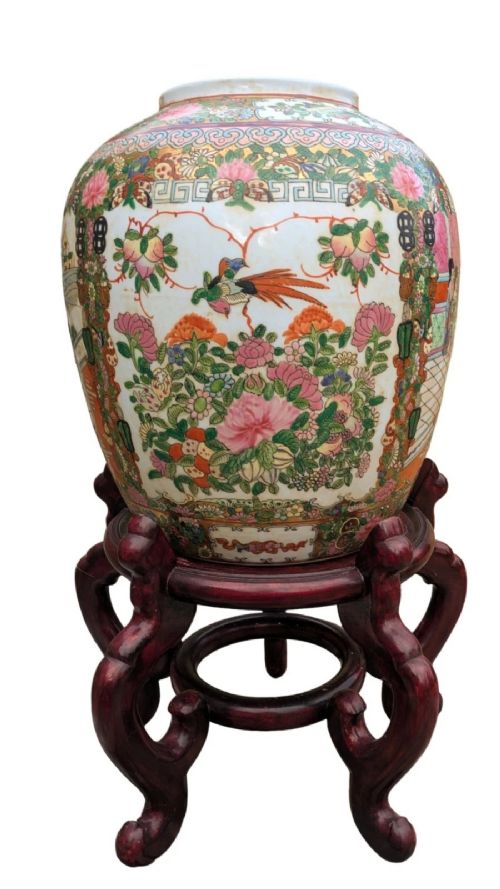
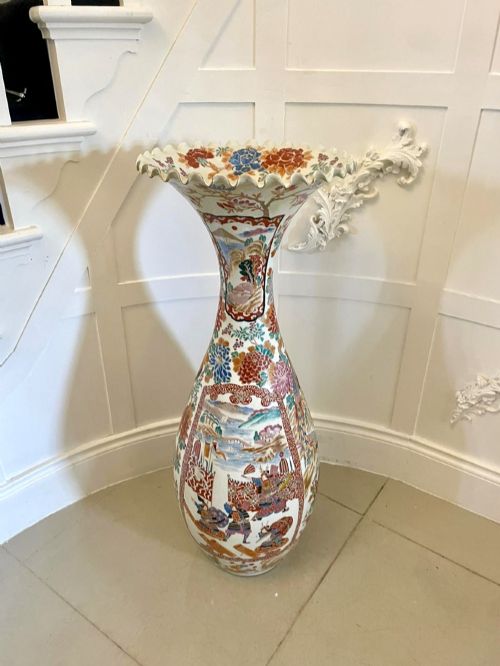
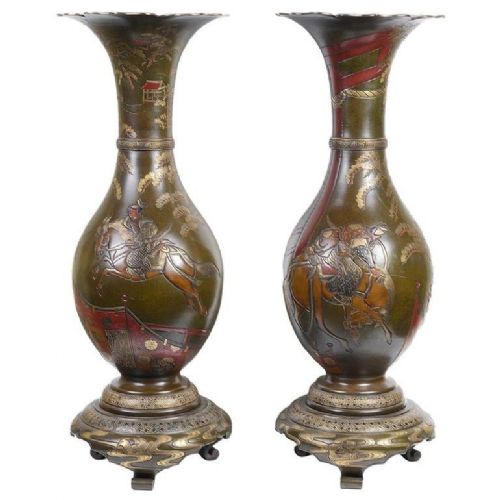
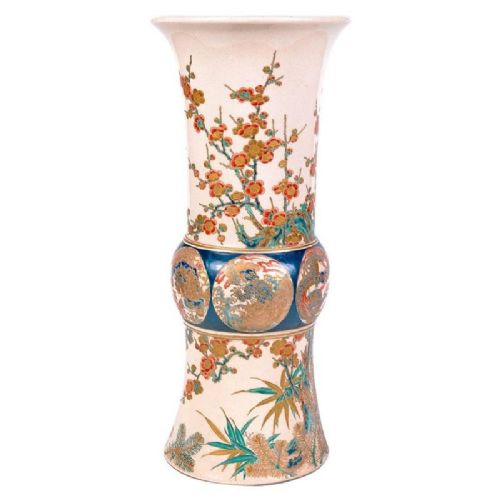
A decorative floor urn is a large vessel designed to stand directly on the ground rather than upon a table or mantelpiece. These grand objects span the nineteenth century and the early twentieth century, taking the form of monumental floor vases, temple vessels, and palace vases.
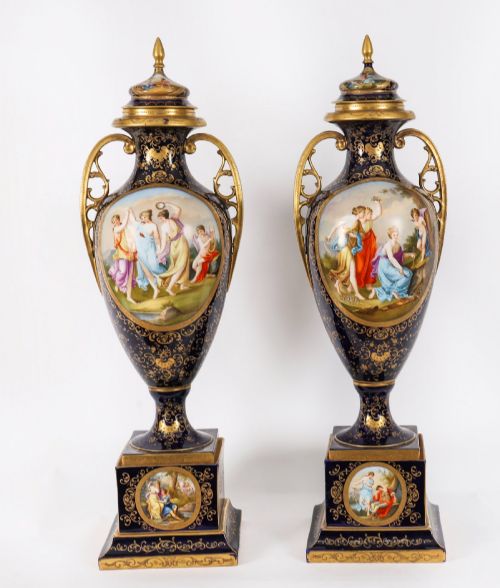
The selections available here showcase a distinct cross-cultural reach, moving from European neoclassical porcelain and French copper to Japanese Imari, Satsuma, Kutani, and Chinese cloisonné enamel. Pairs dominate the offerings, often standing alongside pedestals and columns intended to elevate them further.
Buyers encounter substantial scales ranging from medium floor heights up to monumental proportions exceeding three feet. The forms incorporate baluster bodies, twin handles, and lidded jars alongside flared profiles.
How decorative floor urn pieces were made
Maker workshops utilised diverse foundational materials, shaping porcelain, earthenware, bronze, and copper into imposing vertical forms. Cloisonné pieces rely on soldered metal wires forming cells filled with coloured enamel, while others combine wood and lacquer panels over black paint.
Surface ornamentation involved intricate hand-painted palettes, including Imari designs, Famille Rose, and Famille Verte enamels, frequently enhanced with gold leaf and gilt detailing. Bronze and copper vessels often featured applied relief work, while ceramic examples were fired in large kilns to support their heavy structure.
Decorative Floor Urn Retail Price Guide 2026
Typical asking prices for decorative floor urn among the pieces listed under this phrase on Sellingantiques today, from the lower quarter to the upper quarter. They describe what is for sale here now, not the wider market.
The inventory includes forms from the Meiji period, Qing Dynasty, and Edo period, alongside Victorian neoclassical pedestals and columns.
What varies in quality in decorative floor urns
Quality rests in the precision of the hand-painted detailing and the crispness of the applied motifs across the body of the vessel. Superior examples display meticulous execution in complex enamel work or deeply defined bronze and cloisonné cells.
The scale and ambition of the piece dictate its standing, with monumental pairs requiring immense technical skill in firing and construction without warping. The integrity of accompanying elements, such as lacquer panels or original stands, further distinguishes the finer works.
Kinkozan
The Decorative Floor Urn Glossary
- Imari palette
- A traditional Japanese style of ceramic decoration employing rich underglaze blue and iron red, often heightened with gold.
- Cloisonné
- A metalwork technique where fine wires are soldered to a base to create compartments filled with enamel paste before firing.
- Baluster
- A vertical architectural form featuring a rounded lower body that tapers towards a narrow neck.
- Famille Rose
- A major palette of Chinese ceramic glazes introduced in the eighteenth century, distinguished by opaque pink enamel.
- Meiji Period
- The era in Japanese history spanning from eighteen sixty-eight to nineteen twelve, known for opening international trade in decorative arts.
Decorative Floor Urn: Frequently Asked Questions
Where should a decorative floor urn be placed?
These large vessels suit wide hallways, grand reception rooms, and corners where vertical height balances open architectural space. They rest directly on the floor or atop matching pedestals and columns.
Positioning them away from heavy foot traffic protects their delicate hand-painted surfaces and prominent lacquer or enamel panels from accidental impacts.
How do I identify a Japanese Meiji period vase?
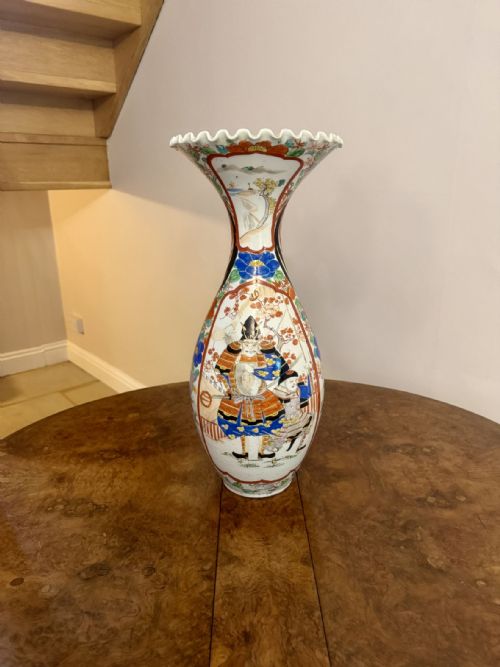
Meiji period pieces date between eighteen sixty-eight and nineteen twelve, reflecting the artistic output of Japan during an era of expanding global trade. Look for characteristic Satsuma earthenware, Imari palettes, or Kutani styles.
Many of these large floor vessels incorporate detailed hand-painted motifs depicting traditional birds, figures, and floral compositions.
What is the difference between cloisonne and porcelain?
Cloisonne involves metal vessels, typically copper or bronze, decorated with soldered wire compartments filled with coloured enamel. Porcelain vessels are formed from ceramic clay, fired at high temperatures, and glazed.
Both methods produce monumental floor vases, but cloisonne presents a metallic tactile surface while porcelain offers smooth ceramic glazes.
How were large Chinese palace vases used?
Monumental Chinese palace vases and temple vases served as major decorative focal points within grand interiors and export markets during the nineteenth century. Their immense scale, sometimes reaching over seven feet, commanded visual authority.
They were displayed in pairs to anchor rooms, often showcasing complex Famille Rose or Chinoiserie lacquer designs.