
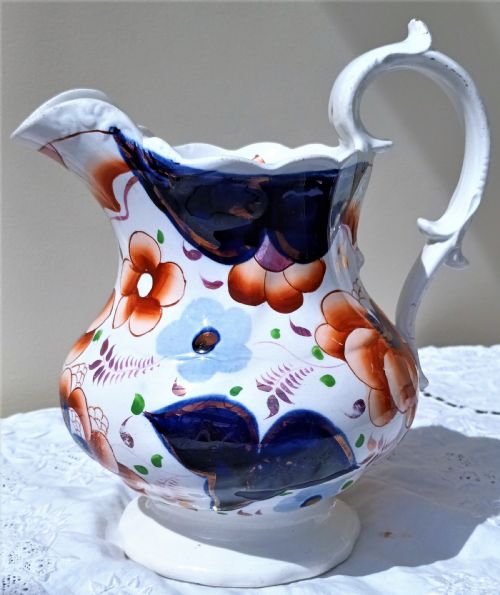
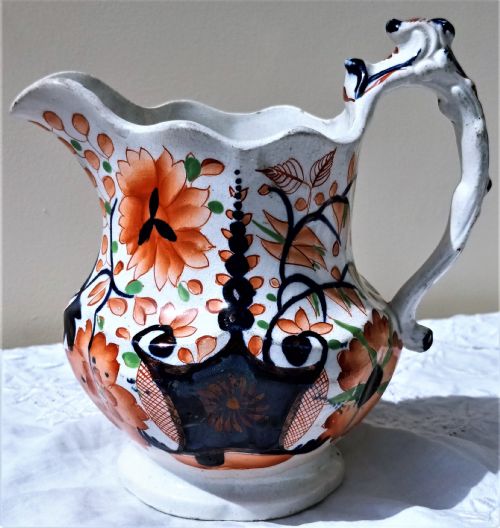
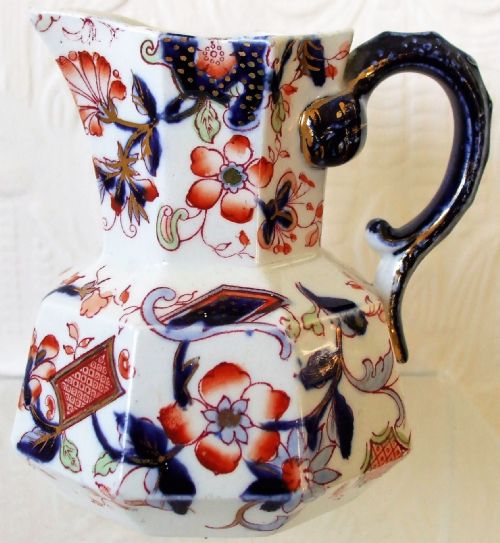
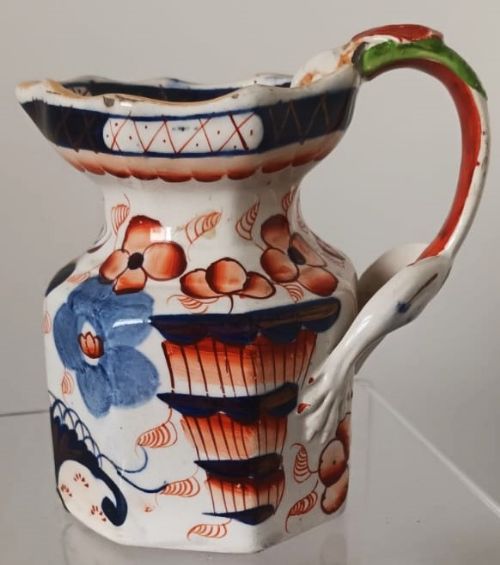


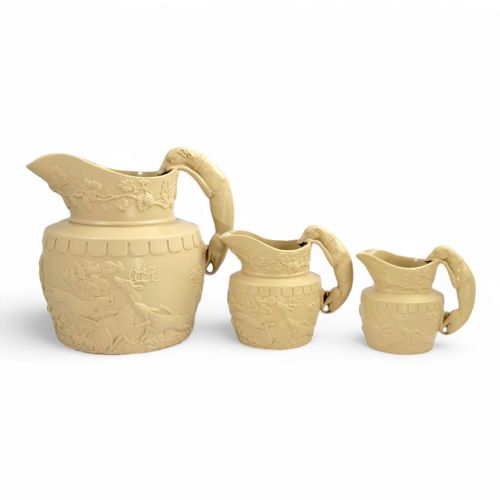


Decorative Earthenware Jug
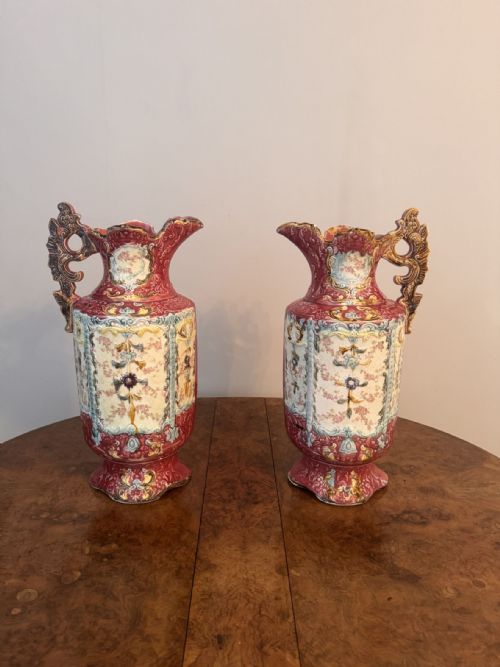
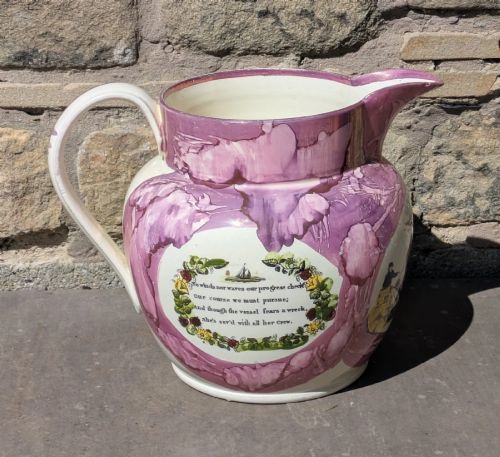
These decorative earthenware jug examples range from Georgian lustre and Victorian majolica to studio pottery.
Decorative Earthenware Jug
A decorative earthenware jug serves as both a functional vessel and an ornamental centrepiece, drawing on traditions from the eighteenth to the twentieth centuries. When searching for a decorative earthenware jug, buyers encounter forms that include ewers, pitchers, and Toby jugs spanning Victorian, Georgian, and Arts and Crafts styles.
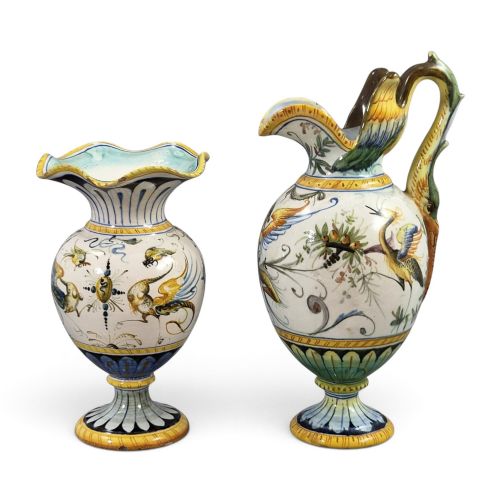
The pieces available on this page reflect diverse origins, from English Staffordshire potteries and Welsh patterns to Italian majolica and French earthenware. These vessels utilise glazes, enamels, and gilding to accentuate their contours, whether shaped as scallop-shell pilgrim flasks or traditional water jugs.
How they were made
Potters shaped these vessels using earthenware and ceramic bodies, frequently finishing the surface with tin glaze, enamel, or coloured glazes. Studios and factories applied techniques such as lustre work, polychrome painting, and gilding to achieve rich decorative finishes.
Moulding and throwing formed the primary bodies, whilst specialised handles, such as hound motifs, were modelled separately and attached before firing. Tin glaze and applied enamels provided a smooth canvas for hand-painted patterns ranging from maritime themes to botanical motifs.
The listings on this page span the 18th, 19th, and early 20th centuries, featuring earthenware, stoneware, and tin glaze materials.
What varies in quality
Quality rests in the crispness of the moulded relief and the precision of the hand-painted enamels or lustre applications. Finer pieces demonstrate careful control during the kiln firing, resulting in even glazes and sharp definition across complex patterns.
The distinction between standard production wares and exceptional pieces lies in the artistic ambition of the decoration, whether through sophisticated polychrome palettes or sculptural details like hound handles.
Cantagalli Florence·Keeling & Co.·Sir Edmund Elton·Choisy-le-Roi·Sarreguemines·Charlotte Rhead·Phillips & Bagster·Doulton Lambeth·Spode
The Decorative Earthenware Jug Glossary
- Earthenware
- Porous pottery fired at lower temperatures than stoneware, requiring a glaze to achieve impermeability. It forms the core material for much of the traditional tableware and decorative vessels found here.
- Majolica
- Opaque tin-glazed pottery with brightly coloured lead glazes, revived with enthusiasm during the nineteenth century. This technique allowed makers to produce vibrant decorative ewers and vases.
- Lustre
- A metallic film applied to pottery to create an iridescent sheen. Sunderland and copper lustre varieties achieve their distinctive reflective surfaces through this chemical reduction process.
- Ewer
- A large jug with a wide spout and handled base, historically used for pouring water. Victorian and Renaissance Revival examples frequently emphasise ornamental form over utility.
- Toby jug
- A pottery jug modelled as a stout, full-length or seated person, usually holding a mug or pipe. These character vessels appear in Staffordshire and Dutch Delft traditions across the eighteenth and nineteenth centuries.
Decorative Earthenware Jug: Frequently Asked Questions
What is a decorative earthenware jug?
A decorative earthenware jug is a ceramic vessel shaped for pouring liquids yet designed primarily for display. These pieces encompass everything from Georgian lustre pitchers to Victorian majolica ewers.
They utilise glazes, enamels, and sculpted handles to combine utility with ornamental appeal, reflecting the prevailing artistic tastes of their respective periods.
How do I date an antique jug?
Dating relies on identifying stylistic markers, manufacturing techniques, and specific factory patterns recorded in the titles. Victorian, Georgian, and Edwardian periods each brought distinct decorative vocabularies.
Examining the glaze composition, body material, and any associated factory marks helps narrow the decade of production.
How were these jugs used originally?
While many served functional roles for water, milk, or wine, finer examples were created purely for display on sideboard furniture. Larger ewers and decorative pitchers occupied prominent positions in period rooms.
Character pieces like Toby jugs often doubled as tavern vessels before transitioning into collector cabinets.
What is Gaudy Welsh pottery?
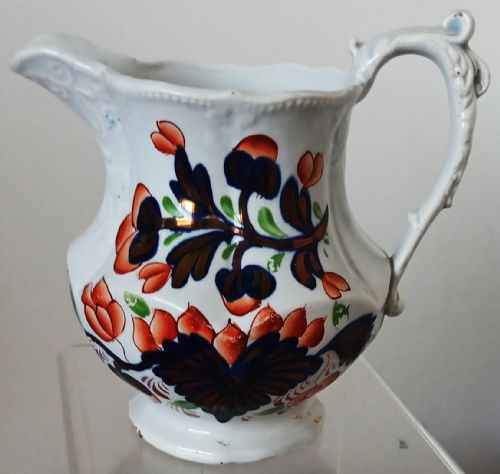
Gaudy Welsh pottery refers to earthenware items decorated with vibrant cobalt blue, copper lustre, and iron-red enamels. These patterns gained popularity during the nineteenth century.
Common motifs include floral arrangements and architectural scenes such as the pagoda or drape designs.