




Decorative Crystal Dish
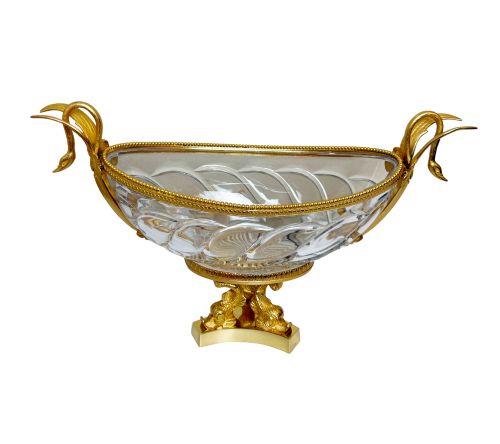
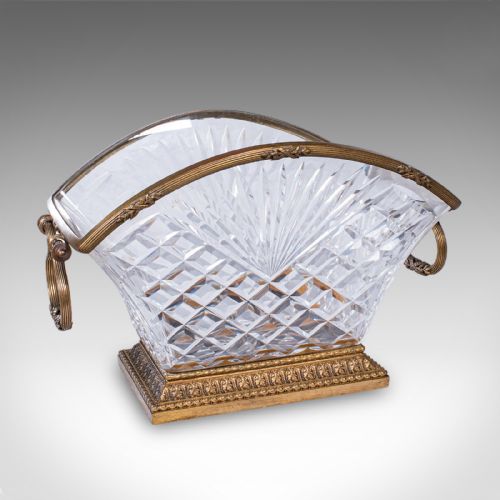
These decorative crystal dish pieces bring heavy cut glass and gilt mounts into a room, offering weight and sparkle for a table.
Decorative Crystal Dish
When you search for a decorative crystal dish, you are looking at heavy glass bowls, tazzas and centrepieces often paired with metal mounts. These items range from Victorian and Edwardian cut glass to later French art glass and Art Deco pieces.
You are most likely to meet Victorian and 19th-century examples on this page, alongside early 20th-century centrepieces. They appear in forms such as open bowls, serving dishes and mounted centrepiece bowls.
The materials span clear lead crystal and cut glass combined with bronze, ormolu, gilt bronze, and silver plate. Styles stretch from Empire and Rococo Revival through to Art Deco and French Art Glass.
How they were made
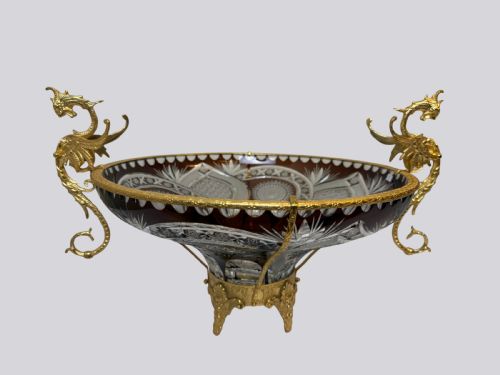
The manufacture relies on heavy lead crystal and cut glass, shaped by blowing and deep cutting. Makers achieved coloured effects through layered glass techniques like over crystal, producing deep green or yellow tones.
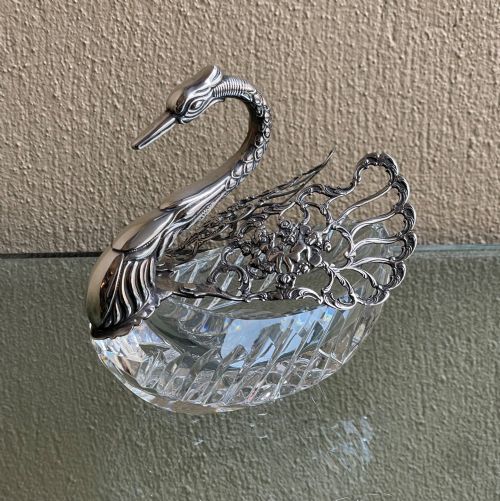
Metal components involve cast bronze, gilt bronze, and ormolu mounts fitted tightly to the glass vessels. Silver plate also appears on smaller swan dishes and specialised serving pieces.
Decorative Crystal Dish Retail Price Guide 2026
Typical asking prices for decorative crystal dish among the pieces listed under this phrase on Sellingantiques today, from the lower quarter to the upper quarter. They describe what is for sale here now, not the wider market.
Listings feature 19th-century and 20th-century items, including cut glass, lead crystal, gilt bronze, and ormolu.
What varies in quality
Quality rests in the crispness of the glass cutting and the weight of the crystal. Superior examples show deep, sharp facets that catch the light cleanly, alongside substantial thickness in the vessel walls.
The metalwork dictates the tier of the piece, with finely chased gilt bronze or ormolu mounts marking out the top of the range. Simpler silver-plated fittings or plain bronze frames sit at the standard level.
Daum France·Val St Lambert·François Eugène Rousseau·Baccarat
The Decorative Crystal Dish Glossary
- Ormolu
- A gilt bronze mount applied to decorative objects. It gives a rich gold-coloured finish to the metal frames holding the glass.
- Tazza
- A shallow bowl or saucer raised on a stem and foot. This form elevates the crystal above the surface of the table.
- Over crystal
- A technique where a layer of coloured glass is cased over a clear crystal body. Cutting through the top layer reveals the clear glass beneath.
- Pâte de verre
- A glass-making method involving crushed glass melted in a mould. This process creates dense, textured pieces with blended colours.
Decorative Crystal Dish: Frequently Asked Questions
What is a decorative crystal dish used for?
These items serve as table centrepieces, fruit bowls, or standalone display objects. Their substantial weight and decorated mounts make them focal points on dining tables or sideboards.
Larger versions hold floral arrangements or function as tazzas for serving. Smaller variants act as decorative serving dishes for sweets or nuts.
How do I tell a Victorian piece from a 1920s piece?
Victorian and 19th-century examples typically feature heavy cut glass paired with ornate gilt bronze, ormolu, or Rococo Revival styling. They lean towards traditional floral motifs and deep geometric cutting.
Pieces from the 1920s and 1930s often adopt cleaner lines, geometric Art Deco factory marks, or coloured over-crystal designs like those from Belgian workshops.
How do I clean a mounted crystal dish?
Wash the glass portion by hand in lukewarm water with mild soap. Avoid harsh scrubbing brushes that can scratch the crystal surface.
Keep water away from any gilt bronze, ormolu, or silver-plated mounts to protect the metal finish. Wipe the mounts gently with a dry cloth instead.
Are these pieces made of lead crystal?
Many of the listed items use lead crystal or heavy cut glass. This material content gives the bowls their clear ring and high refractive index.
Some specialised French art glass uses pâte de verre rather than clear lead crystal, focusing on dense colour and texture instead.