

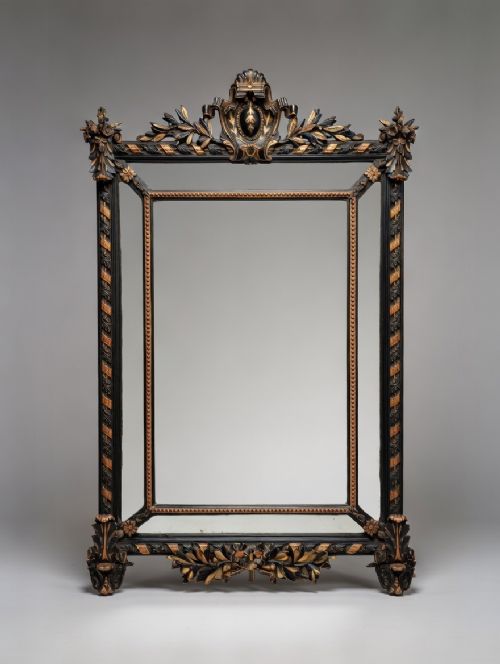
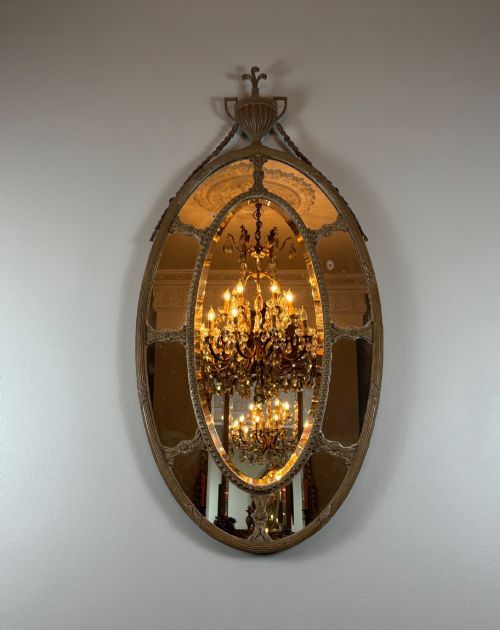
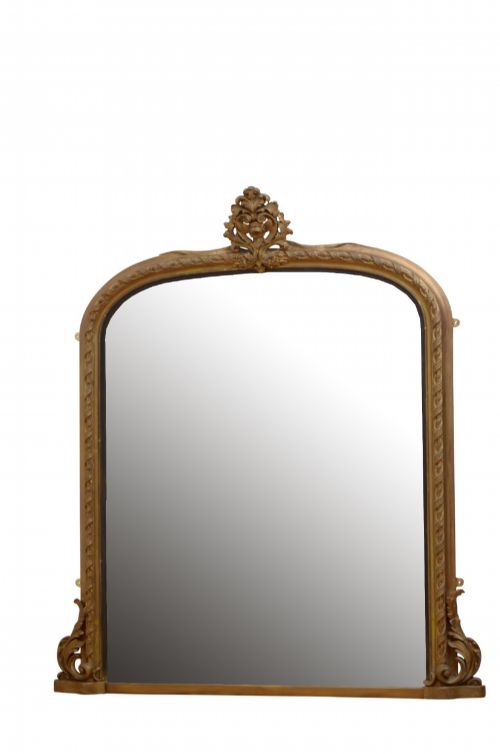
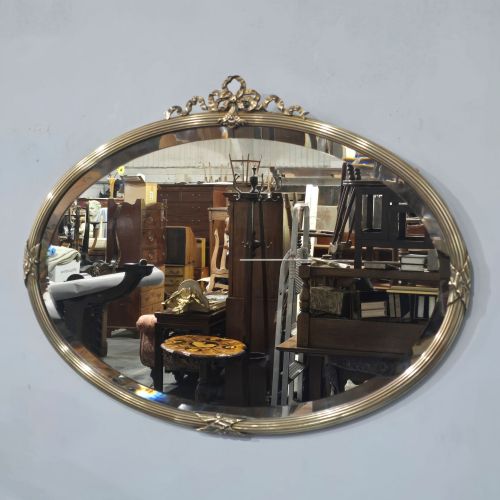
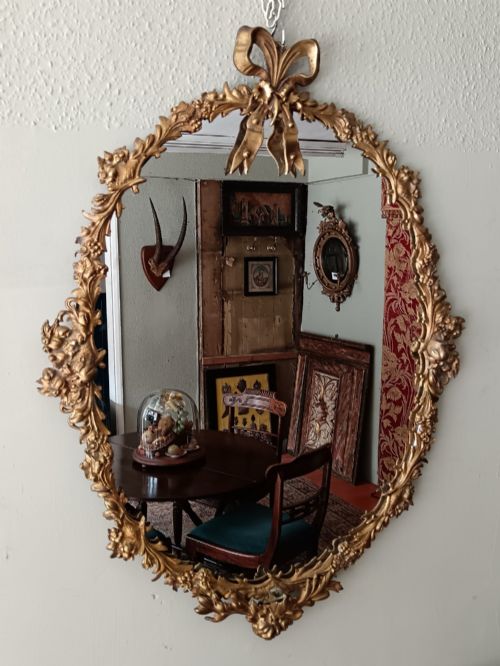
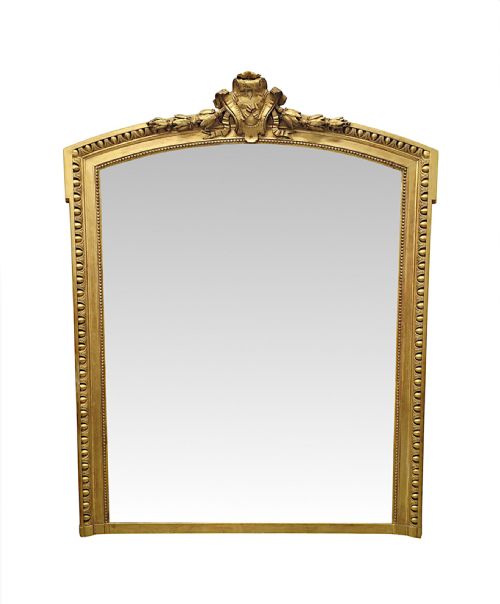

Decorative Crest Wall Mirror
A decorative crest wall mirror brings architectural weight and reflective light to a room, drawing the eye upwards through carved crests and elaborate frames.
Decorative Crest Wall Mirror
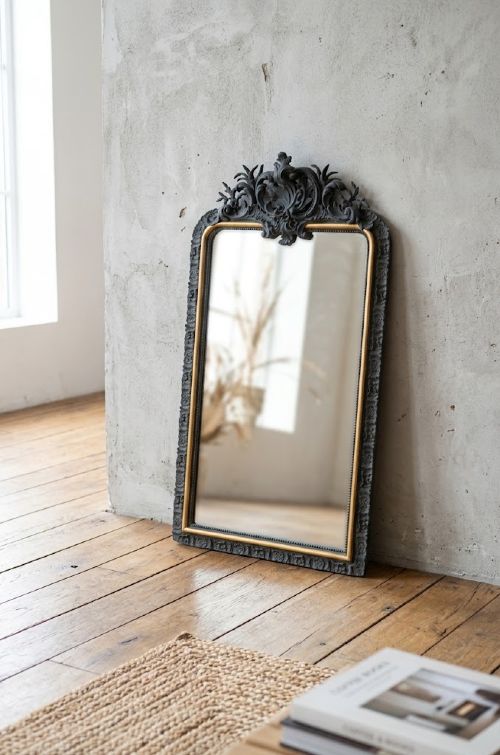
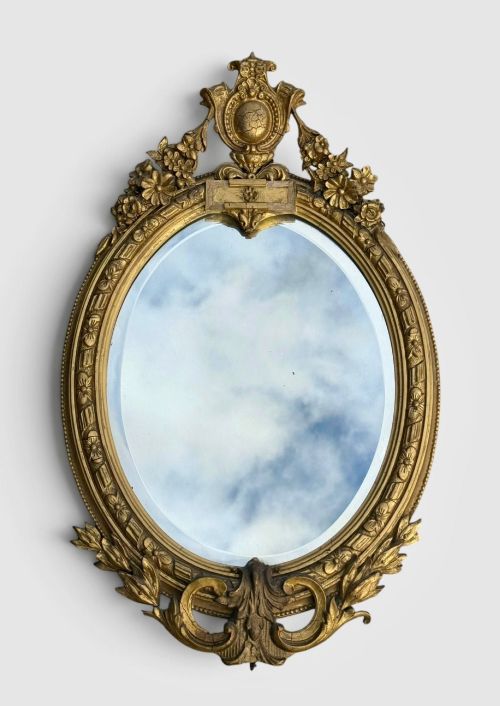
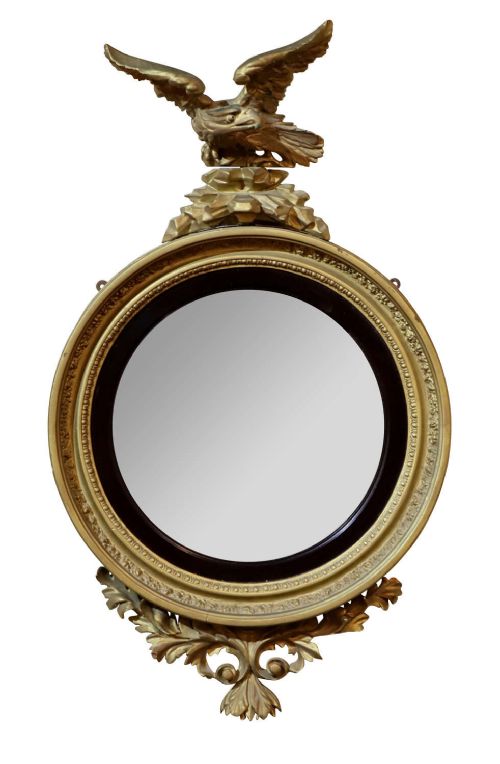
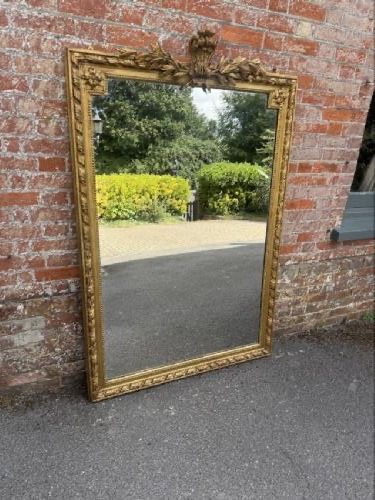
A decorative crest wall mirror is a framed reflective glass piece featuring an ornamental top piece, such as a carved crest, eagle surmount, urn, or central cartouche. These mirrors function as prominent interior focal points, combining practical reflection with sculptural woodcarving and moulding.
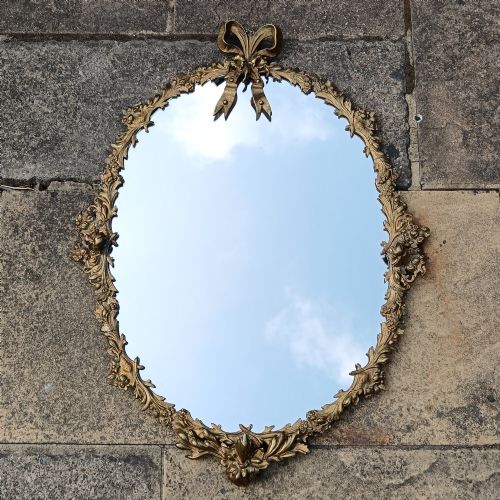
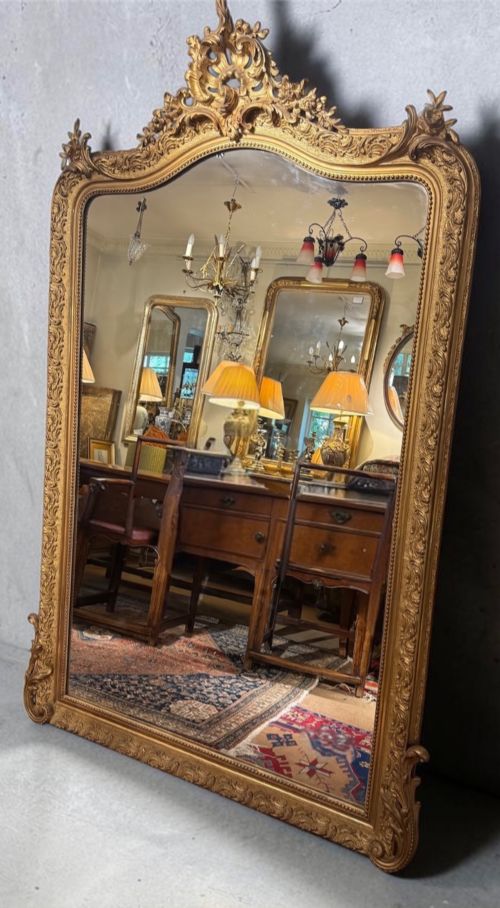
The pieces appearing on this page span several centuries, with the nineteenth century and Victorian era providing the highest concentration of examples. Forms range from large overmantel mirrors and pier mirrors to smaller oval wall mirrors and Venetian cushion mirrors.
Stylistic influences in this selection draw heavily on French Rococo, Louis XVI, Regency, and Adam designs. Buyers frequently encounter giltwood and gesso frames alongside painted wood and ebonised variants.
Materials and construction
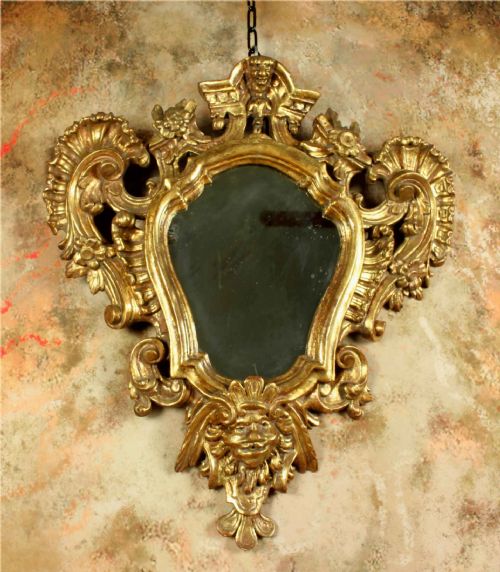
Makers constructed these frames using wood, such as carved walnut, pine, or ebonised timber, often applying a layer of gesso to build up intricate surface ornamentation. Gilding with gold leaf or metallic paint completed the luminous appearance of the carved foliage, rope twists, and swags.
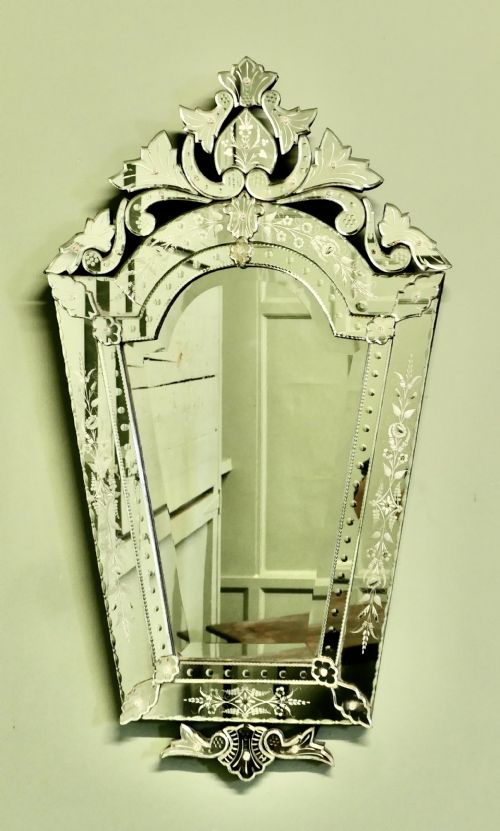
Glass production involved traditional mirrored glass, sometimes cut and etched or framed with border glass in Venetian styles. Gilt bronze mounts and brass fixtures also appear on specific continental and English pieces from the period.
Several mirrors include eagle surmounts perched atop the frame, watching over the room with eighteenth-century vigilance.
Evaluating quality in frames and glass
Quality rests in the depth and sharpness of the hand-carved wood and gesso ornamentation, where crisp lines on crests and cartouches separate superior work from softer moulding. The integrity of the original gilding or painted surface also dictates the character of the piece.
The condition and authenticity of the mirrored glass contribute significantly to the overall merit of the mirror. Original bevelled or cut glass plates retain a depth of reflection that simple replacements lack.
The Decorative Crest Wall Mirror Glossary
- Giltwood
- Wood that has been coated with gold leaf or a gold-coloured metallic finish. This technique creates a bright, reflective surface popular in classical and revival frames.
- Gesso
- A plaster-like mixture applied to wood frames and carved before gilding or painting. It allows artisans to shape intricate relief details like scrolls and swags.
- Overmantel mirror
- A large mirror specifically designed to hang above a fireplace mantelpiece. These pieces often feature wide proportions and substantial arched tops.
- Pier mirror
- A tall, narrow mirror designed to hang on the wall space between two windows. They frequently match console tables placed below them.
- Trumeau mirror
- A decorative mirror incorporating a painted panel or artwork within the upper section of the frame. Originating in France, these pieces served as permanent wall decoration.
Decorative Crest Wall Mirror: Frequently Asked Questions
Where should I hang a decorative crest wall mirror?
These mirrors suit locations with sufficient vertical wall space to accommodate their ornamental tops, such as above a fireplace mantel or in a hallway. Pairing them with adequate ceiling height ensures the crest remains a prominent visual feature.
Positioning them opposite a window also helps maximise the reflection of natural light into the room.
How do I identify a Victorian mirror?
Victorian mirrors often utilise heavy gesso and carved wood frames finished in gilt or ebonised wood. Stylistic markers include rope twists, classical revival motifs, and substantial overmantel formats.
Examining the construction methods and the backing boards helps confirm the nineteenth-century origin.
Can I clean the original glass safely?
Cleaning original mirrored glass requires a gentle touch and mild cleaning solutions applied to a soft cloth rather than directly onto the surface. Avoiding harsh chemicals protects the silvering on the rear of the glass plate.
Care must also be taken around the edges where gesso or gilt frames meet the glass.