


Decorative Copper Plate
These decorative copper plate examples range from Japanese cloisonné enamel to Arts and Crafts beaten work, bringing heavy metal and rich surface pattern into the home.
Decorative Copper Plate
When searching for a decorative copper plate, buyers encounter a broad sweep of nineteenth-century metalwork, including Japanese Meiji period cloisonné chargers, Egyptian Cairo Ware, and British Arts and Crafts pieces. Platters, wall chargers, trays, and table gongs dominate the forms, originating from workshops across Britain, the Middle East, India, and East Asia.
The selection leans heavily toward Japanese cloisonné enamel plates and chargers from the late nineteenth century, alongside European Gothic Revival and Basque folk art pieces. These items served both functional and display purposes, utilising copper as a primary canvas for intricate surface decoration.
Materials and Techniques
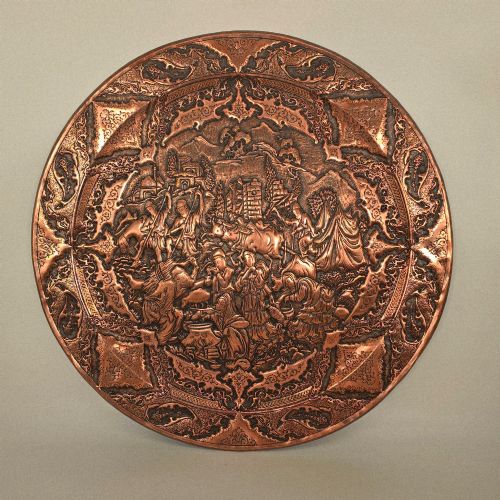
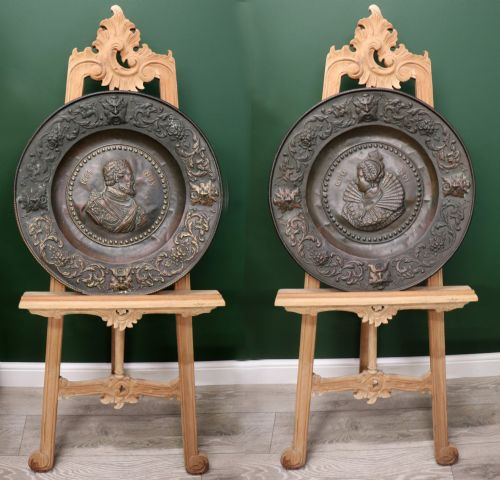
Makers shaped these objects using hammering, beating, and repoussé techniques on copper bases, sometimes combining iron, brass, and bronze. Surface ornamentation often involved silver and brass wire inlay, cloisonné enamelling, or detailed repoussé work to create relief portraits and motifs.
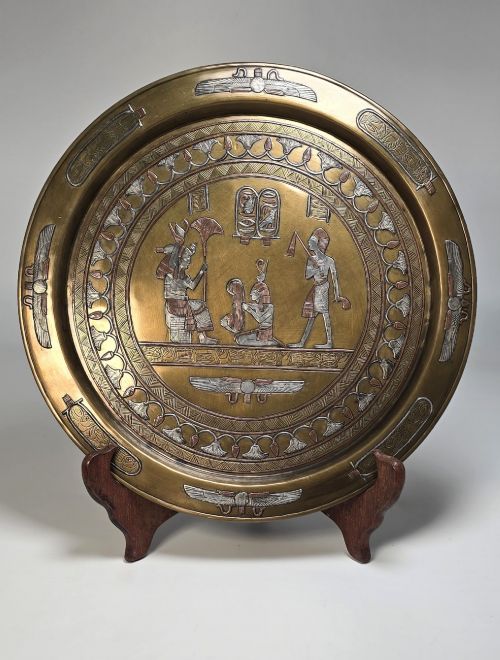
In Asian and Middle Eastern pieces, silver inlay and Cairo Ware techniques added contrasting metallic tones to patinated copper surfaces. British Arts and Crafts examples relied on hand-beaten textures and organic motifs like pomegranates and foliage.
Listings span the eighteenth, nineteenth, and early twentieth centuries, featuring Victorian, Arts and Crafts, and Meiji period aesthetics.
Craftsmanship and Execution
Quality rests in the precision of the handwork, whether in the tightness of cloisonné wire cells or the depth of repoussé relief. Superior examples exhibit deliberate, crisp hammer marks and secure wirework without irregularities in the enamel or inlay.
The complexity and scale of the design also set pieces apart, moving from simple pie-crust edges to intricate figural scenes depicting birds, dragons, and historical portraits.
Faulkner Bronze Company
The Decorative Copper Plate Glossary
- Repoussé
- A metalworking technique where the artisan hammers the metal from the reverse side to form a raised design in relief on the front. This method creates tactile, three-dimensional surface patterns on chargers and dishes.
- Cloisonné
- An enamelling process utilising thin metal wires soldered to a copper base to form enclosed compartments for coloured glass paste. Firing fuses the enamel within these wire boundaries.
- Cairo Ware
- Nineteenth-century metalware produced in Egypt, characterised by heavy bronze or copper bodies inlaid intricately with silver and brass. It revivalised traditional Islamic surface decoration for the Western market.
- Charger
- A large ornamental plate or platter intended primarily for display on a wall or sideboard rather than for dining use. These pieces often feature elaborate pictorial or geometric designs.
- Table Gong
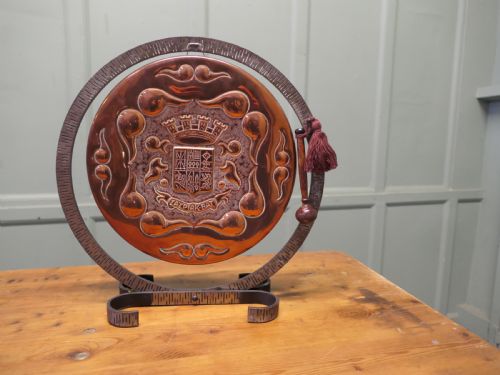
- A suspended metal disc struck with a mallet to produce sound, frequently mounted in a decorative frame. Basque and Victorian examples pair copper gongs with iron or wooden supports.
Decorative Copper Plate: Frequently Asked Questions
How do I hang a heavy copper wall charger safely?
Wall chargers require sturdy brass or steel brackets that grip the rim securely without pinching the metal. Ensure the fixing enters solid wall masonry rather than plaster alone to bear the weight.
For pieces with raised repoussé or delicate enamel, use a padded display hanger designed to distribute pressure evenly across the outer edge of the plate.
Were these decorative plates used for food?
Most nineteenth-century chargers and heavy trays served purely ornamental purposes in Victorian drawing rooms or studies. The presence of silver inlay, soft enamel, or toxic patination precludes safe food contact.
Plain beaten copper trays might have held calling cards or decanters, but intricately decorated examples were strictly for visual display.
How do I clean antique copper without damaging the patina?
Dusting with a dry microfiber cloth is usually sufficient for maintaining stable copper surfaces. Avoid harsh chemical dips that strip away the aged dark finish valued by collectors.
Enamelled or inlaid sections require particular caution, as abrasive polishes will scratch glass cells and ruin wirework. Consult a specialist before applying any moisture or cleaning agents.
How can I tell Japanese Meiji cloisonné from European work?
Japanese Meiji period pieces typically employ extremely fine brass wire and translucent enamels over a thin copper foundation. The imagery frequently incorporates natural motifs like Ho-o birds, dragons, and Mount Fuji.
European Arts and Crafts copper focuses instead on unadorned hammered textures, plant forms, and geometric repoussé work without the dense glass enamelling seen in Asian imports.