


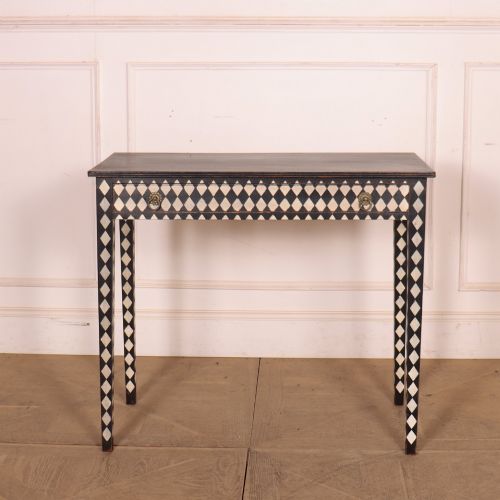


Decorative Console
A decorative console brings architectural presence and surface utility to an interior, drawing the eye through carved detail and shaped marble.
Decorative Console
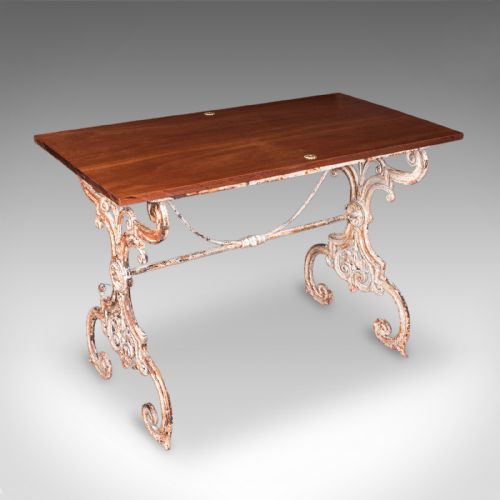
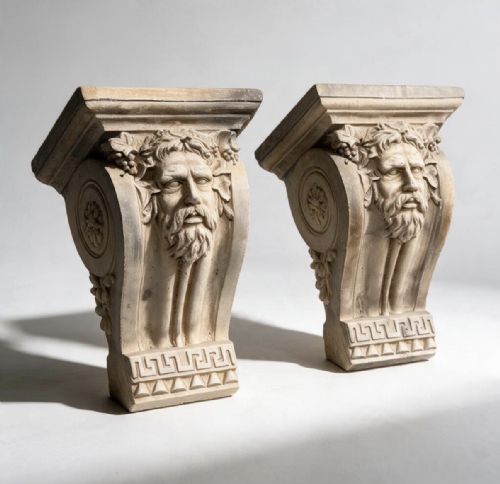
A decorative console encompasses wall brackets, side tables, and pier tables designed to stand against a wall or project from it. These pieces emerge across periods from the eighteenth century through to the early twentieth century, reflecting shifting tastes in interior ornament.
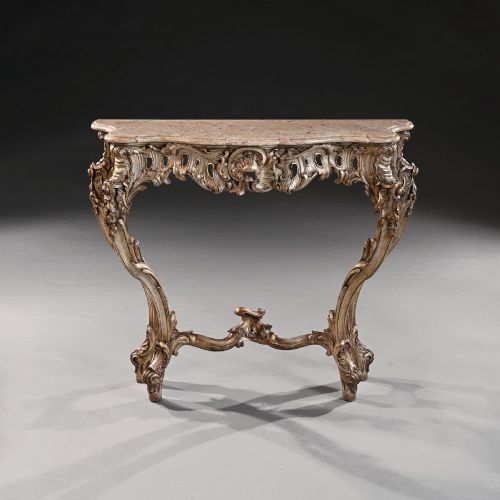
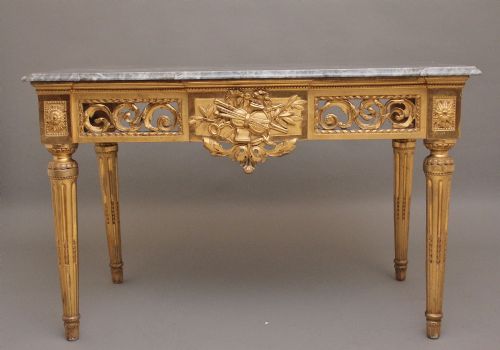
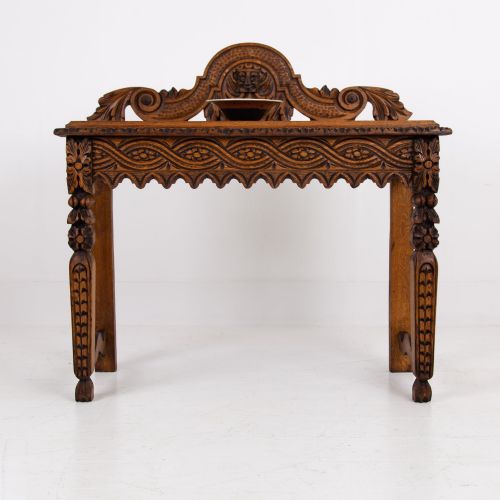
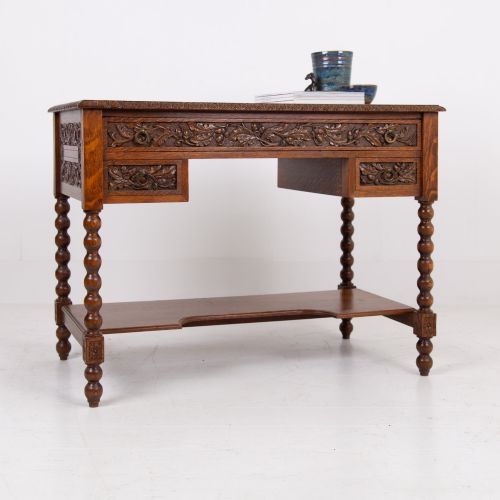
The most frequent examples encountered include Victorian oak side tables, Italian giltwood consoles with shaped marble tops, and French painted or marquetry pieces. Alongside these stand smaller wall brackets and shelves carved from walnut, oak, and giltwood.
Origin points range widely across European and international workshops, including English, French, Italian, German, Syrian, and Anglo-Indian designs. Forms vary from demi-lune display tables and lamp tables to elaborate pier mirrors with integrated shelves.
Materials and construction methods
Carpenters and cabinetmakers utilised solid timbers and veneers such as oak, walnut, satinwood, amboyna, and mahogany for the structural carcasses and table tops. These foundational woods frequently received elaborate surface treatments, including hand carving, marquetry inlay, and ebonising.
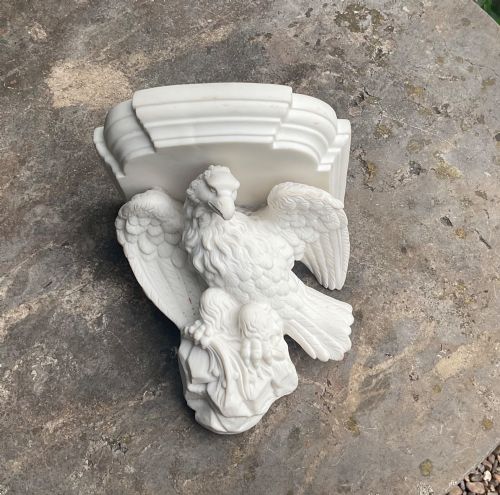
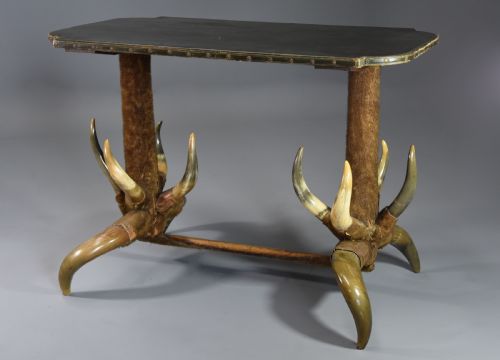
Gilding techniques applied gold leaf, silver gilt, or gesso over carved wooden substrates to create reflective surfaces on console tables and wall brackets. Parian porcelain, brass, ormolu, and ceramic elements appear alongside carved cow horn, red walnut, and lacquer.
Many examples incorporate heavy stone elements, most notably shaped marble, specimen marble, and painted wooden tops resting securely upon the wooden bases. Wall-mounted iterations rely on sturdy corbels and brackets to support both the weight of the timber and the stone.
Decorative Console Retail Price Guide 2026
Typical asking prices for decorative console among the pieces listed under this phrase on Sellingantiques today, from the lower quarter to the upper quarter. They describe what is for sale here now, not the wider market.
The documented periods span across the eighteenth, nineteenth, and early twentieth centuries, encompassing Victorian, Rococo, and Empire aesthetics.
Markers of distinction and finesse
The degree of hand carving distinguishes simpler utility items from masterwork consoles, particularly where deep undercut foliage, cherubs, or architectural corbels show genuine sculptural skill. Crispness in the execution of giltwood, gesso, and marquetry determines how effectively the piece catches ambient light.
Materials selection drives the upper tiers of the range, visible in the choice of figured burr walnut, amboyna, or genuine specimen marble inserts rather than plain timber or standard slate. Originality of finish and surface condition, such as untouched paint or patinated gold leaf, preserves the integrity of the maker's original intention.
Maple and Co
The Decorative Console Glossary
- Console table
- A table designed to be fixed against a wall, often supported by ornate brackets or legs rather than a full four-legged freestanding frame.
- Giltwood
- Timber that has been coated with gold leaf or gold paint over a prepared gesso ground, creating a bright metallic surface.
- Demi-lune
- A half-moon shape characteristic of tables built to sit flush against a flat wall while occupying minimal floor space.
- Wall bracket
- A projecting architectural shelf fixed to a wall, utilised for displaying ornaments, clocks, or smaller ceramic pieces.
- Marquetry
- Decorative patterns formed by the insertion of different woods, veneers, or shell into a solid wood matrix.
Decorative Console: Frequently Asked Questions
Where should a decorative console be placed?
These pieces suit entrance halls, narrow corridors, and living rooms where floor space is limited yet surface area is required. A wall bracket or console table anchors a room when paired with a matching mirror or painting hung directly above.
Positioning a console beneath a window or along a blank passage wall creates an immediate focal point without obstructing movement through the interior.
How do I distinguish 18th century pieces from later revivals?
Eighteenth-century examples display authentic joinery methods, hand-cut fixings, and natural timber ageing consistent with early workshops. Later Victorian and Edwardian revivals often incorporate machine-cut elements or stylistic exaggerations typical of nineteenth-century historicism.
Examining the underside, drawer construction, and wear patterns around the feet provides clear indicators of the true period of manufacture.
Can marble-topped consoles support heavy objects?
Solid marble and specimen marble tops possess substantial natural weight and handle heavy table lamps, bronze figures, or large ceramic bowls securely. The supporting wooden frame or wall brackets beneath must be structurally sound and properly anchored to the wall.
Care should be taken during relocation to lift the stone separately from the base if the design allows, preventing strain on the antique joints.
How do I care for giltwood and painted surfaces?
Giltwood and delicate painted finishes require gentle dusting with a soft, dry ostrich feather brush to prevent abrasion to the gold leaf or paint layers. Avoid using chemical sprays, abrasive cloths, or excessive moisture which can lift the gesso or crack aged varnishes.
Maintaining stable room humidity protects both the timber substrates and the decorative surface treatments from warping or flaking over time.