


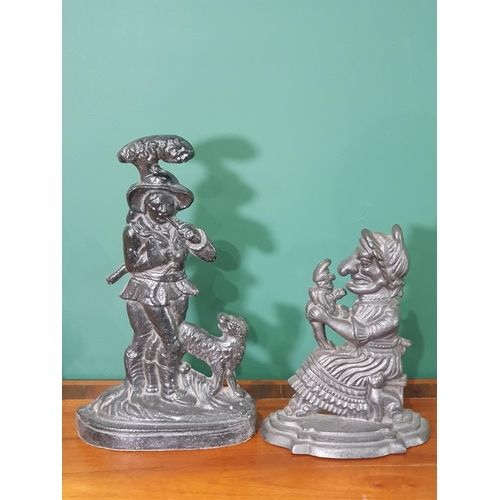


Decorative Cast Iron Weight
A decorative cast iron weight holds doors open with sturdy mass and character, ranging from spirited animal figures to historic personages.
Decorative Cast Iron Weight
A decorative cast iron weight primarily takes the form of a doorstop or door porter, designed to hold heavy doors open in domestic interiors. These pieces frequently appear in Victorian and Edwardian guises, reflecting the utilitarian yet ornamental tastes of those periods.
The assortment relies heavily on figural representations, including animals such as lions, dogs, elephants, and dolphins, alongside character subjects like Lord Nelson and Mr Punch. Many examples originate from the nineteenth century, spanning specific dates from about 1860 through to the Edwardian era.
Folk art influences emerge in several pieces, imparting a vernacular charm to the standard doorstop forms. Buyers encounter both plain cast iron finishes and painted versions that retain historic colour highlights from their period of manufacture.
Materials and construction
Production relies entirely on durable cast iron, providing the substantial mass required to function effectively as a door keeper. Makers poured molten metal into sand moulds to achieve the crisp contours of animals, knights, and figural characters.
Surface treatment often involves applied paint over the base metal, capturing details on figures like Mr Punch and Lord Nelson. Some examples incorporate wood or supplementary elements, though cast iron remains the dominant structural medium throughout the periods recorded.
Listings span the Victorian, late Victorian, Edwardian, and nineteenth-century periods, utilising cast iron, paint, and wood.
Assessing quality
Quality rests upon the crispness of the casting and the fidelity of the sculptural form, distinguishing robustly articulated figures from softer, worn impressions. Heavier proportions and more dynamic modelling indicate superior workshop standards during the Victorian and Edwardian periods.
The preservation of original painted surfaces significantly elevates an example, as surviving historic pigment adds visual depth to the cast iron body. Pieces that retain their authentic character without heavy modern intervention demonstrate greater integrity.
The Decorative Cast Iron Weight Glossary
- Doorstop
- A heavy object designed to keep a door stationary by sheer mass. These items are frequently cast in iron and fashioned into ornamental shapes.
- Cast iron
- An iron-carbon alloy poured into moulds to create solid, heavy objects. It forms the primary structural material for nineteenth-century door porters.
- Door porter
- An alternative term for a heavy doorstop used in large hallways. Such pieces combine utility with decorative sculptural presence.
- Victorian Gothic Revival
- A nineteenth-century design style drawing inspiration from medieval architecture and motifs. This aesthetic occasionally influences the heavy figural forms of domestic hardware.
Decorative Cast Iron Weight: Frequently Asked Questions
What is a decorative cast iron weight?
A decorative cast iron weight is a heavy utilitarian object, most commonly shaped as a doorstop or door porter, designed to hold doors open.
These items combine practical mass with sculptural forms ranging from animals to historic figures.
How were these weights used?
They were placed on interior floors to keep heavy wooden doors from swinging shut in drafty hallways and rooms.
Their substantial weight ensured doors remained stationary while adding a decorative focal point to the room.
How do I date a cast iron weight?
Dating relies on stylistic clues, sculptural subjects, and material characteristics associated with the Victorian and Edwardian periods.
Nineteenth-century examples often feature specific figural subjects like Lord Nelson or Mr Punch alongside distinct casting techniques.