


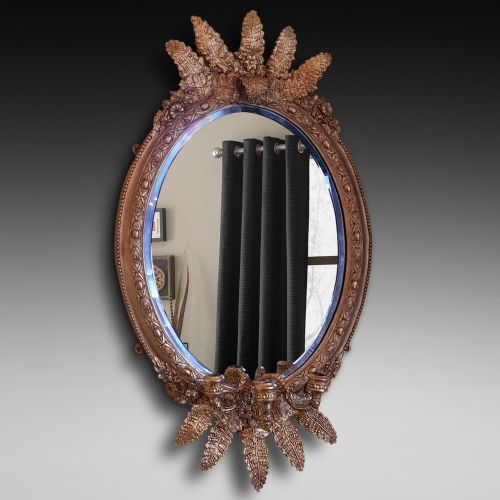
Decorative Candle Brackets
These decorative candle brackets light a room with the rich warmth of gilded brass, carved wood, and antique metal.
Decorative Candle Brackets
Decorative candle brackets are wall-mounted fixtures designed to hold candles, appearing on this page in forms such as wall lights, wall sconces, and wall mirrors. The selection spans centuries of design, encompassing styles from the seventeenth century through the Edwardian era and the early twentieth century.
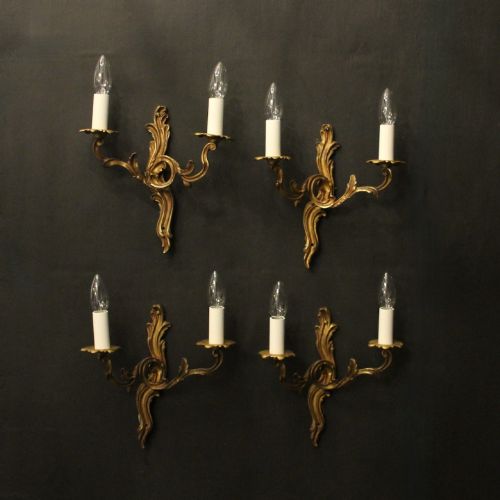
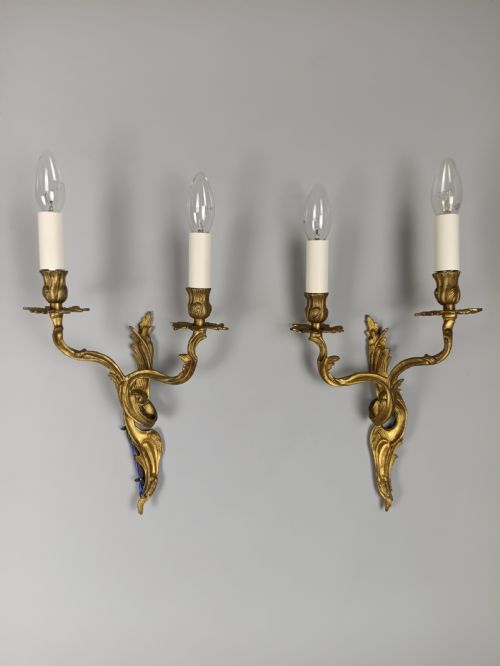
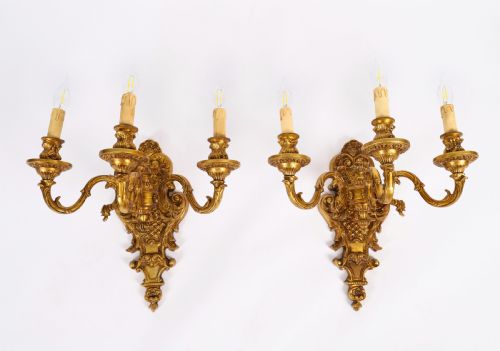
The most common versions encountered here are French and Italian pieces reflecting baroque, rococo, and rococo revival tastes. These range from twin-arm gilt brass fittings to carved and gilded wooden sconces.
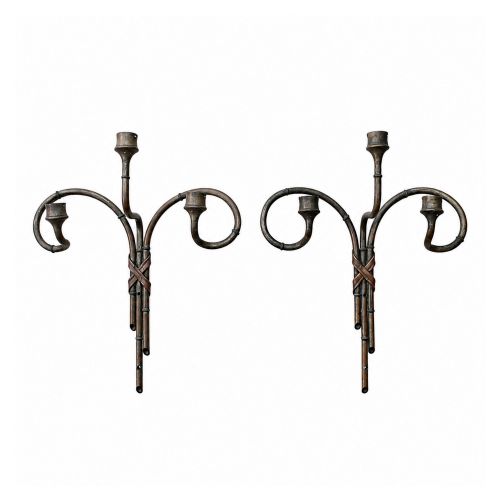
Other variations include bamboo wall lights reflecting a japonisme influence alongside polychrome wooden designs and Victorian gesso wall mirrors. Each piece serves to project candlelight across a room while acting as a striking wall ornament.
Materials and construction methods
The construction relies heavily on cast metals such as brass, gilt bronze, and standard metal, often finished with gilding or silver leaf. French and Italian workshops shaped these metals into elaborate scrolling arms and backplates characteristic of rococo designs.
Wooden elements utilise carved wood, gesso, and giltwood, where artisans built up plaster layers over a carved wooden base before applying gold leaf or polychrome paint. Iron and bamboo also appear in the evidence, providing alternative structural frameworks for early twentieth-century lighting.
Finishing techniques depended on the regional style, combining fire-gilding on bronze components with hand-applied gesso and leaf on wooden frames to achieve a reflective surface for candlelight.
Listings feature periods from the seventeenth century through the Victorian and Edwardian eras up to nineteen-thirty.
Distinctions in quality
Quality in decorative candle brackets reveals itself in the crispness of the chasing on bronze and brass work, or the depth and detail of the carving in giltwood and gesso pieces. Finer examples display fluid asymmetry in their rococo scrolls and well-defined botanical motifs rather than soft, blurred casting lines.
The integrity of the surface finish also marks out superior examples, with genuine period gilding, silver leaf, or polychrome paint showing subtle patination rather than flat, modern uniformity. Heavier gauge metal and solid carved wooden construction distinguish the more substantial pieces from lighter alternatives.
The Decorative Candle Brackets Glossary
- Gilt bronze
- Bronze that has been coated in a layer of gold, frequently utilised in fine French wall lights to provide a durable and lustrous golden surface.
- Gesso
- A paint mixture consisting of a neutral binder mixed with chalk or plaster, applied to wood surfaces and carved or moulded before gilding.
- Wall sconce
- A decorative light fixture fixed to a wall, designed to project candlelight or lamplight into a space.
- Rococo revival
- A nineteenth-century style drawing inspiration from the asymmetrical curves and naturalistic motifs of the eighteenth-century French rococo movement.
- Japonisme
- The influence of Japanese art and design on Western aesthetics, visible in the use of materials such as bamboo during the early twentieth century.
Decorative Candle Brackets: Frequently Asked Questions
Where should I mount decorative candle brackets?
These pieces suit placement in hallways, dining rooms, or flanking a fireplace where they can reflect ambient light. Placing them at eye level allows the detail of the metalwork or carved wood to be appreciated.
Ensure the wall construction can support the weight, particularly with heavier giltwood, gesso, or cast bronze fixtures.
How do I clean antique giltwood and brass?
Dust gently with a soft, dry brush to avoid disturbing fragile gold leaf or gesso surfaces on wooden frames. Moisture can damage old water-gilding and cause flaking.
For brass and bronze components, avoid harsh chemical polishes that strip the historic patina. A gentle wipe with a soft cloth is usually sufficient.
Are these brackets wired for electricity?
Many wall lights and sconces from the twentieth century or earlier were originally designed for candles, though some have been adapted for electrical use over time. Buyers should inspect individual listings to determine the current wiring status.
Any electrical adaptation should be checked by a qualified professional to ensure safety before installation.
How do I identify a rococo revival piece?
Rococo revival pieces typically feature asymmetrical C-scrolls, S-scrolls, and naturalistic plant motifs such as acanthus leaves. This style appeared across various periods including the nineteenth century and later revivals.
Italian and French makers adopted these flowing, exuberant shapes for both wooden frames and metal wall lights.