



Decorative Bronze Plaque
A decorative bronze plaque brings depth and historical character to a wall, offering rich relief work and patinated metal surfaces that anchor a room.
Decorative Bronze Plaque
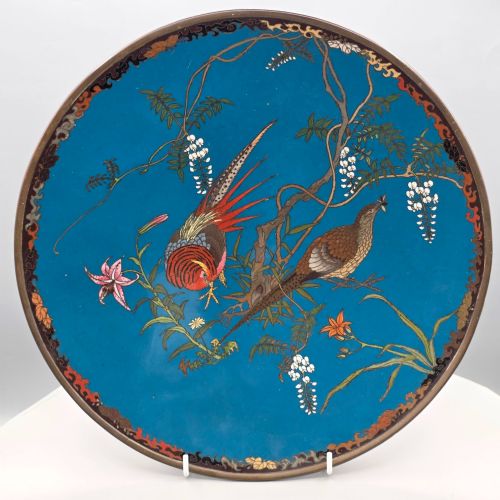
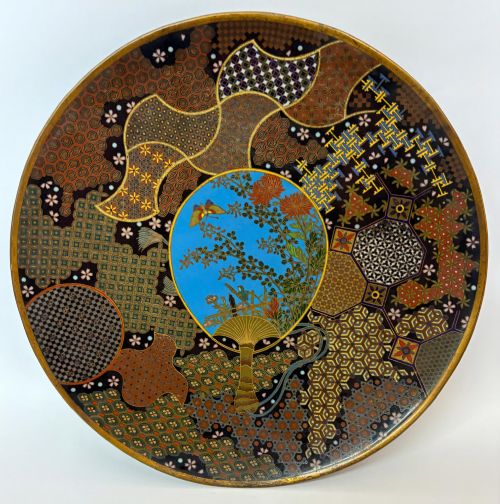
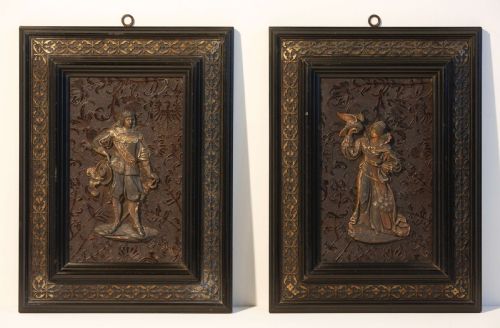
A decorative bronze plaque spans diverse aesthetic traditions, running from European classical revivals to intricate Meiji period Japanese metalwork. These pieces take the form of wall plaques, large chargers, and relief plates designed principally for display.
The nineteenth century yields the highest concentration of examples on this page, incorporating styles ranging from Neoclassical and Baroque Revival to Art Nouveau and Arts and Crafts. Buyers encounter both European foundry casts and Asian mixed-metal or enamelled vessels serving as wall art.
Subjects vary widely, encompassing heraldic insignia, mythological figures, satirical scenes, and natural motifs such as birds and chrysanthemums. Each form reflects the specific decorative preoccupations of its period of origin.
Materials and technique
Foundries utilised traditional casting methods for bronze, brass, and white metal, frequently applying gilt finishes, patination, or ormolu mounts to enhance the surface detail. Relief work dominates the physical form, whether achieved through direct casting, hammering, or repoussé.
Makers integrated contrasting media such as enamel, copper, terracotta, and ebonised wood into the metal armature, particularly within Japanese cloisonné and Arts and Crafts copper pieces. Wirework and inlaid mixed-metal elements further complicated the manufacturing process.
A satirical refugee monkey family in America finds itself immortalised in Austrian terracotta.
Distinctions in quality
The refinement of the chasing and the crispness of the relief work set superior examples apart from simpler production pieces. Sharp definition in hair, drapery, and background elements indicates a high standard of hand finishing by skilled artisans.
Complexity of composition and the successful integration of mixed materials, such as multi-coloured enamels or complex patination, signal superior craftsmanship. Pieces demonstrating distinct artistic intent rather than formulaic reproduction command greater attention.
Ernst Wahliss·Faulkner Bronze Company·Coalbrookdale
The Decorative Bronze Plaque Glossary
- Patina
- The surface coloration and sheen developed naturally over time or applied chemically by the maker. It protects the metal and adds visual depth.
- Repoussé
- A metalworking technique where the artisan hammers the metal from the reverse side to form a raised design in relief. Details are subsequently refined from the front.
- Cloisonné
- An enamel technique where metal wire is soldered to a base to form compartments, which are then filled with coloured paste and fired. This method creates vibrant, patterned surfaces.
- Ormolu
- Gilded bronze, typically produced in France, used for decorative mounts and vessels. The technique involves applying a gold amalgam to the bronze base.
- Charger
- A large decorative plate or dish intended for display on a wall or sideboard rather than for dining use. These often feature prominent pictorial subjects.
Decorative Bronze Plaque: Frequently Asked Questions
How do I hang a heavy bronze plaque safely?
Wall fixings must match the weight of the metal and the construction of the wall itself. Utilise appropriate wall anchors and ensure brackets engage securely with structural supports.
Avoid relying on simple picture wire for heavy cast pieces. Direct mechanical support distributed across the plaque frame or dedicated mounting brackets provides stability.
How should I clean antique bronze?
Dusting with a soft, dry brush removes surface particles safely without disturbing the patination. Avoid abrasive cloths or chemical polishes that strip historical surfaces.
Professional conservation advice should be sought before attempting any intervention on stable patinated finishes or delicate enamel and mixed-metal inlays.
What is the difference between a charger and a plaque?
A charger is fundamentally a large circular plate or dish adapted for vertical or horizontal display. Its form derives from dining vessels.
A plaque is cast or fashioned specifically as a flat, standalone panel for wall mounting. Both serve decorative rather than utilitarian functions.
How do I identify Meiji period metalwork?
Meiji period pieces often display precise cloisonné enamel work, mixed-metal inlay, or signature panels associated with Japanese workshops. Themes frequently include dragons, deities, and natural flora.
These items date from the late nineteenth century and reflect the opening of Japanese trade markets to Western collectors during that era.