





Decorative Brass Inlaid Chest
A decorative brass inlaid chest brings rich timber and fine metalwork to a surface, offering small-scale storage for tea or letters.
Decorative Brass Inlaid Chest
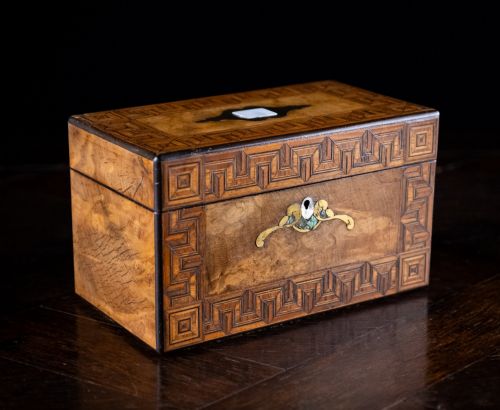
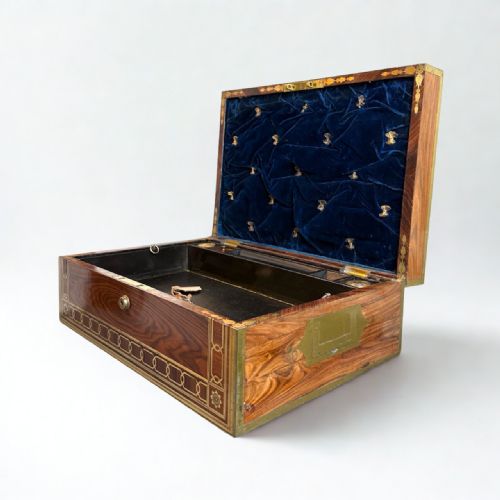
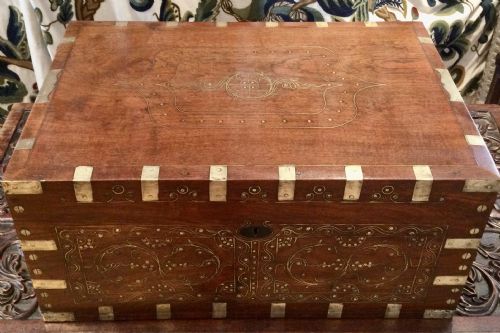
A decorative brass inlaid chest appears across this selection primarily as a tea caddy, writing box, or small trinket chest designed for domestic use. These objects range from the Georgian period through the Victorian era, housing precious commodities or personal correspondence.
Rosewood and mahogany form the foundation of most pieces, often enhanced with brass stringing, marquetry, or mother-of-pearl. Makers from the eighteenth, nineteenth, and mid-twentieth centuries produced these compact boxes to sit upon side tables and desks.
The most common survival among these listings is the tea caddy, frequently featuring internal compartments or canisters for dry leaf storage. Alongside these, writing boxes and occasional trunks provide alternative forms of small-scale containment.
How they were made
Cabinetmakers constructed these boxes using dense tropical hardwoods such as rosewood and mahogany, sometimes applying ebonised finishes or tortoiseshell veneers to the exterior carcase. The timber was selected for stability and grain figure before being cut into panels.
Brass inlay, often combined with mother-of-pearl or specimen bone veneers, was set into channelled recesses cut directly into the wood surface. Craftsmen secured these metal strips and motifs with animal glue, then scraped and polished the entire exterior flush.
What varies in quality
The distinction between ordinary and superior examples lies in the precision of the brass inlay and the selection of timber veneers. Finely executed stringing and complex marquetry require meticulous hand-cutting that elevates the visual depth of the piece.
Internal arrangements dictate the structural sophistication of a box, with fitted canisters, working locks, and secondary woods demonstrating greater original expenditure. The retention of original interior components preserves the integrity of the design.
The Decorative Brass Inlaid Chest Glossary
- Tea Caddy
- A small lidded box designed for storing loose tea leaves securely. These containers often featured internal divisions and fitted metal or wooden canisters.
- Marquetry
- The art of applying decorative veneer pieces to a structural carcase to form geometric or pictorial patterns. Craftsmen utilised contrasting woods, shell, and metal.
- Boulle
- A technique of marquetry utilising tortoiseshell and brass inlay, developed in seventeenth-century France and revived during later periods. The contrasting materials create a striking optical effect.
- Stringing
- A narrow strip of contrasting wood or metal inlaid into the surface of furniture or boxes to form borders. This linear detail defines the edges of panels and lids.
- Writing Box
- A portable slant-front or folding desk containing compartments for ink, pens, and paper. These boxes provided a stable writing surface away from the main bureau.
Decorative Brass Inlaid Chest: Frequently Asked Questions
What were tea caddies used for?
Tea caddies served to store expensive tea leaves securely under lock and key in the household. Servants or homeowners kept the precious leaves away from damp and pilfering.
Inside, divided compartments or removable metal canisters separated different tea varieties. The locked lid protected a valuable commodity during periods when tea was heavily taxed.
How do I date a brass inlaid box?
Dating relies on observing the timber species, the style of the brass inlay, and the construction of the interior compartments. Georgian and Regency pieces often feature simpler rosewood surfaces with fine brass stringing.
Victorian examples frequently incorporate heavier marquetry, mother-of-pearl, or boulle work. Examining the secondary woods inside the box also reveals the manufacturing period.
Can I use a writing box daily?
These boxes function well for storing stationery, modern correspondence, or small keepsakes on a desk. The internal compartments accommodate pens and small items neatly.
Care should be taken with antique hinges, tortoiseshell, and delicate veneers when opening and closing the lid frequently. Placing the box away from direct sunlight protects the timber and polish.