




Antique Wooden Writing Case
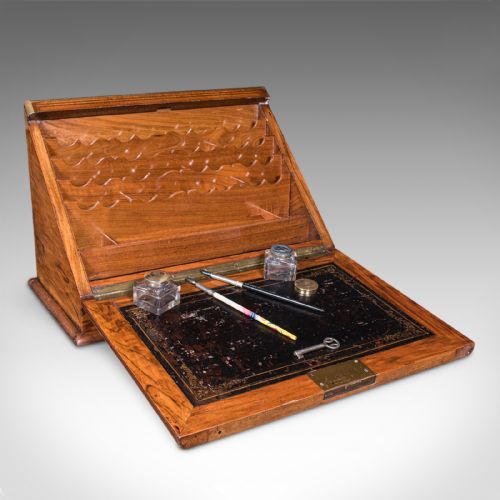
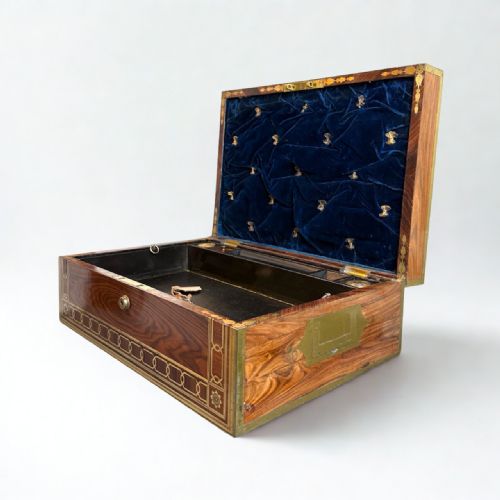
An antique wooden writing case is a portable desk or fitted box for correspondence, offering refined craftsmanship and clever internal compartments for daily use.
Antique Wooden Writing Case
An antique wooden writing case brings together personal correspondence furniture and portable storage from past centuries. When you search for this phrase, you encounter pieces designed for travel, domestic desks, or professional use.
The selections available here span the 19th Century, Victorian, Regency, and Edwardian eras, alongside pieces dated to 1880, 1910, and 1920. Styles include Victorian, Edwardian, Regency, Qing Dynasty, and Anglo-Indian designs.
Forms extend beyond standard writing boxes to encompass document boxes, travelling boxes, desk accessories, and fitted slopes. Walnut, rosewood, mahogany, and ebony provide the primary wooden structures for these functional objects.
How they were made
Cabinet makers utilised dense hardwoods such as rosewood, mahogany, walnut, and ebony to construct durable cases capable of withstanding regular travel. Brass banding often reinforced corners and edges, securing the box against heavy daily handling.
Interiors integrated specialised compartments lined with leather for writing surfaces, alongside glass inkwells and silver fittings. Decorative techniques featured reeded moulding and Tunbridge Ware mosaic patterns applied directly to the wooden surfaces.
Materials documented across the collection include brass, rosewood, glass, mahogany, walnut, leather, silver, and ebony.
What varies in quality
Superior examples distinguish themselves through the precision of their internal joinery and the quality of their secondary woods. Master makers integrated hidden compartments and sophisticated folding mechanisms that operate smoothly without binding.
The selection of decorative veneers and the integration of brass mounts define the visual hierarchy of these pieces. Original internal fittings, including matched glass inkwells and intact leather inserts, elevate the integrity of a case.
The Antique Wooden Writing Case Glossary
- Writing slope
- A portable box featuring a slanted writing surface that folds flat when closed. Inside, compartments store paper, pens, and inkwells.
- Tunbridge Ware
- A type of decorative woodwork characterised by mosaic designs formed from tiny pieces of naturally coloured woods. These geometric or pictorial scenes adorn the lids of boxes.
- Document box
- A rigid container sized specifically for holding legal papers or letters flat. They frequently feature secure brass locks and reinforced corners.
- Reeded decoration
- A series of parallel convex mouldings carved directly into the surface of the wood. This technique adds texture and linear detail to the exterior.
Antique Wooden Writing Case: Frequently Asked Questions
What is an antique wooden writing case?
An antique wooden writing case is a portable container designed to hold stationery, pens, and ink for letter writing while travelling or at home.
These pieces typically feature hinged lids that open to reveal fitted compartments, storage slots, and a sloped writing surface.
How were writing cases used originally?
Owners used writing cases to maintain correspondence before the era of mass communications and fountain pens.
They provided a secure, self-contained desktop with space for paper, nibs, sealing wax, and inkwells during journeys or in private chambers.
How do I identify a Regency writing box?
Regency writing boxes date from the early nineteenth century and often feature crisp geometric proportions with brass corner binding.
Woods like rosewood and mahogany predominate, paired with austere classical lines and understated brass inlay rather than heavy carving.
Where should I place a writing case at home?
Writing cases sit well upon side tables, chests of drawers, or open desks as display pieces with functional storage.
Keep them away from direct heat sources and strong sunlight to protect the polished wood surfaces and internal leather linings.