




Decorative Textile
A decorative antique textile brings centuries of woven design, embroidery and print into a room.
Decorative Textile
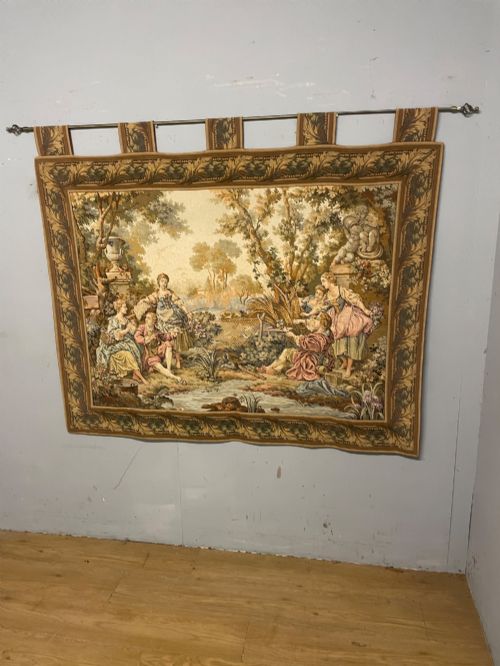
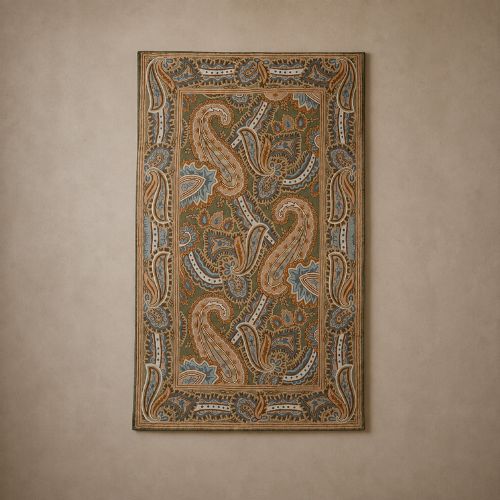
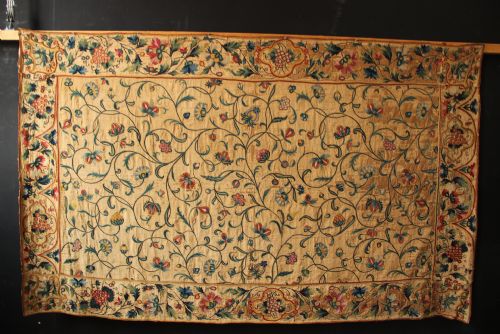
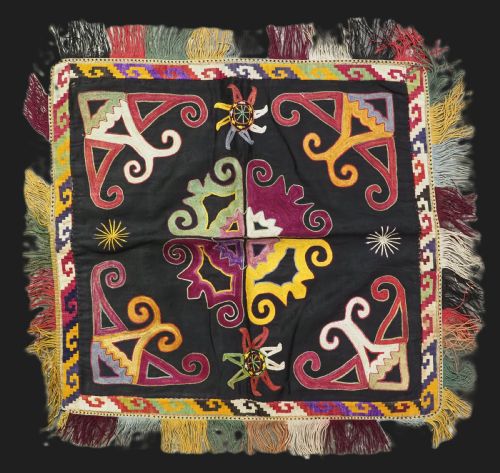
A decorative antique textile spans wall hangings, tapestries, tribal dowry pieces, and carved printing blocks created across the seventeenth, eighteenth, nineteenth, and early twentieth centuries. Buyers seeking these items encounter large crewelwork panels, intricate Uzbek Suzanis, nomadic Turkmen bags, and European verdure wall coverings.
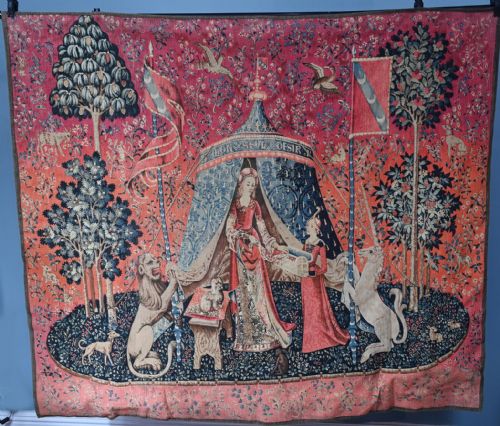
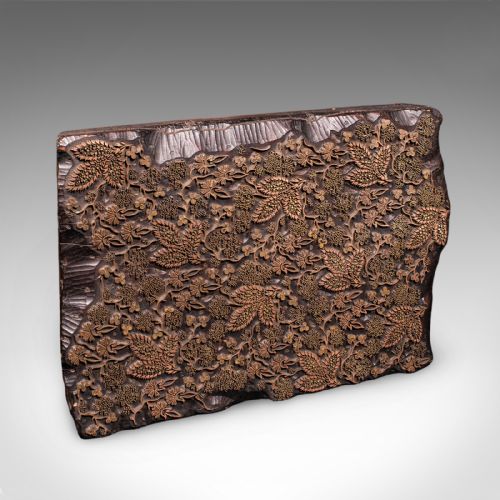
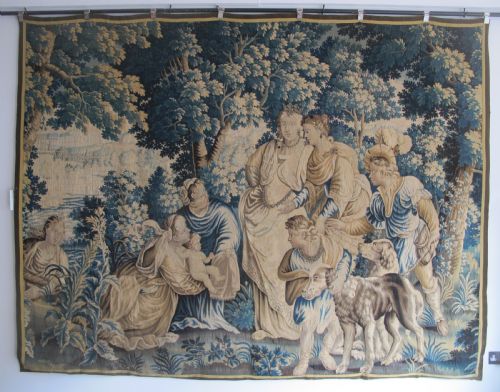
The selection ranges from grand French Aubusson tapestries and Flemish verdure scenes to Central Asian tribal hangings and English brass-inlaid wallpaper printing stamps. These pieces function primarily as wall art or tactile room decoration, carrying the distinct visual language of diverse historical traditions.
Tribal weaving traditions from Central Asia and Persia appear alongside formal European embroidery and classical panels. This variety allows collectors to source everything from a delicate silk cushion cover to a large room-anchoring tapestry.
Materials and construction methods
Makers utilised natural fibres including wool, silk, cotton, and linen, often combining them with metal thread for added lustre in formal European panels and tapestries. Natural dyes provide the enduring palette seen in tribal torbas, suzanis, and nomadic salt bags.
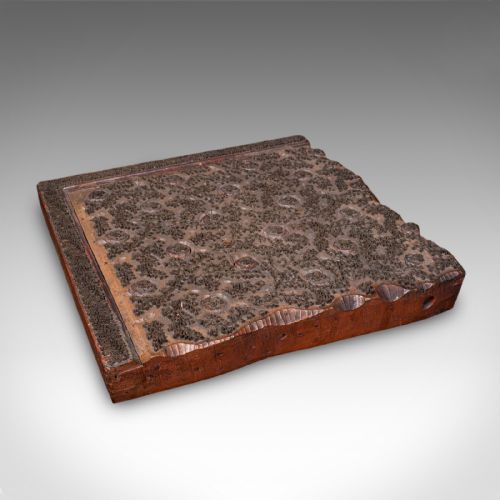
Construction techniques vary widely from needlework crewel embroidery and fine silk stitchery to traditional loom weaving and hand-knotting. Carved wood and brass printing blocks demonstrate the mechanical side of textile design, used alongside spinning wheels and distaffs.
Spinning wheels and wooden distaffs sit quietly among the soft threads, ready to start the textile journey from the very beginning.
Assessing quality and preservation
Quality rests upon the fineness of the weave, the intricacy of the stitch work, and the stability of the foundational fabric. Master craftsmanship shows in the precision of tribal motifs, the depth of natural dye colours, and the survival of original borders.
Condition plays a central role, distinguishing intact panels and complete bag faces from heavily fragmented carpets or worn tent bands. The clarity of design execution in carved printing blocks and the tightness of knotting in nomadic work separate standard items from superior examples.
The Decorative Textile Glossary
- Suzani
- An embroidered tribal hanging from Central Asia, traditionally worked in silk on a cotton ground as part of a dowry. These pieces often feature bold floral medallions and scrolling vine patterns.
- Crewelwork
- A type of embroidery using wool yarn on a linen or cotton twill fabric. It allows for complex, textured designs across large wall panels and curtains.
- Verdure tapestry
- A European woven wall hanging dominated by lush foliage, trees, and often animals or distant landscapes. These scenes were popular in Flemish and French weaving centres.
- Torba
- A small Turkmen storage bag used within a tent for household goods. They feature characteristic tribal guls and banded geometric borders.
- Kalamkari
- A type of hand-painted or block-printed cotton textile from India. These narrative pieces often depict traditional temple stories and mythological scenes.
Decorative Textile: Frequently Asked Questions
How do I hang a heavy textile safely?
Large tapestries and heavy wool panels require proper weight distribution to prevent distortion of the fabric fibres. A professional conservator often attaches a supportive linen backing and a matching hanging sleeve.
For rigid items like carved printing blocks or framed panels, secure wall fixings suited to the specific weight of the wood and brass elements must be used.
What is the difference between a suzanis and a torba?
A suzani is a large, embroidered wall hanging or bed cover created in Central Asia using colourful silk threads on a light cotton foundation. They were traditionally made by brides for their wedding.
A torba is a much smaller tribal storage bag made by Turkmen nomads, usually featuring geometric medallion motifs known as guls and dense wool weaving.
How can I tell the age of a textile?
Dating relies on examining the materials, the types of dyes used, and the construction methods employed by the maker. Natural dyes and hand-spun wool or silk fibres provide strong clues to nineteenth-century and earlier origins.
Stylistic markers, such as specific tribal border patterns or regional embroidery stitches, also help narrow down the period of creation.