
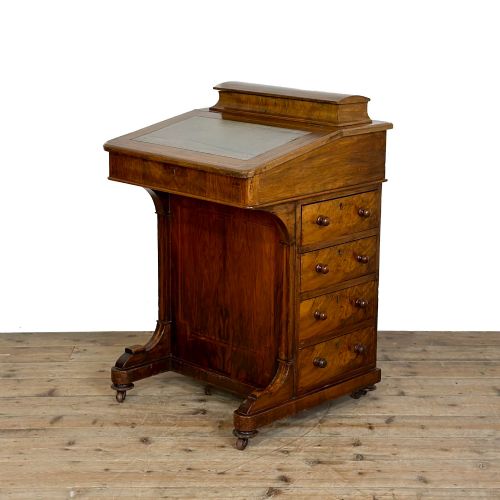
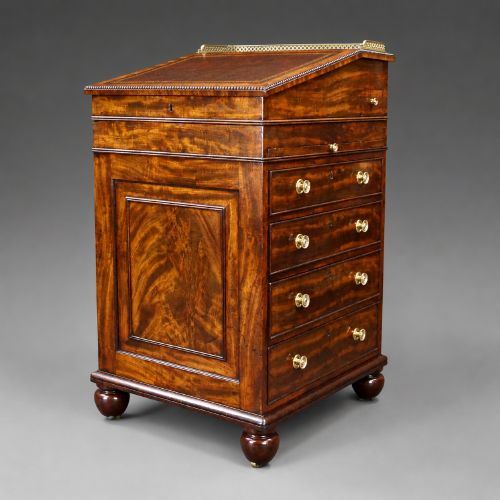
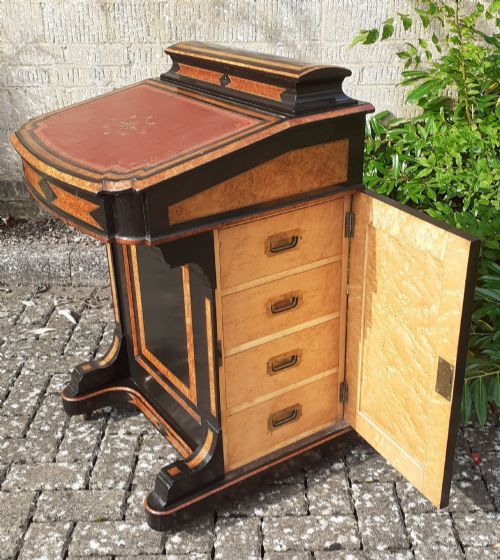
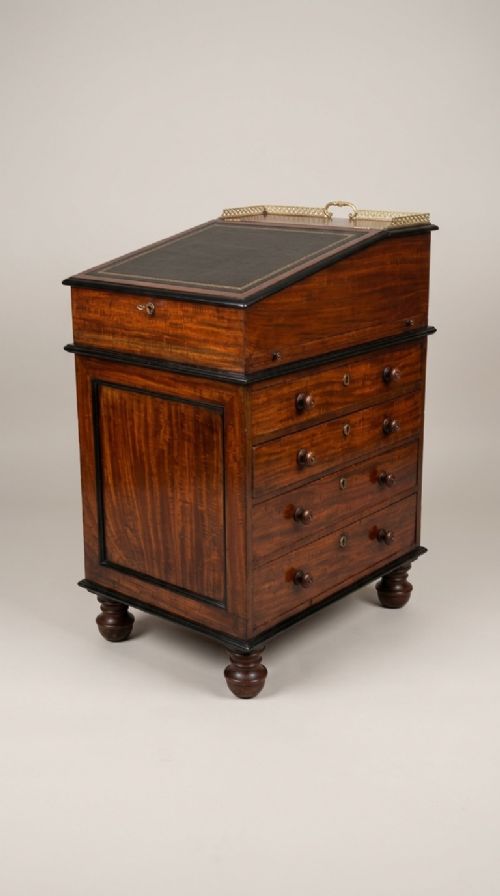




Davenport Desk Drawers
Davenport desk drawers combine compact writing surfaces with concealed storage, prized for their ingenious joinery and elegant proportions in period interiors.
Davenport Desk Drawers
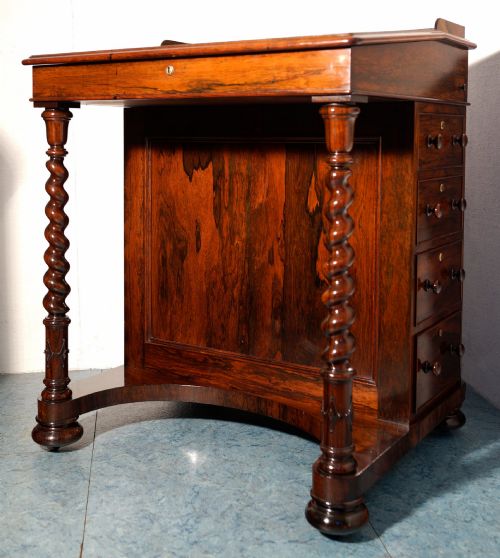
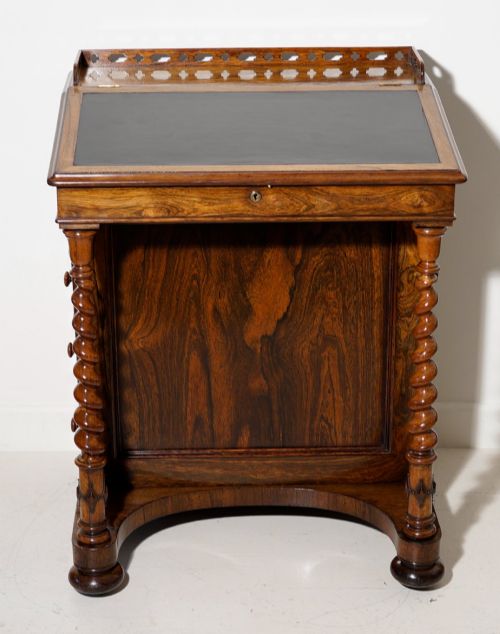
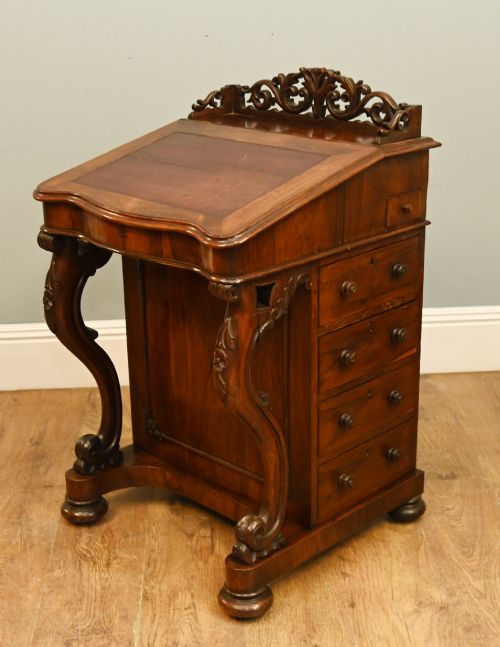
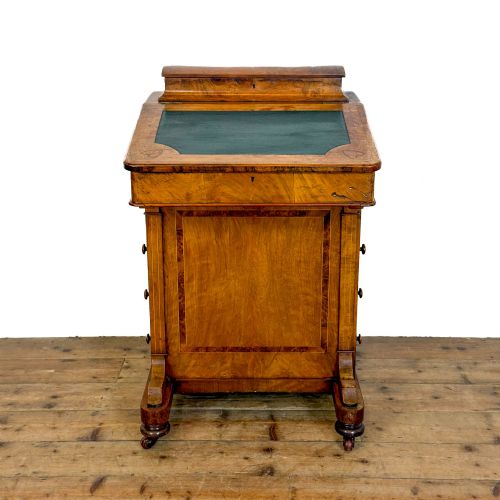
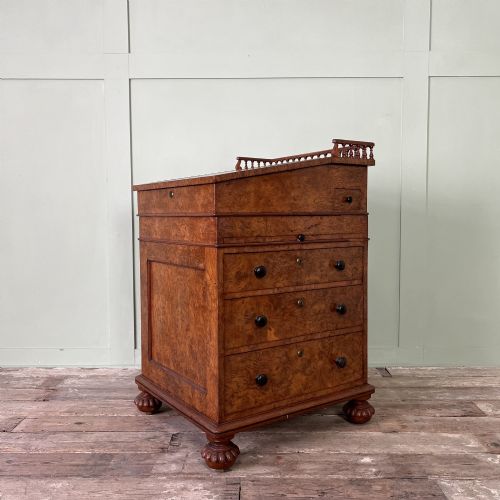
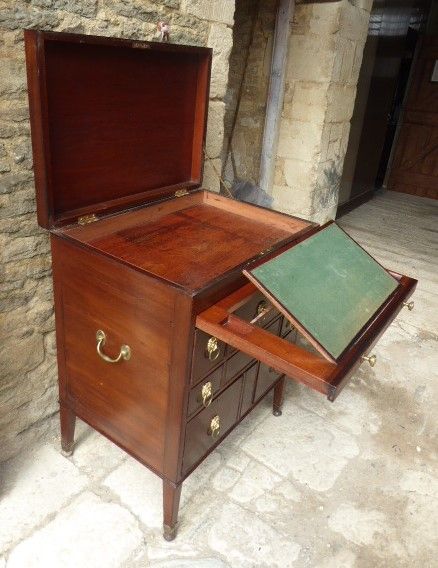
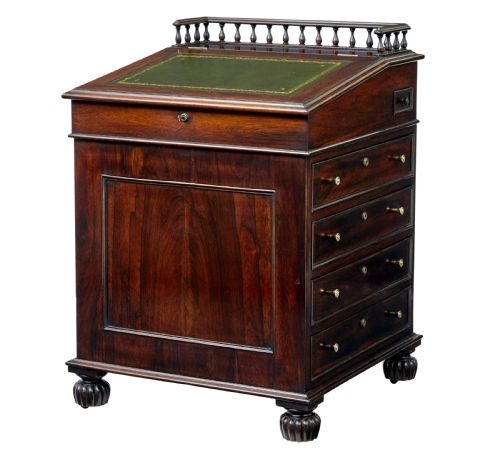
When you search for davenport desk drawers, you encounter compact writing furniture that integrates a sloping desktop with side drawers, appearing primarily across Georgian, Regency, William IV, and Victorian periods. These pieces serve as practical writing stations where the upper slope lifts to reveal stationery compartments, while the pedestals house functional storage.
The versions most common on this page date from the nineteenth century, including early Victorian and later Victorian examples alongside Regency and Edwardian variants. Forms range from standard four drawer setups to specialised designs featuring drawers on both sides or sliding tops.
Materials and Technique
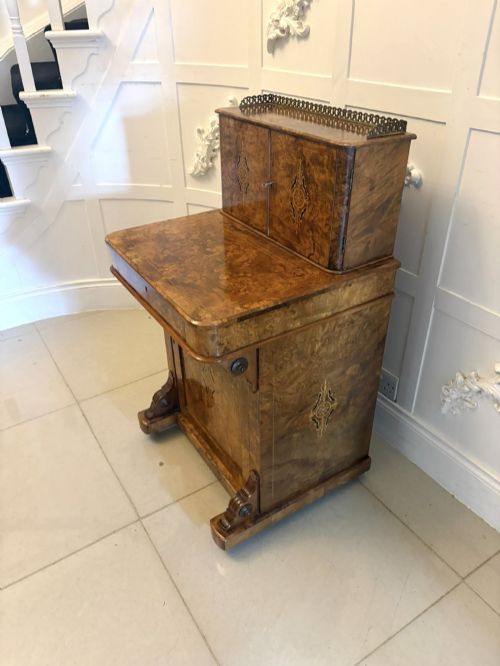
Cabinet makers utilised dense native and exotic timbers, framing carcasses in mahogany and rosewood, or applying decorative veneers of burr walnut, flame mahogany, pollard oak, and amboyna. Surfaces frequently incorporate inset leather writing panels tooled with gold leaf borders, alongside brass hardware, hinges, and castors.
Construction relies on traditional dovetail joinery for the small drawers and internal compartments, with secondary woods supporting the primary show woods. Cabinet makers also integrated clever mechanics such as sliding tops and secret compartments operated by hidden spring latches.
Listings feature mahogany, rosewood, walnut, burr walnut, pollard oak, amboyna, and flame mahogany surfaces across Georgian to Edwardian periods.
Judging Quality
Quality rests on the selection and matching of timber veneers, particularly the grain movement across burr walnut, flame mahogany, and pollard oak surfaces. Finer examples show careful attention to internal secondary timbers and precise hand-cut dovetailing in every drawer.
The sophistication of the mechanism distinguishes superior pieces, such as sliding desktop movement that operates smoothly or well-fitted secret drawers. Maker attribution, evidenced by stamped signatures or distinctive Gillows design traits, elevates a piece significantly above standard commercial production.
Gillows·Gillow and Co
The Davenport Desk Drawers Glossary
- Davenport desk
- A compact writing desk featuring a sloping, hinged desktop above a pedestal base fitted with drawers. The form became popular in the late eighteenth century and remained a staple of Victorian study furniture.
- Flame mahogany
- Timber cut from the fork of the mahogany tree to produce a distinctive, flickering flame-like grain pattern. Cabinet makers reserved this highly decorative veneer for principal exterior surfaces.
- Burr walnut
- Wood taken from walnut tree growths that display intricate, swirling knot patterns. This material was sliced into fine veneers and applied to Victorian and Edwardian Davenport desks.
- Campaign chest
- Portable modular furniture built in sections with brass corners and recessed carrying handles for transport. Examples recorded in these listings demonstrate the robust framing techniques contemporary with Davenport production.
- Marquetry
- The art of applying decorative pieces of veneer to a structure to form geometric or floral pictures. Victorian workshops utilised this technique to adorn walnut writing surfaces.
Davenport Desk Drawers: Frequently Asked Questions
What is a Davenport desk?
A Davenport desk is a compact writing cabinet featuring a sloping top for correspondence and a pedestal base containing small drawers. The form combines a traditional writing slope with vertical storage in a footprint much smaller than a kneehole partner's desk.
Most examples include stationery wells beneath the lid and dummy drawers on one side to balance functional drawers on the other. This efficient layout made them popular for drawing rooms and boudoirs throughout the nineteenth century.
How do I use a sliding top?
The sliding top mechanism allows the upper writing slope to push forward independently of the base drawers. This adjustment alters the seating position and provides comfortable knee room for the writer.
To operate the mechanism safely, release any internal locking catches and slide the superstructure gently along its tracks. Regular wax maintenance on the runners keeps the action smooth.
How do I date a Victorian Davenport?
Dating relies on stylistic shifts in timber choice, hardware, and structural proportions from the nineteenth century. Early Victorian pieces tend to utilise heavy solid mahogany with restrained classical lines.
Later Victorian versions frequently display elaborate burr walnut veneers, marquetry inlay, and serpentine fronts. The presence of secondary construction woods and lock stamps also helps narrow the decade of manufacture.
Where were they placed in rooms?
Period interiors positioned Davenport desks freestanding in the middle of a room or angled beside a window for natural light. Because many feature faux drawers on the reverse side, they look presentable from every angle.
In modern rooms, they function well as writing stations in bedrooms, home offices, or hallways where floor space is limited.