




Dark Wood Wing Chair
These dark wood wing chair pieces are sturdy domestic seats designed to keep out draughts, offering deep comfort by the hearth.

Dark Wood Wing Chair
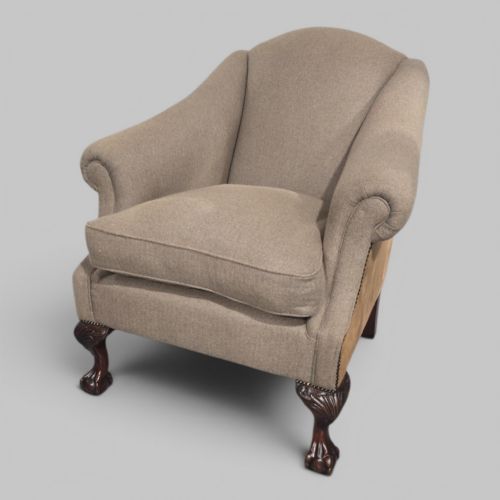
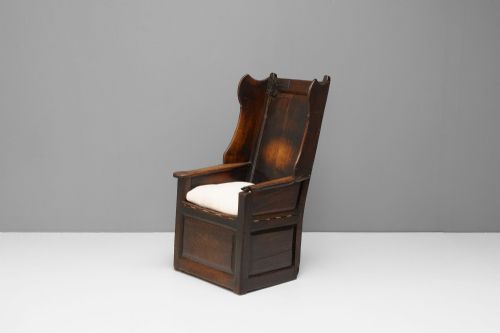
When you search for a dark wood wing chair, you encounter a variety of traditional seating forms designed for the home, ranging from early vernacular designs to later revivals. The selection includes specific regional variants like lambing chairs alongside formal mahogany armchairs from the Georgian period.
The most common examples you meet on this page date from the eighteenth and nineteenth centuries, constructed in solid woods with high backs and protective side wings. These pieces span centuries of domestic seating, incorporating styles such as Queen Anne, Chippendale, and seventeenth-century vernacular.
Forms vary from low back upholstered armchairs to barrel back shapes and child-sized lambing seats. The origin of these items stretches across different periods including the seventeenth, eighteenth, and nineteenth centuries, as well as twentieth-century revivals.
How they were made
Makers utilised solid timbers such as mahogany, oak, fruitwood, and other woods to build the structural frames of these seats. Joinery techniques varied from vernacular pegged construction to refined cabinetmaking seen in Georgian and revival pieces.
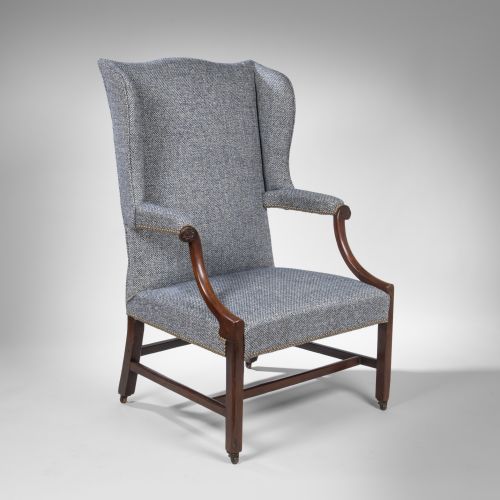
Upholstery materials recorded in the construction include fabric, damask fabric, and velvet, sometimes complemented by brass details. These textiles were fastened to high backs and wings designed to trap warmth around the sitter.
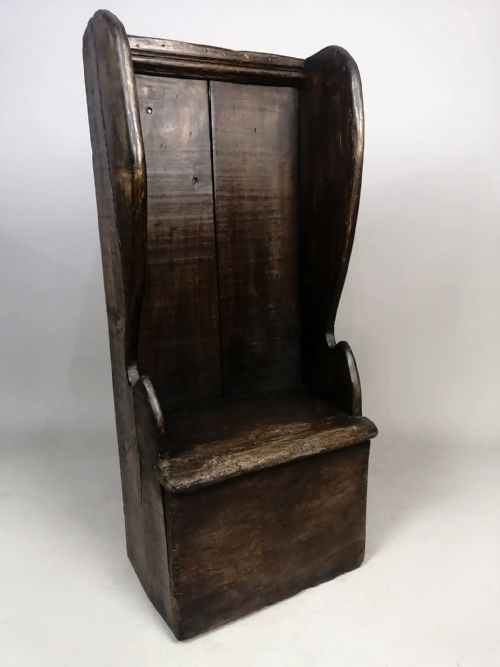
Some early examples were built low to the ground to stay beneath the level of the smoke from a central hearth.
What varies in quality
The distinction between ordinary and superior examples lies in the selection of timber and the refinement of the carved or turned elements. Mahogany frames with well-proportioned arms and legs demonstrate a higher degree of joinery skill than simpler rustic builds.
Upholstery finish and the retention of original textiles or sympathetic recovering contribute to the character of each piece. The integrity of the wooden frame, especially in early vernacular and lambing variants, dictates the overall standing of the item.
The Dark Wood Wing Chair Glossary
- Lambing chair
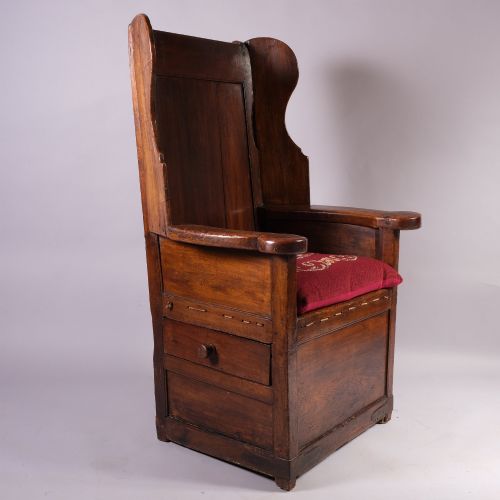
- A traditional vernacular seat featuring a high wooden back, solid sides, and a drawer underneath the seat, originally designed for warmth near the hearth. These pieces often date to the seventeenth and eighteenth centuries.
- Wingback
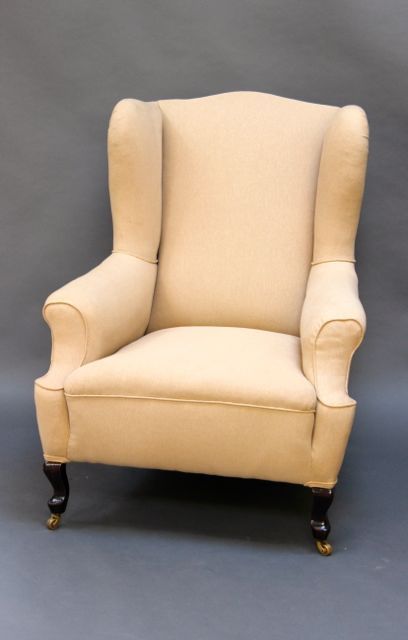
- An armchair with side panels or wings attached to the back, intended to shield the occupant from draughts. This form appears across Georgian, Victorian, and later twentieth-century periods.
- Monopodia
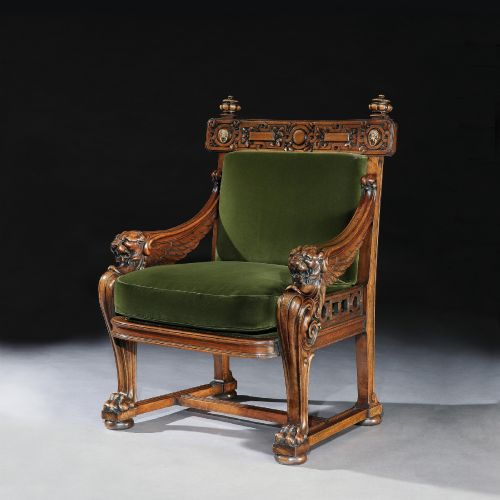
- A furniture support carved as a single lion or animal leg, often associated with classical revival designs. This decorative feature appears on nineteenth-century armchairs influenced by designers such as Thomas Hope.
- Barrel back
- A seating form where the upholstered back curves continuously into the arms to form a tight circular enclosure. This style provides substantial shelter and is found in Georgian examples.
- Vernacular
- Everyday furniture made by local craftsmen using regional traditions and readily available woods rather than following metropolitan fashion. These items often display simple joinery and robust construction.
Dark Wood Wing Chair: Frequently Asked Questions
What is a lambing chair?
A lambing chair is an enclosed wooden seat with high sides and a back, traditionally used in farmhouses to keep warm near the fire. They often include a small storage compartment beneath the seat.
These pieces belong to early vernacular traditions and are typically constructed from timbers like fruitwood or oak.
How do I date a wing chair?
Dating relies on examining the timber species, the style of the legs, and the method of frame construction. Georgian pieces often feature mahogany with characteristic leg forms, while earlier vernacular items show simpler joined oak or fruitwood structures.
Changes in upholstery styles and revival periods also help place an armchair within the eighteenth, nineteenth, or twentieth centuries.
Why did these chairs have wings?
The side panels or wings on these armchairs were originally designed to trap heat from a fireplace and block cold draughts in large rooms. This practical feature defined the silhouette of fireside seating for centuries.
Over time, the form evolved from purely functional wooden shelters into heavily upholstered drawing room seats.
What woods were used?
Makers constructed these seats using sturdy hardwoods and local timbers available in their region. Mahogany and oak appear frequently in formal and vernacular pieces alike.
Fruitwood is also recorded in early vernacular examples, providing a dense and durable frame for everyday use.