

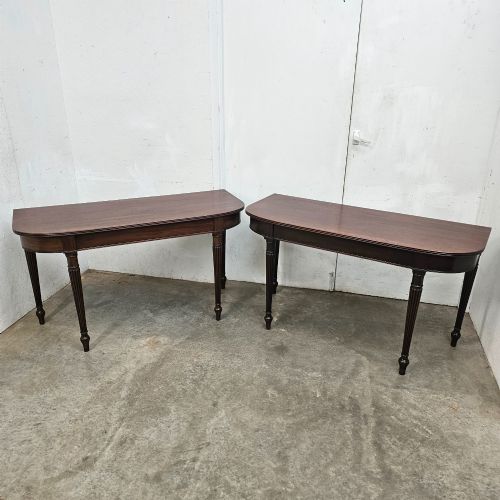
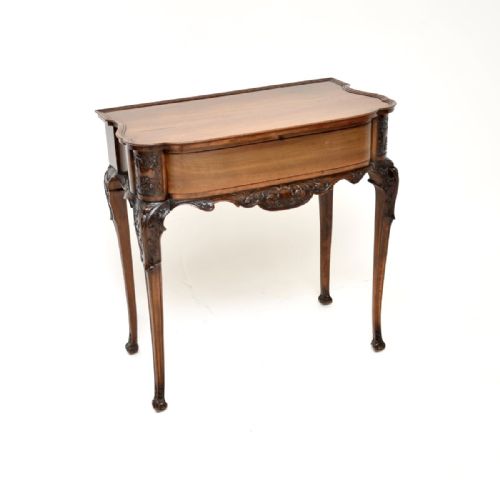
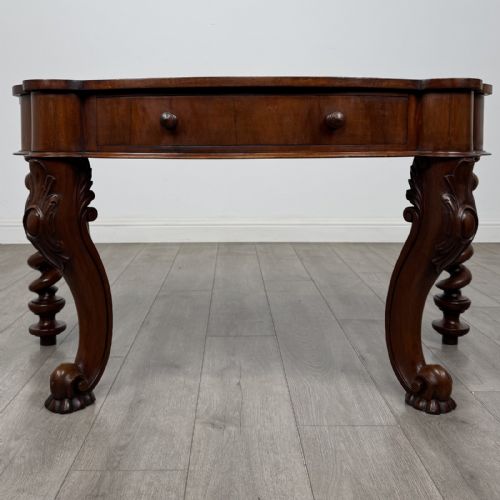
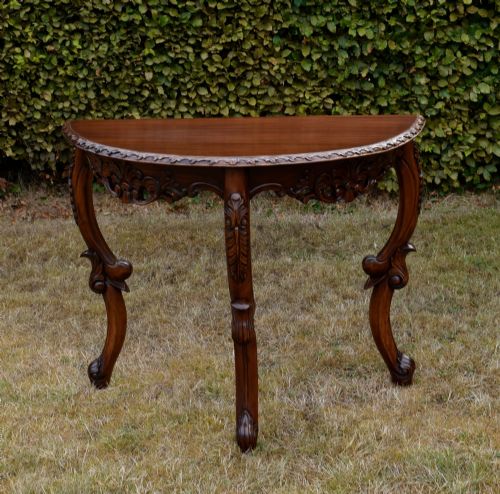
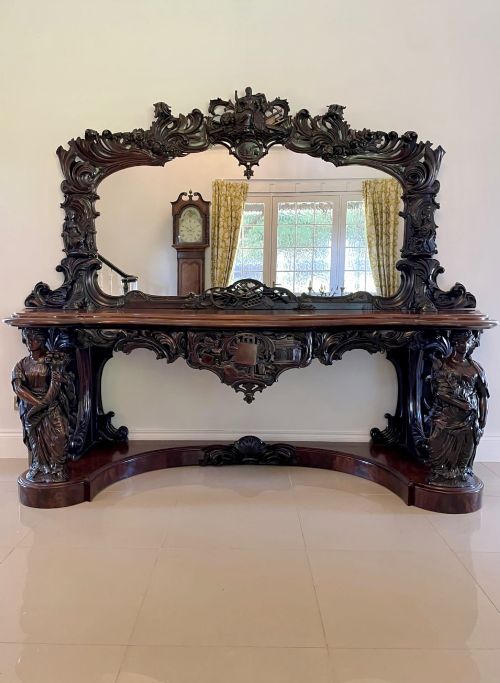
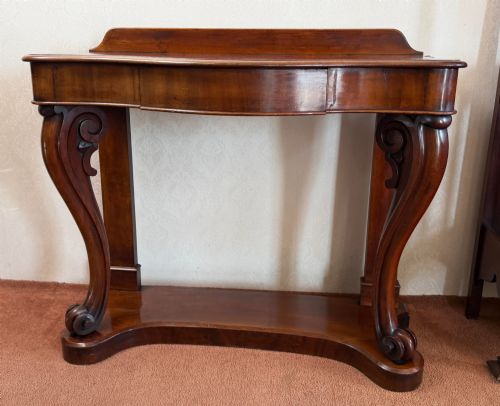
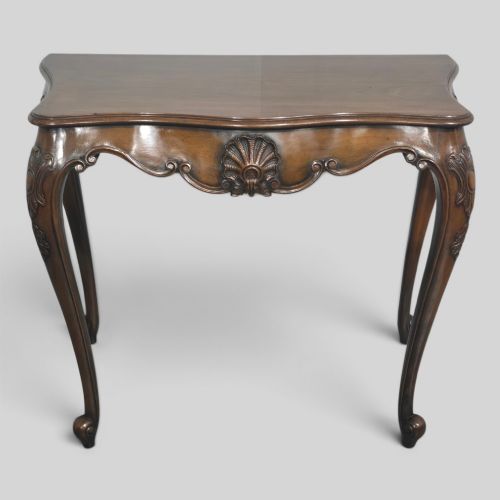
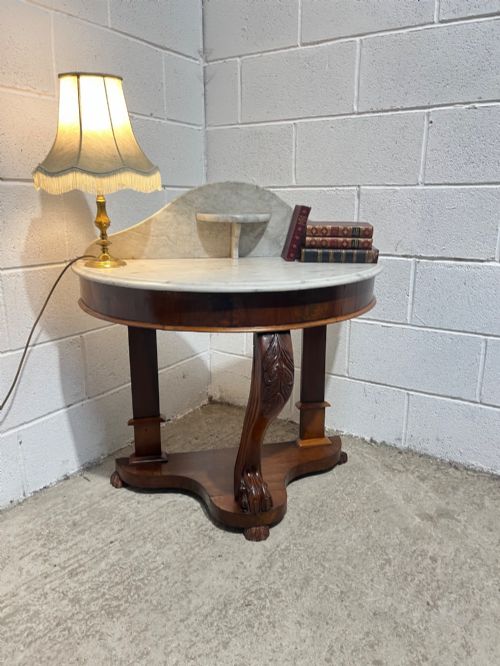


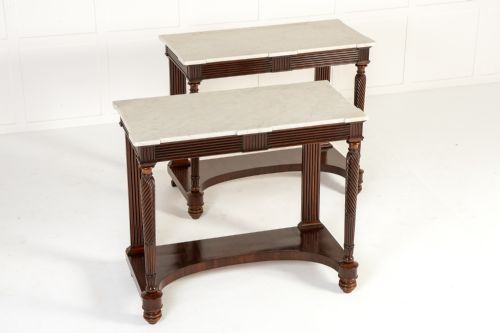
Dark Wood Wall Console
A dark wood wall console anchors a room with rich grain and architectural presence, offering a practical surface mounted firmly against the wall.
Dark Wood Wall Console
A dark wood wall console typically takes the form of a console table, bracket shelf, or pier table designed to sit neatly against a wall surface. These pieces emerge predominantly in mahogany, rosewood, walnut, and oak across periods ranging from the eighteenth century to the early twentieth century.
Buyers encountering these items on this page will most frequently find nineteenth-century and Victorian iterations, alongside Regency, Georgian, and twentieth-century Revival examples. Forms vary from demi-lune shapes and serpentine fronts to narrow serving tables and carved wall brackets.
Origin and stylistic influences stretch from English workshops to Italian, French, and Anglo-Indian makers. The overarching function remains the display of decorative objects or the provision of a compact surface in hallways, reception rooms, and drawing rooms.
Materials and Construction
Makers utilised dense timbers such as Cuban mahogany, padauk wood, rosewood, and red walnut, often selecting them for deep natural colour and capacity for intricate carving. Surfaces frequently pair these dark hardwoods with inset marble tops or incorporate brass mounts and glass elements.
Cabinetmakers and carvers employed traditional joinery combined with hand-carved ornamentation, evident in serpentine shaping, demi-lune curves, and structural corbels. Figures working in regional British, Italian, and Anglo-Indian traditions applied distinct regional carving styles directly to the solid and veneered timbers.
Dark Wood Wall Console Retail Price Guide 2026
Typical asking prices for dark wood wall console among the pieces listed under this phrase on Sellingantiques today, from the lower quarter to the upper quarter. They describe what is for sale here now, not the wider market.
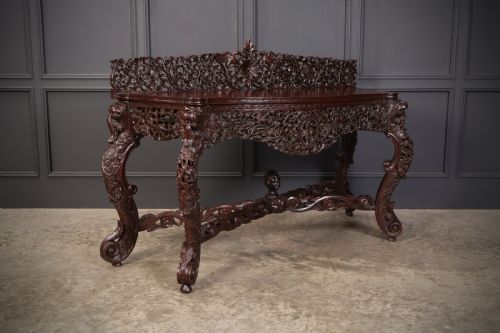
One exceptional nineteenth-century carving carries the signature of master carver Luigi Frullini, depicting the devil himself in red walnut.
Assessing Quality
Quality rests in the depth of timber selection, the crispness of hand-carved detail, and the integrity of structural joinery. Pieces featuring dense Cuban mahogany or figured rosewood with sharp, unblemished carving stand apart from plainer or later revival iterations.
The integration of secondary materials, such as heavy fitted marble slabs and precise brass detailing, elevates a piece. Proportion also dictates standard; narrow profiles and balanced serpentine or demi-lune lines demonstrate greater design success than bulky or awkward assemblies.
Luigi Frullini·Gillows
The Dark Wood Wall Console Glossary
- Demi-lune
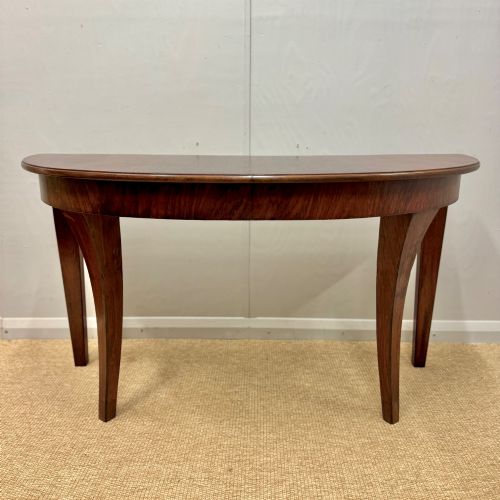
- Half-moon shape. This curve appears frequently on console tables designed to fit flat against a wall.
- Pier table
- A table designed to stand against the wall between two windows. These often sit beneath a matching wall mirror.
- Serpentine
- A line or surface that curves outward at the centre and inward at the sides. This profile adds fluid movement to wooden furniture tops.
- Corbel
- A structural bracket projecting from a wall to support a weight. In console furniture, this often takes decorative carved forms.
Dark Wood Wall Console: Frequently Asked Questions
How do I style a dark wood wall console?
Pair the console with a complementary wall mirror or bracket shelf to create a balanced vertical focal point in a hallway or reception room.
Keep surface objects minimal to let the rich grain of the mahogany, walnut, or rosewood remain the primary visual feature.
What is the difference between a console table and a pier table?
A console table is designed to stand against a wall, frequently supported by wall brackets or front legs with a flat rear edge.
A pier table specifically occupies the wall space between two architectural windows, historically paired with a matching wall mirror above it.
How do I identify a Regency period console?
Regency pieces date from the early nineteenth century and often exhibit Neoclassical influences, clean architectural lines, and dark mahogany or rosewood timbers.
Look for restrained classical carving, concave leg configurations, and proportions intended for formal Regency interiors.
Can these consoles support heavy marble tops?
Yes, many nineteenth-century console tables are built with heavy marble slabs inset into the wooden framework.
The dense hardwoods such as mahogany and oak provide the structural strength necessary to support heavy stone without warping.