




Dark Wood Vanity Chest
These dark wood vanity chest options span dressing tables, chests, and portable travel boxes crafted from rich timbers for daily personal grooming.
Dark Wood Vanity Chest
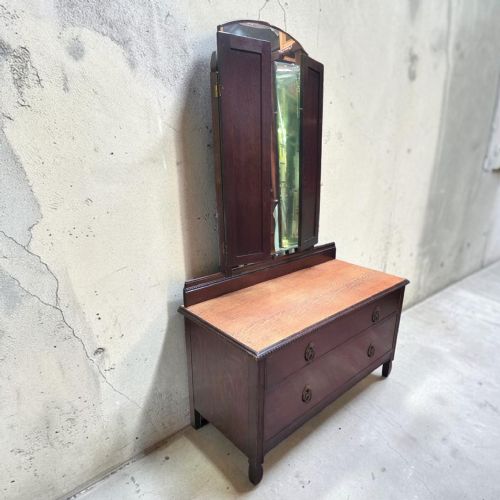
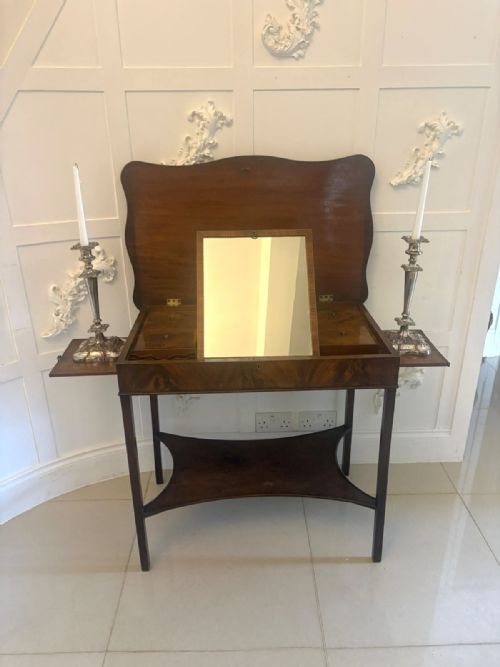
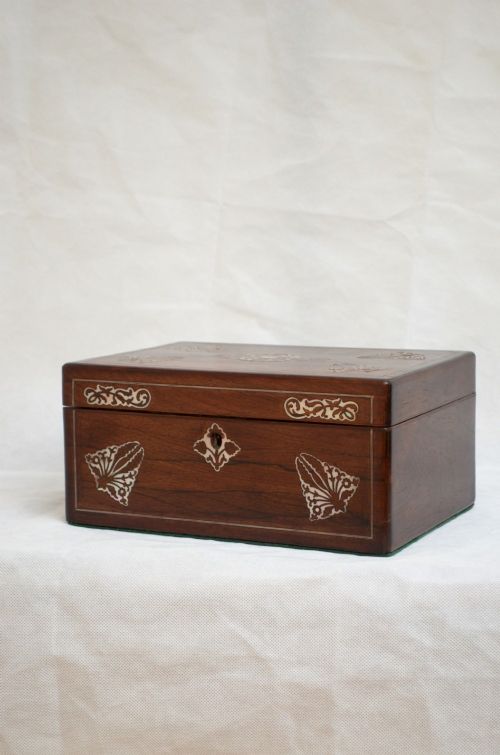
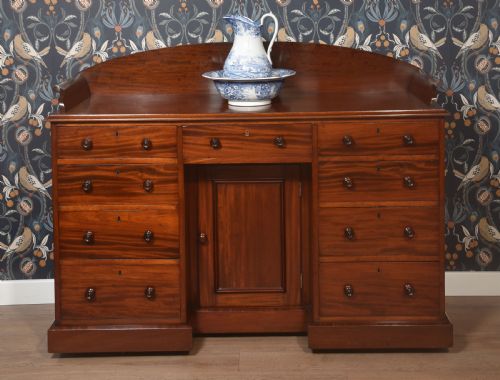
A dark wood vanity chest encompasses a broad range of forms, from large freestanding Victorian and Georgian dressing tables with triple mirrors down to compact tabletop jewellery boxes and travelling cases. Buyers seeking a dark wood vanity chest will encounter substantial mahogany dressing chests alongside rosewood and coromandel boxes fitted with trays and interior compartments.
The selection extends across multiple eras, featuring George II, Georgian, Victorian, and Edwardian examples, plus revival styles such as Chippendale and Jacobean. Alongside British pieces, the listings include Chinese Hongmu travelling boxes, demonstrating the global reach of these personal grooming pieces.
How they were made
Cabinet makers utilised dense, durable timbers including mahogany, rosewood, oak, and coromandel to construct these pieces, often enhancing the surfaces with marquetry inlay and contrasting boxwood stringing. Smaller travelling boxes and tabletop cabinets frequently incorporate delicate mother of pearl detailing alongside fitted glass elements and brass hardware for locks and handles.
Interior fittings reveal careful construction through lined compartments, dedicated trays for trinkets, and specialised spaces for travelling bottles and mirrors. Structural elements range from robust campaign washstands to intricate drawer arrangements within dressing chests.
Travelling boxes occasionally retain secret compartments designed to hide family letters and private fortunes from inquisitive guests.
What varies in quality
Quality rests upon the selection of timber grain, the precision of marquetry inlay, and the integrity of the brass or mother of pearl ornamentation. Pieces displaying refined proportions and sophisticated period stylistic details, such as Georgian cabinetry or George II design traits, sit at the higher end of the scale.
The sophistication of the internal fittings, including custom trays, secure locks, and the condition of textile linings, distinguishes standard utility pieces from finer cabinet work. Preservation of original surfaces and harmonious proportions across mirrors and chests further mark out superior examples.
The Dark Wood Vanity Chest Glossary
- Campaign washstand
- A portable piece of furniture designed for military use or travel, featuring folding elements and robust brass corners.
- Marquetry
- Decorative woodwork where pieces of veneer are fitted into a ground to form geometric or floral patterns.
- Hongmu
- A Chinese term for dense hardwoods, often translated as red wood, utilised in traditional furniture and boxes.
- Coromandel
- A heavy, dark-grained tropical Asian timber highly prized for luxury Victorian boxes and cabinets.
- Boxwood stringing
- Inlay work using thin lines of pale boxwood to create contrasting borders on darker furniture surfaces.
Dark Wood Vanity Chest: Frequently Asked Questions
What is a dark wood vanity chest?
A dark wood vanity chest is a term covering both large dressing tables with mirrors and smaller tabletop storage boxes made from timbers like mahogany and rosewood.
These pieces were traditionally used for personal grooming, storing jewellery, and keeping cosmetics organised in bedrooms or during travel.
How do I date a mahogany vanity chest?
Dating relies on observing structural characteristics, timber choice, and decorative styles aligned with periods like the Georgian era or Victorian times.
Cabinet construction methods and the presence of specific revival styles, such as Chippendale influence, help narrow down the decade of manufacture.
Where were travelling vanity boxes used?
Travelling vanity boxes accompanied owners on long journeys, designed to secure valuables, toiletries, and jewellery safely inside fitted compartments.
Their robust construction in rosewood or coromandel with brass hardware allowed them to withstand the rigours of 19th-century transport.
How do I care for rosewood furniture?
Rosewood surfaces benefit from minimal interference, gentle dusting, and protection from direct sunlight and sudden humidity changes.
Maintaining stable environmental conditions preserves the natural oils and the rich grain patterns of the timber over time.