


Chinese Jewellery Box
A chinese jewellery box brings together intricate craftsmanship and practical storage, offering a tangible piece of history for your dressing table.
Chinese Jewellery Box
When you search for a chinese jewellery box, you encounter items ranging from compact travelling chests to elaborate table cabinets created across the nineteenth and early twentieth centuries. The pieces on this page span diverse stylistic roots, including Qing Dynasty, Chinese Export, and Chinoiserie traditions.
Most examples function as small storage receptacles designed for trinkets, keepsakes, or travelling essentials, often taking the form of tabletop chests, caskets, or fitted cases. You will frequently find variants dating from the Victorian and Edwardian eras alongside items from the Chinese Republic Period.
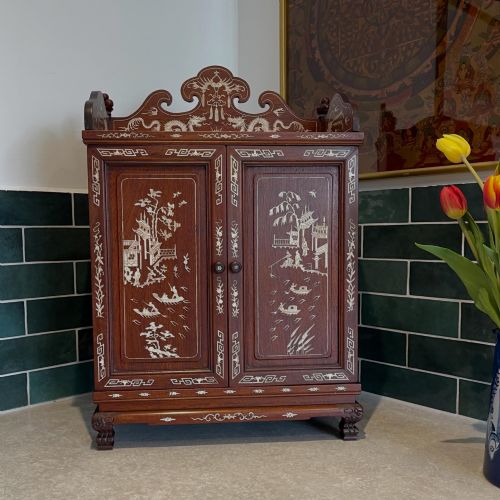
Forms include swing out clerical cases, hexagonal trinket boxes, and hardwood specimen cases suited for collectors. These versatile objects reflect both domestic Chinese use and goods tailored for the export market.
Materials and Technique
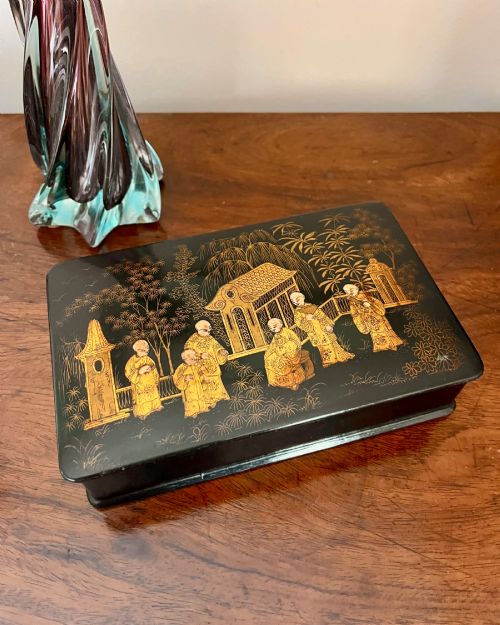
Makers utilised dense timbers such as rosewood, hongmu, and elm, often applying rich coats of lacquer to the wooden structures. These surfaces were frequently embellished with gold leaf or detailed with inlaid mother of pearl.
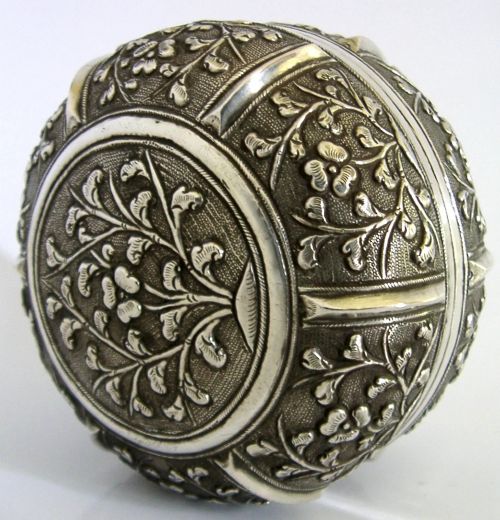
Metalwork plays a key role, with solid silver, copper, and brass mounts, hinges, and dragon motifs integrated into the design. Artisans employed carving techniques on materials like jade and hardwood to build texture and depth.
Certain travelling cases include swing out compartments designed to keep a Victorian cleric organised on the move.
Evaluating Quality
Quality rests upon the precision of the joinery and the depth of the carving or inlay work visible across the hardwood and lacquer surfaces. Finer items display meticulous attention to detail in their brass or silver mounts and internal fittings.
The sophistication of the painted or gilded decoration dictates the tier of the piece, with complex pictorial scenes holding greater visual weight than simpler patterns. Preservation of the original materials and structural integrity also distinguishes top examples.
Wang Hing And Company
The Chinese Jewellery Box Glossary
- Hongmu
- A dense, dark tropical hardwood used in traditional Chinese furniture and box making. It translates to red wood and provides a heavy, durable structure.
- Chinoiserie
- European artistic styles that reflect Chinese artistic influences, popular in decorative arts and box manufacturing. This style blends Western forms with Eastern motifs.
- Export silver
- Items created in China by local silversmiths specifically for Western markets, often marked with artisan stamps. These pieces frequently feature dragon designs or traditional chased patterns.
- Mother of pearl
- Iridescent inner layer of mollusc shells used for inlay work on lacquer and wooden boxes. It catches the light and adds contrast to dark timber.
Chinese Jewellery Box: Frequently Asked Questions
What were chinese jewellery boxes used for?
These boxes served to store small valuables, rings, and personal trinkets securely at home or during travel. Many featured specialised compartments and swing out trays for organised storage.
Larger table cabinets functioned as decorative specimen cases or portable storage for daily accessories. Their clever internal layouts accommodated delicate items safely.
How do I date a chinese jewellery box?
Dating relies on identifying materials like nineteenth century lacquer, specific silver hallmarks, and construction styles such as Victorian campaign cases. Maker marks and export stamps also provide clear chronological markers.
Stylistic shifts between Qing Dynasty designs and later Chinese Republic or Edwardian pieces help narrow down the period of manufacture.
How should I care for lacquered wood?
Keep lacquered and wooden surfaces away from direct sunlight and dramatic humidity changes to prevent the finish from cracking. Dust gently with a dry, soft cloth.
Avoid using harsh chemical polishes or modern cleaning sprays on antique lacquer and inlaid mother of pearl.