

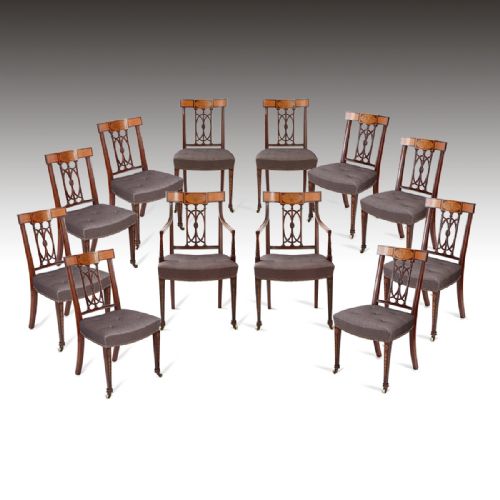
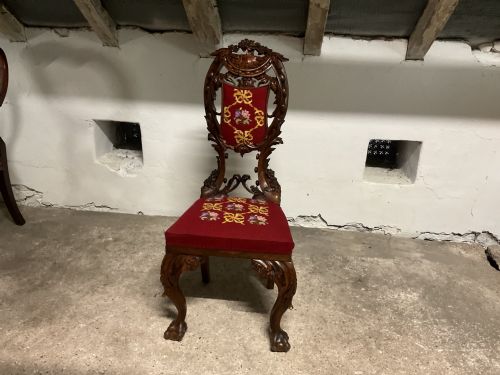
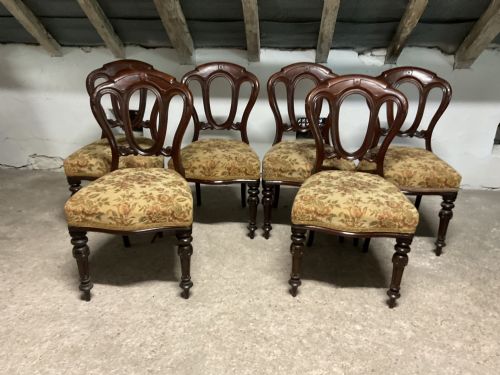
Dark Wood Upholstered Chair
A dark wood upholstered chair brings warmth and solidity to a room, offering a functional seat grounded in centuries of cabinet-making tradition.
Dark Wood Upholstered Chair
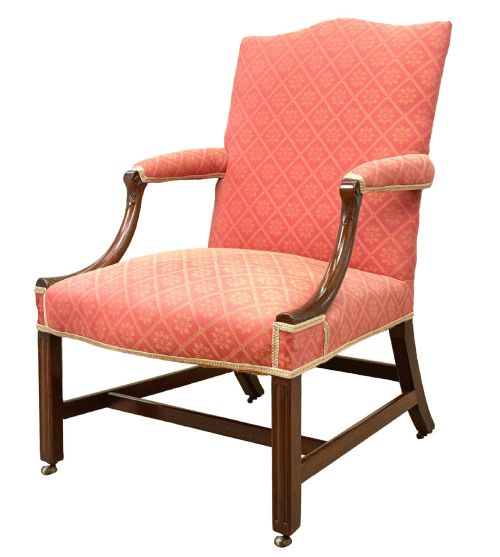
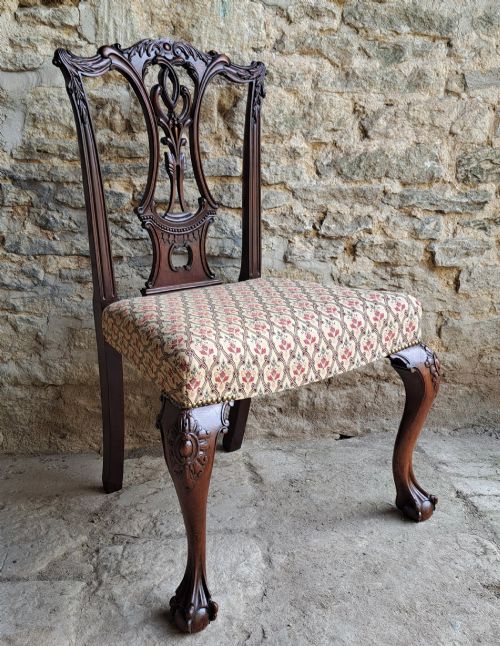
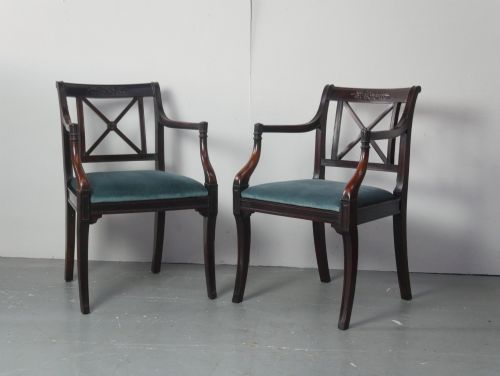
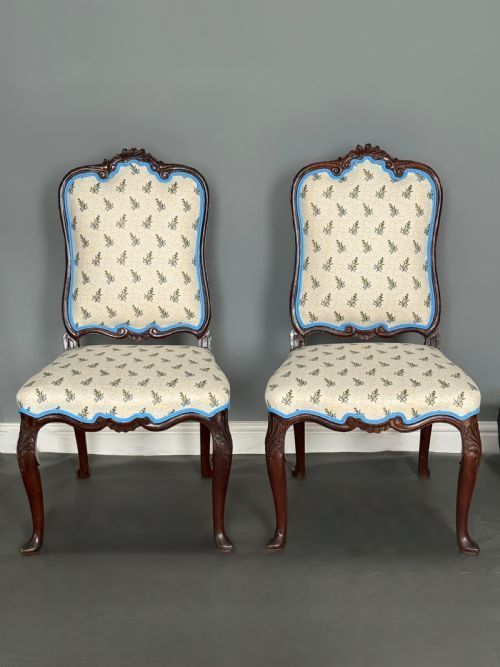
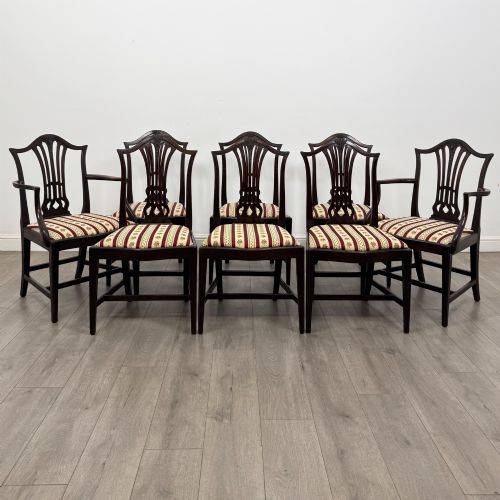
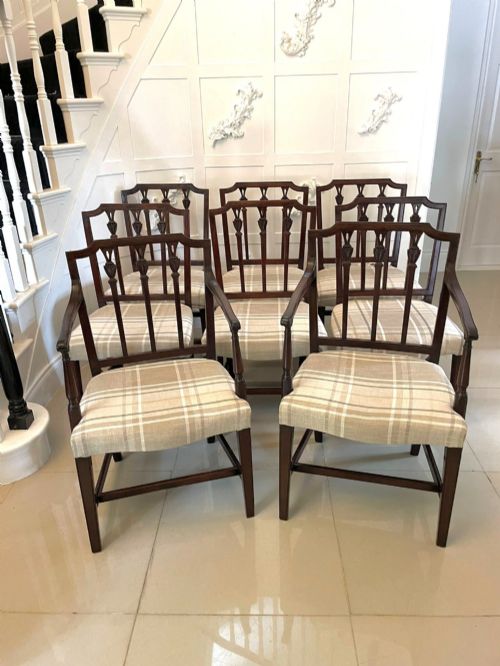
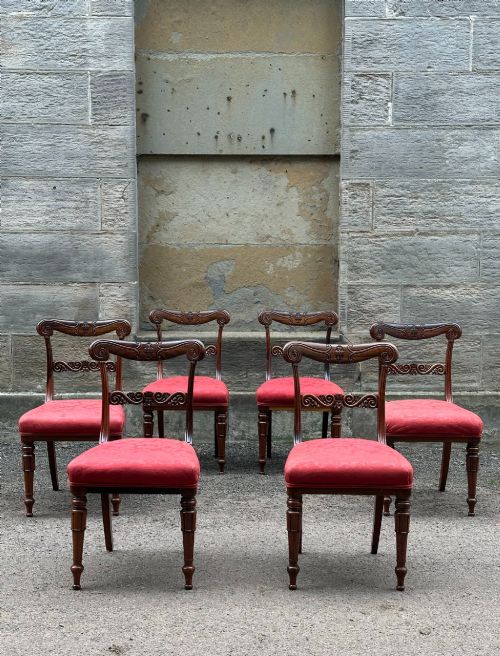
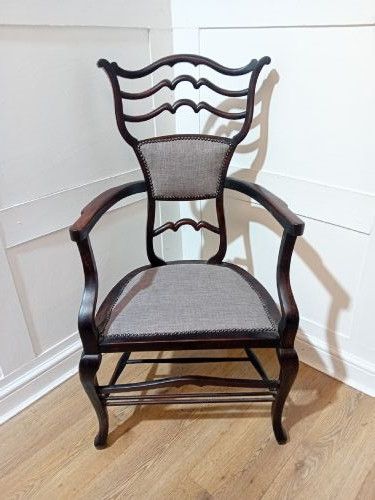
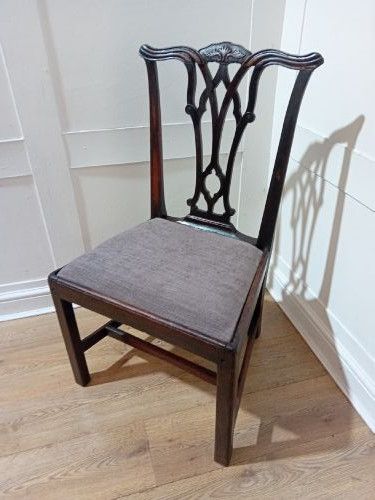
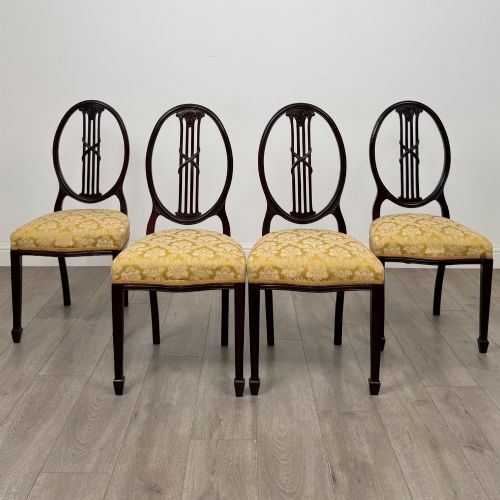
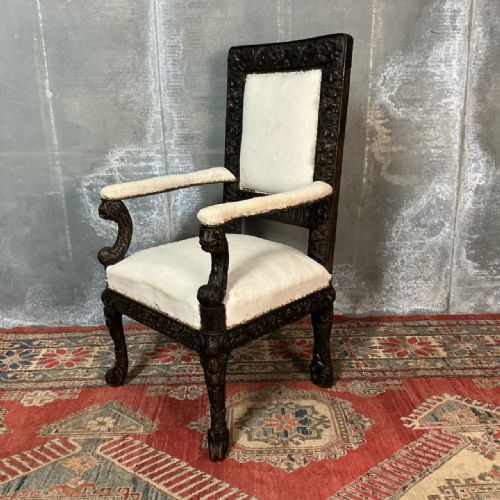
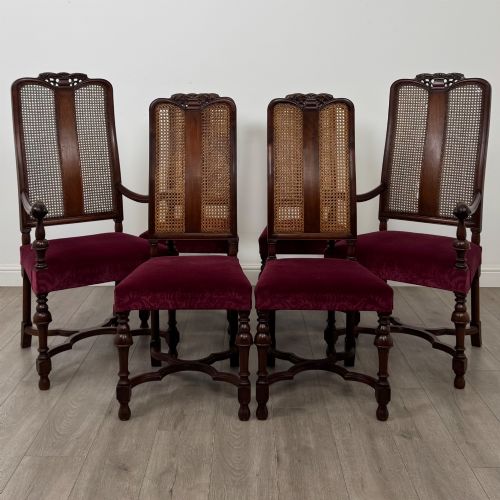
Buyers exploring this selection encounter a variety of forms including dining chairs, armchairs, side chairs, hall chairs, rocking chairs, settees, and piano stools. The physical evidence spans multiple eras, drawing heavily from the 18th century, Victorian period, Regency, and Edwardian times.
The materials recorded in the inventory range from robust timbers like mahogany, rosewood, and oak paired with diverse fabrics, velvet, textiles, and upholstery, sometimes accented with brass. These pieces reflect stylistic influences such as Chippendale, Hepplewhite, George III, and Baroque.
The most frequently met examples on this page are dining chairs and armchairs constructed from mahogany or rosewood, often produced in large sets or pairs. Their construction reflects the prevailing domestic needs of their respective centuries, from formal dining rooms to private libraries.
Materials and construction techniques
Makers relied primarily on dense hardwoods such as mahogany, rosewood, and oak for the structural frames, providing the necessary strength for daily use. These timbers were frequently hand-carved with intricate details like shield backs, scroll carvings, or lyre shapes.
Upholstery techniques involved securing textile, fabric, or velvet over supportive stuffings and springs within the wooden framework. Brass elements occasionally appeared as castors or decorative tacks, completing the assembly of the seat.
Listings feature items spanning the 18th century through the Edwardian era, constructed primarily from mahogany, rosewood, and oak.
Markers of distinction in manufacture
The calibre of a dark wood upholstered chair rests upon the selection of the timber and the precision of the joinery. Dense, highly figured grain patterns in the mahogany or rosewood indicate superior raw material selection by the cabinet-maker.
Execution of carved details reveals the artisan's skill, distinguishing sharply finished scrollwork and crisp back splats from simpler, mass-produced alternatives. Furthermore, the integrity of the original frame construction dictates whether a piece retains its structural rigidity over centuries of sitting.
Gillows·Alfred Allen of Birmingham·Howard and Sons·Mellier and Co
The Dark Wood Upholstered Chair Glossary
- Shield back
- A chair back shaped in the outline of a heraldic shield, popularised by designers in the 18th century. This silhouette provides a graceful curve that supports the back while showcasing carved wooden details.
- Library chair
- A heavy, comfortable armchair designed for reading rooms, frequently upholstered in leather or fine fabric. These seats often feature padded armrests and sturdy wooden frames.
- Hall chair
- An upright wooden seat intended for entrance halls rather than prolonged lounging. They typically lack plush upholstery and display prominent family crests or carved wood panels.
- Rosewood
- A dense, heavily figured tropical hardwood prized for its dark purple-brown colour and rich grain. It appears frequently in high-status 19th-century dining and parlour seating.
- Chippendale style
- A design framework inspired by 18th-century cabinet-maker Thomas Chippendale, characterised by intricate pierced splats and cabriole legs. Pieces in this style often employ carved mahogany.
Dark Wood Upholstered Chair: Frequently Asked Questions
How do I identify a Regency chair?
Regency seating often incorporates classical motifs inspired by ancient Rome and Greece, such as sabre legs and brass inlay. The timber choice leans heavily towards dark Cuban mahogany or rosewood.
Look for clean lines and restrained ornamentation that set these pieces apart from the heavier, more carved Victorian styles that followed.
Can I mix different dining chairs?
Combining different styles within a dining space is a traditional way to assemble a collection over time. Matching timber tones helps create visual harmony even when the chair forms vary.
Pairs or sets of side chairs work particularly well alongside a larger carver chair at the head of the table.
How should I care for antique wood?
Maintain antique timber by keeping it away from direct sunlight and sudden temperature changes, which cause the wood to dry out and split. Regular dusting with a soft, dry cloth preserves the finish.
Avoid silicone-based polishes, opting instead for traditional beeswax applied sparingly to nourish the grain.