
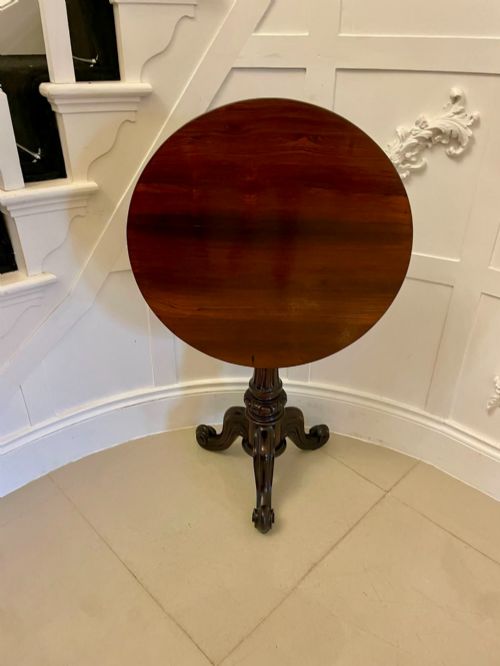


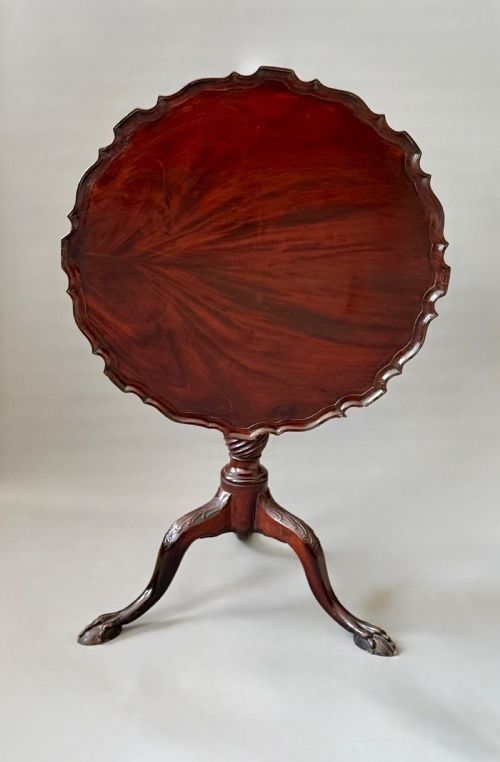
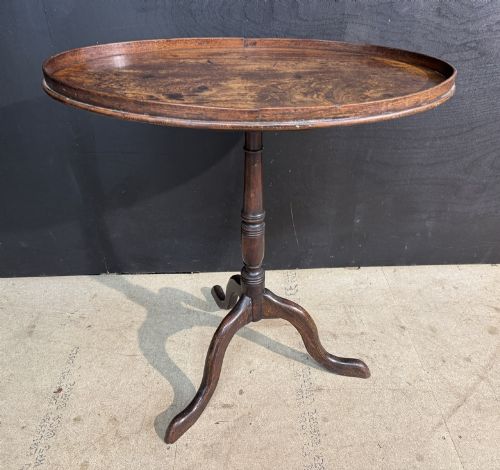
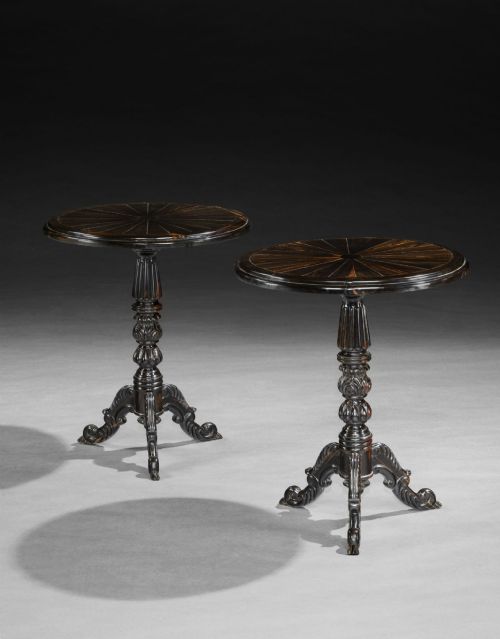
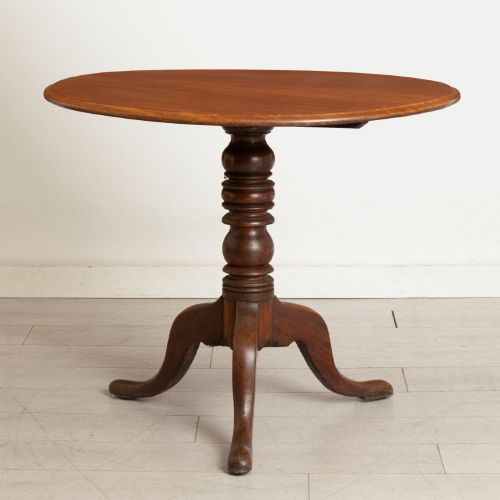
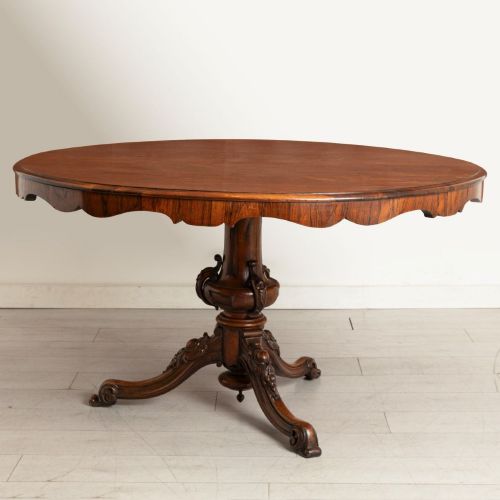
Dark Wood Tilting Table
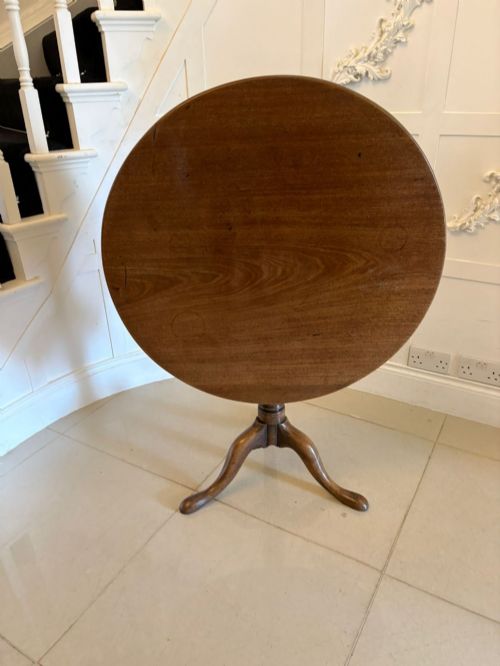
A dark wood tilting table provides a versatile surface that stores flat against a wall when not in use.
Dark Wood Tilting Table
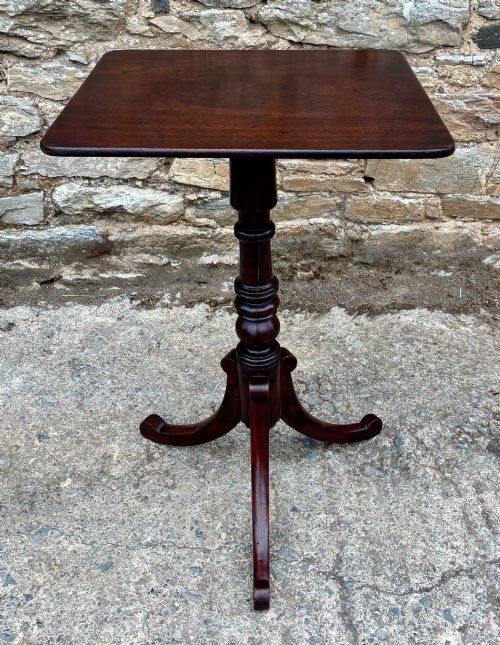
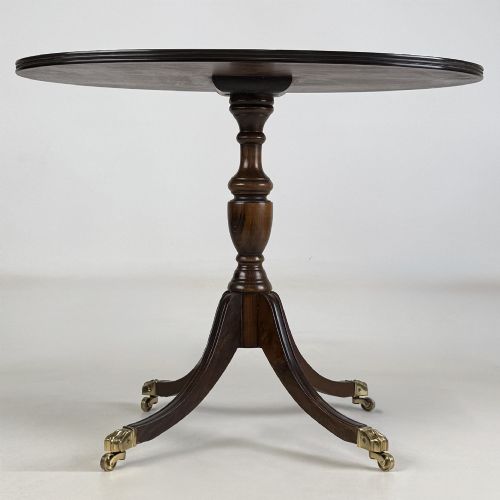
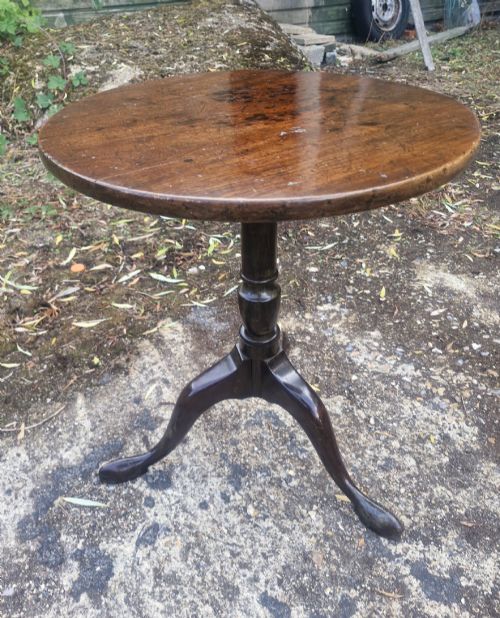
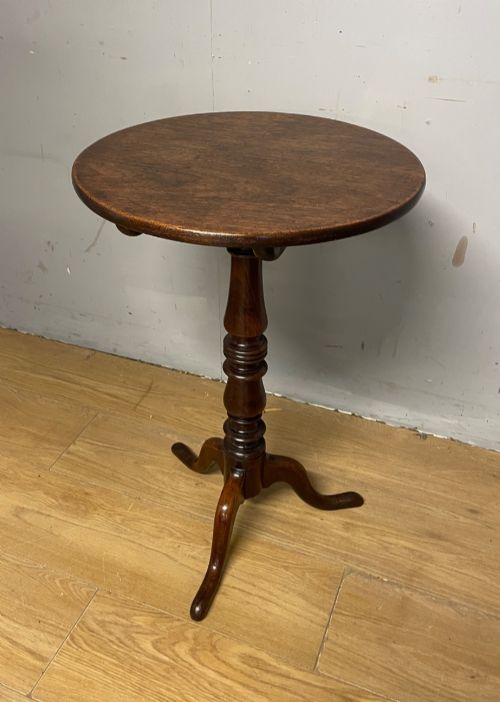
A dark wood tilting table is a multifunctional piece designed to save space, appearing frequently as a tripod wine table, occasional table, or breakfast table. These tables originate primarily from the eighteenth and nineteenth centuries, spanning the Georgian, Regency, William IV, and Victorian periods.
The selection here includes pedestal breakfast tables, side tables, and occasional tables configured with pivoting tops. Mahogany and rosewood dominate the examples, supplemented by walnut, ebony, and burr oak veneer.
Materials and construction
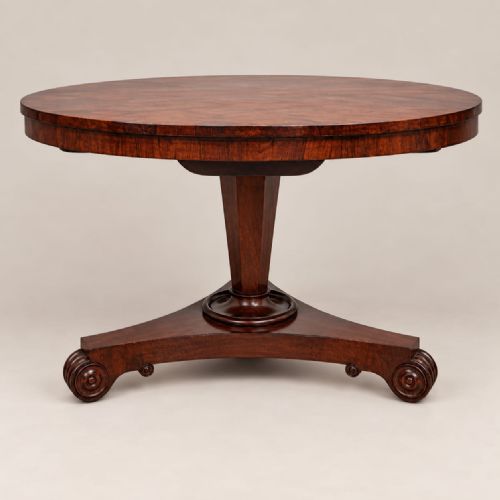
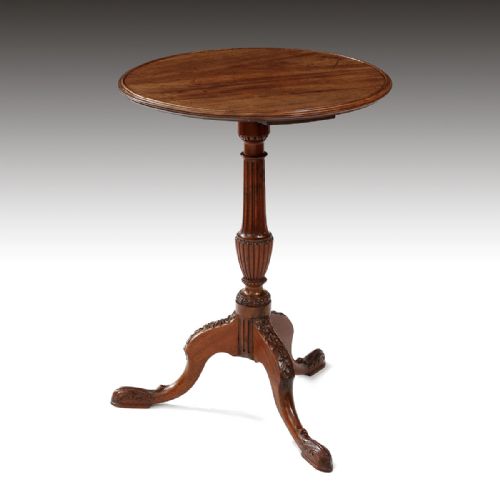
Cabinetmakers utilised dense timbers such as mahogany, rosewood, and walnut for durability and rich grain patterns. Solid planks and figured veneers were mounted to turned pedestals and supported by tripod or triform bases.
The tilting mechanism relies on a clever pivot block and catch, allowing the circular or octagonal top to lock flat for use or swing vertically for storage.
Some clever nineteenth-century tables hide secret drawers within the frieze for storing small valuables.
Craftsmanship and proportion
Quality rests in the crispness of the carved details on the pedestal base and the choice of timber figure on the top. Superior examples display well-matched mahogany grains or finely turned columns without looseness in the tilting mechanism.
Gillows
The Dark Wood Tilting Table Glossary
- Tilt-top
- A table top hinged to pivot from horizontal to vertical. This mechanism allows the furniture to stand against a wall when floor space is required.
- Tripod table
- A small freestanding table supported by three legs radiating from a central pillar. These pieces often incorporate the tilting mechanism.
- Birdcage
- A rotating wooden frame beneath the table top that connects to the pillar. It permits the top to both tilt and rotate.
- Triform base
- A three-sided pedestal base resting on three feet. It provides stability for larger breakfast and dining tables.
- Pie crust
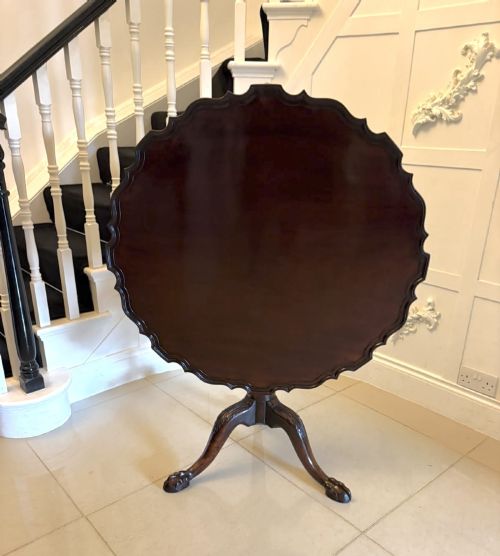
- A carved, raised decorative edge shaped in undulating curves on a round table top. This moulding is typical of finer eighteenth-century examples.
Dark Wood Tilting Table: Frequently Asked Questions
What is a dark wood tilting table used for?
These tables served multiple functions in historic interiors, acting as wine tables, lamp stands, or breakfast tables as needed.
Because the top pivots vertically, the table moves easily out of the way to clear floor space in smaller rooms.
How do you operate the tilt mechanism?
A wooden catch or brass latch beneath the top releases the pivot, allowing the surface to swing upright against the central pillar.
Securing the catch locks the top flat again for serving drinks or displaying objects.
What woods were used for these tables?
Makers relied heavily on dense imported hardwoods such as mahogany and rosewood for their strength and deep colour.
Walnut, ebony, and burr oak veneer also appear across nineteenth-century examples.
How can you tell a Georgian table from a Victorian one?
Georgian examples often feature restrained mahogany tripod bases with crisp carving and subtle proportions.
Victorian pieces tend to be heavier, utilising rosewood or walnut with more robust turned and carved pedestal supports.