

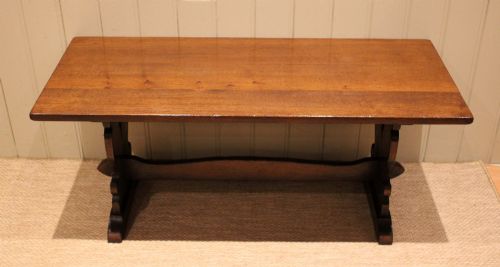
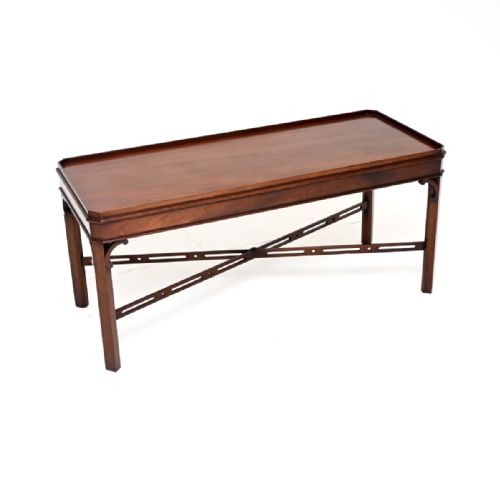
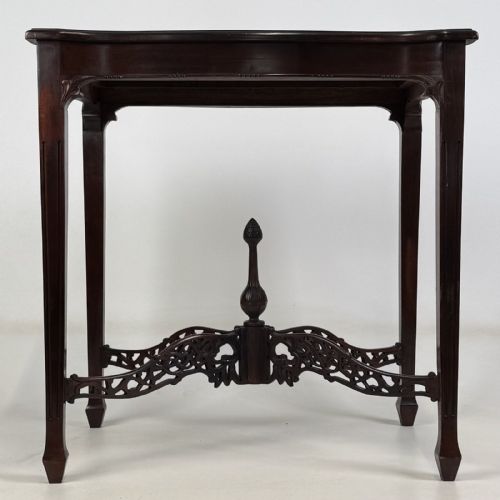
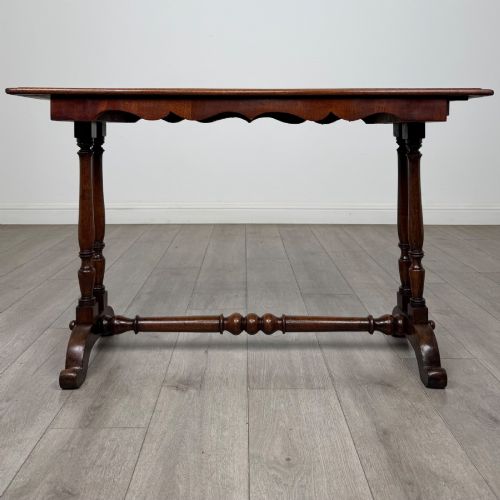
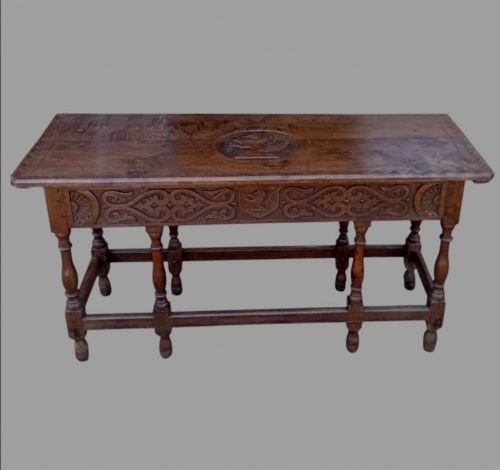
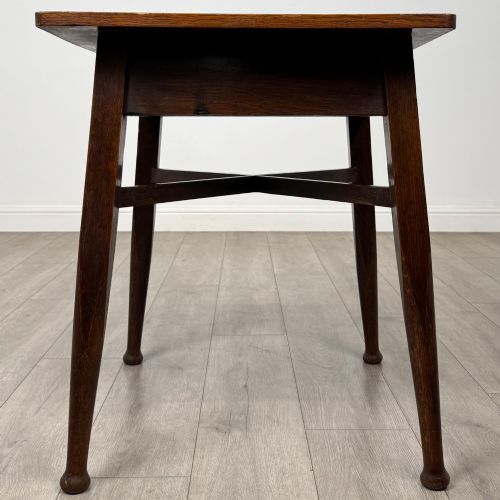
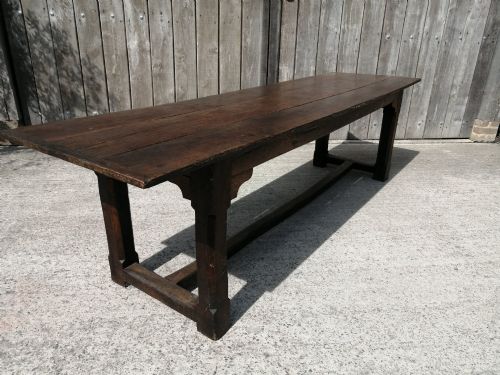
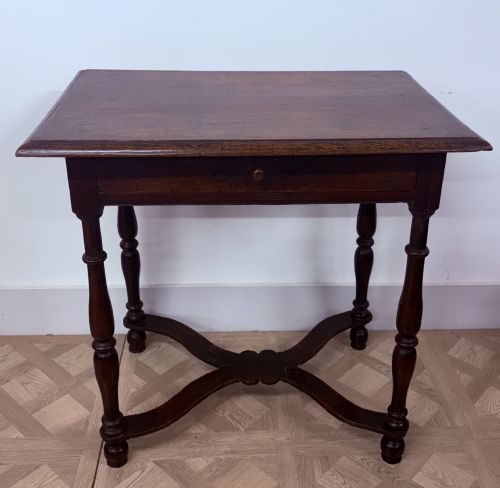
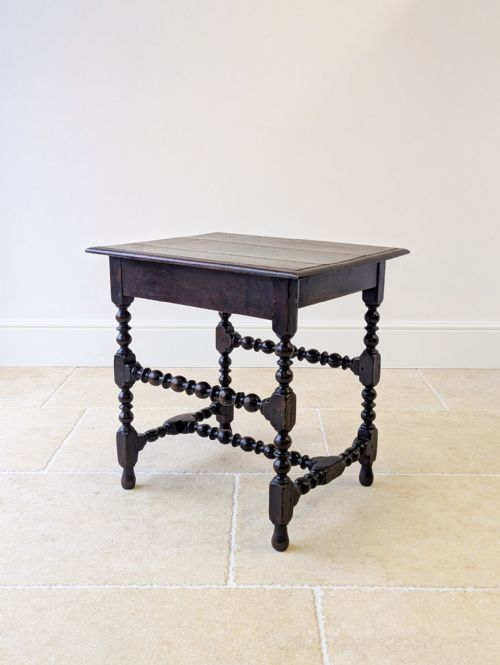
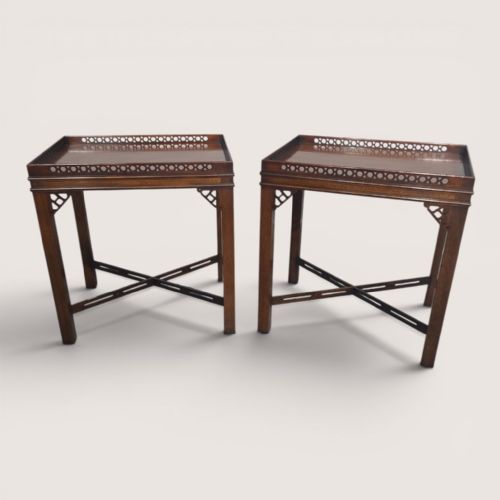
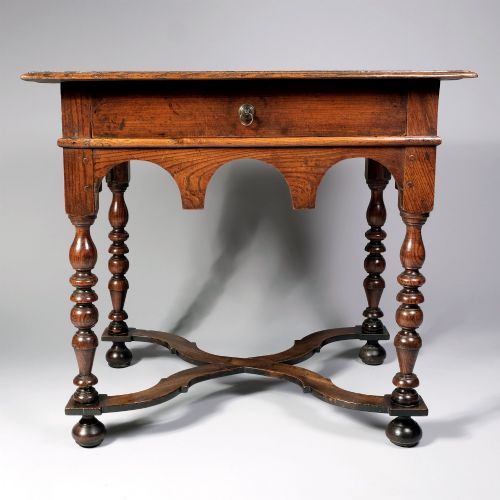
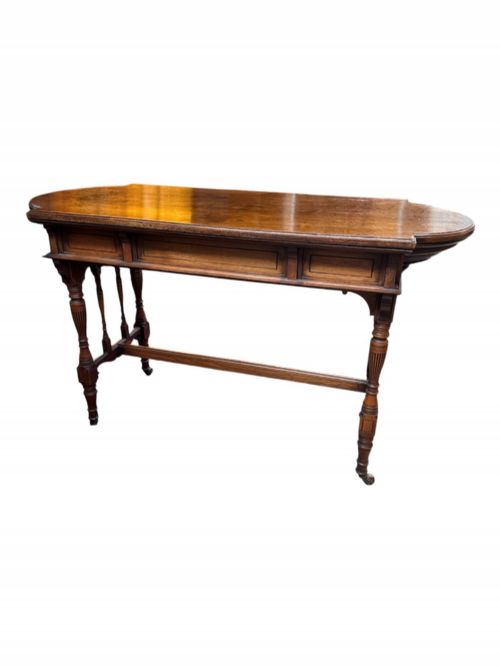
Dark Wood Stretcher Table
These dark wood stretcher tables bring sturdy joinery and rich timber tones to any room, offering both practical surface space and historic character.
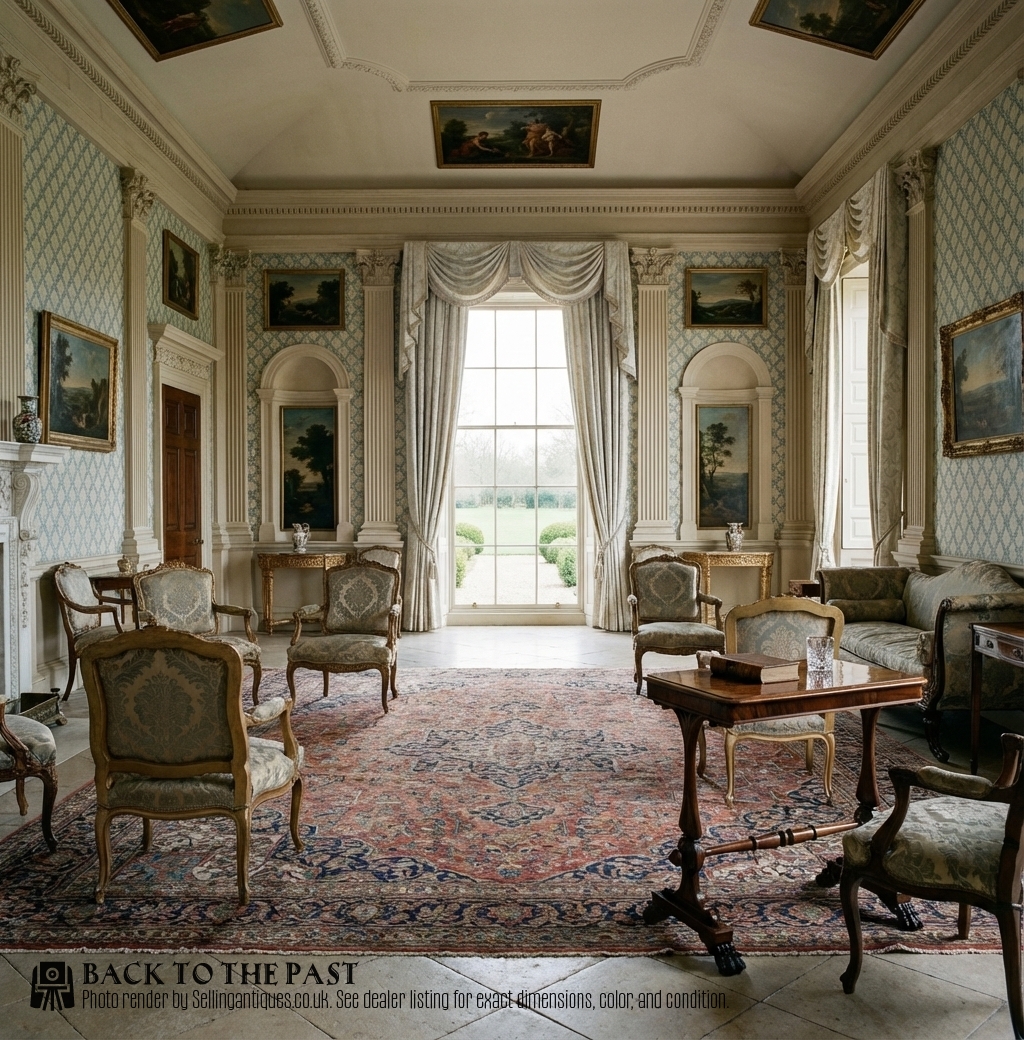
Dark Wood Stretcher Table
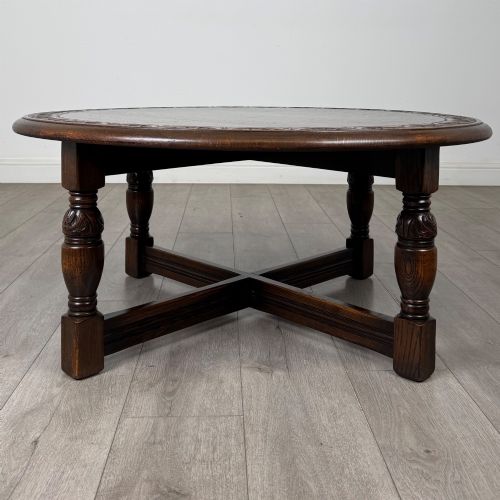
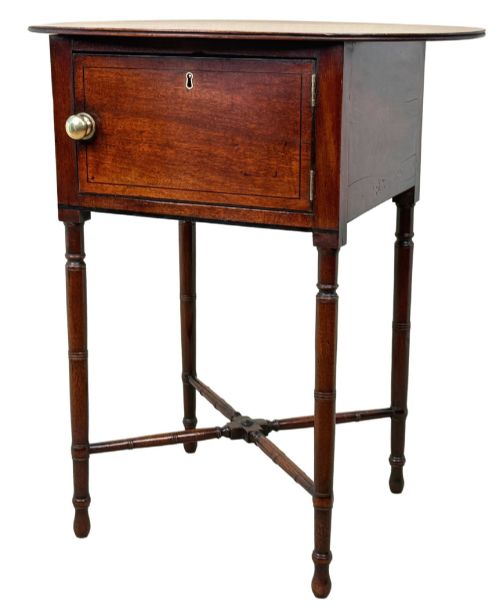
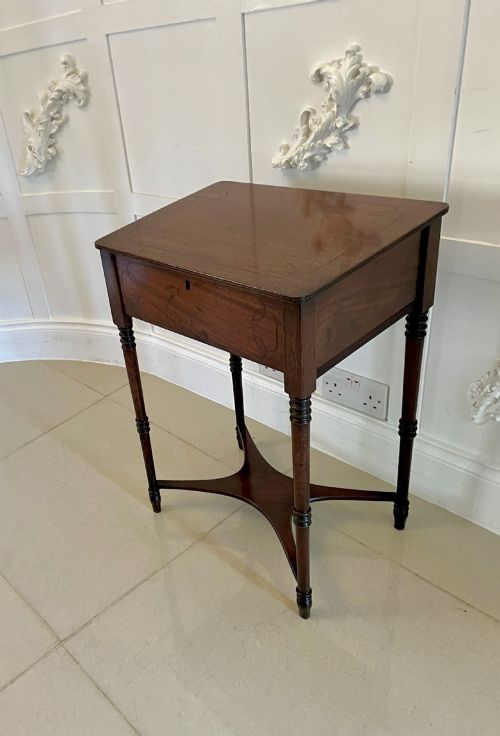
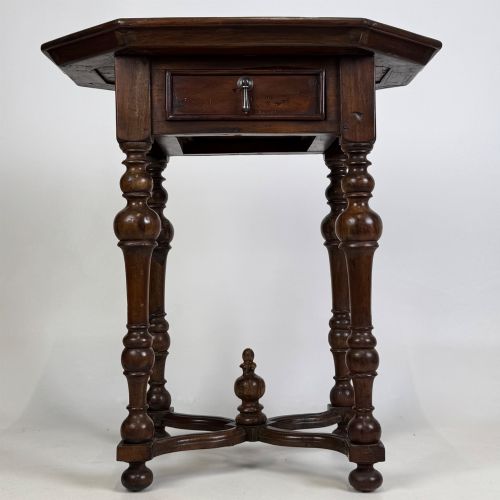
A dark wood stretcher table combines a functional timber top with horizontal bracing connecting the legs, creating a sturdy base for daily use. When you search for this phrase, you encounter forms ranging from compact side tables and occasional pieces to large refectory and centre tables.
The pieces span multiple centuries, with 17th-century oak and elm examples sitting alongside Georgian mahogany designs and later Victorian walnut versions. Side tables and centre tables dominate the selection, often featuring rectangular tops supported by substantial underframing.
Origins vary from English workshops to Spanish and Italian makers, introducing regional turnings and timber selections like walnut and rosewood. Buyers find both rustic country house examples and formal Georgian creations tailored for refined interiors.
Materials and construction methods
Carpenters constructed these tables using dense hardwoods such as oak, mahogany, walnut and elm, chosen for structural strength and attractive grain patterns. Timber selection dictated the weight and visual gravity of each piece, from early native oak to imported colonial mahogany.
Joinery relied on traditional mortise and tenon joints secured with wooden pegs, supplemented by stretcher rails that locked the legs rigidly into position. Turnery techniques evolved from early bobbin and barley twist legs to straight tapered or cabriole supports depending on the period.
Dark Wood Stretcher Table Retail Price Guide 2026
Typical asking prices for dark wood stretcher table among the pieces listed under this phrase on Sellingantiques today, from the lower quarter to the upper quarter. They describe what is for sale here now, not the wider market.
The furniture forms range from simple side tables and refectory boards to elaborate sofa tables, desks, and centre tables with complex stretcher frames.
Evaluating craftsmanship and condition
Quality rests upon the integrity of the original timber and the crispness of the hand-carved or turned details on the legs and stretchers. Superior examples retain their original surface patination and uncompromised structural joints without excessive modern intervention.
Proportion and timber figure separate standard utility tables from exceptional showroom pieces, particularly where book-matched veneers or figured grain adorn the top. The snugness of the stretcher connections and the absence of warping in the main top boards determine overall durability.
The Dark Wood Stretcher Table Glossary
- Stretcher
- A horizontal wooden rail connecting the legs of a table to provide structural rigidity and prevent wobble. These rails often sit near the floor and double as footrests on early forms.
- Refectory table
- A long, narrow dining table traditionally used in monastic dining halls and later adapted for domestic use. These pieces almost invariably rely on robust stretchers to support heavy plank tops.
- Bobbin-turned
- A style of leg or stretcher shaped on a lathe to resemble a series of wooden beads or bobbins linked together. This decorative turning appears frequently on 17th-century oak furniture.
- Patina
- The deep, lustrous surface sheen developed on old wood over centuries of handling, polishing and exposure to light. Original patination serves as a primary indicator of authenticity.
- Centre table
- A freestanding table designed to be viewed from all sides rather than pushed against a wall. These round or rectangular pieces often incorporate central pedestals or four-legged stretcher bases.
Dark Wood Stretcher Table: Frequently Asked Questions
How do I date a stretcher table?
Dating relies on examining the tool marks, timber species, and joinery methods used beneath the top and along the underframe. Early 17th-century pieces typically show hand-riven oak with pegged joints, whereas later Victorian versions display machine-cut elements and denser walnut or rosewood timbers.
Hardware, such as drawer linings and cut nails, also provides clues to the era of manufacture. Comparing the turning style on the stretcher rails to known historical periods helps confirm the timeline.
Can I use a stretcher table for dining?
Many examples, particularly refectory and larger centre formats, function admirably as sturdy dining surfaces for daily meals. The horizontal stretchers provide natural stability, though you must check the knee clearance beneath the apron before seating guests.
Smaller side and occasional variants lack the necessary height or leg room for seating. Reserve those compact formats for lamps, books, or display purposes rather than dining.
How do I maintain the wood surface?
Protect the timber by applying microcrystalline wax periodically to nourish the grain and repel moisture from everyday spills. Avoid placing these tables in direct sunlight or beside heat sources, which can cause the old wood to shrink and split.
Dust regularly with a soft, dry cloth rather than using silicone-based sprays that build up residue. Gentle care preserves the historical finish and natural patination built up over generations.
What is the difference between oak and mahogany versions?
Oak tables generally date from the 17th and early 18th centuries, displaying a heavy, coarse-grained texture associated with rustic or vernacular furniture. Mahogany became popular during the Georgian period, offering a smoother, reddish-brown surface suited to formal drawing rooms.
Mahogany tables often feature finer carved details and more delicate proportions than their robust oak predecessors. Both timbers provide exceptional durability but create entirely different visual atmospheres in a room.