



Carved Rosewood Lamp Table
A carved rosewood lamp table brings heavy timber, dark grain, and steady support for evening light into a sitting room.
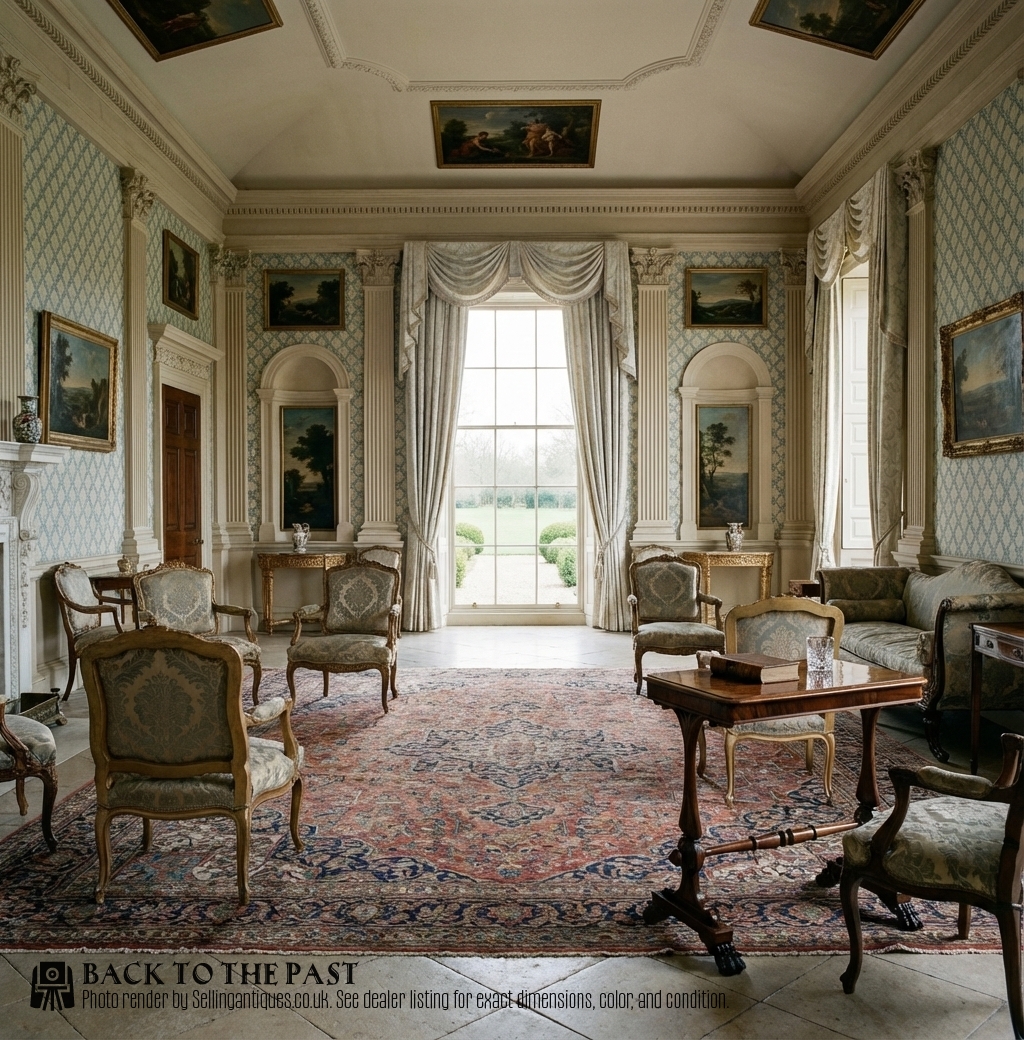
Carved Rosewood Lamp Table
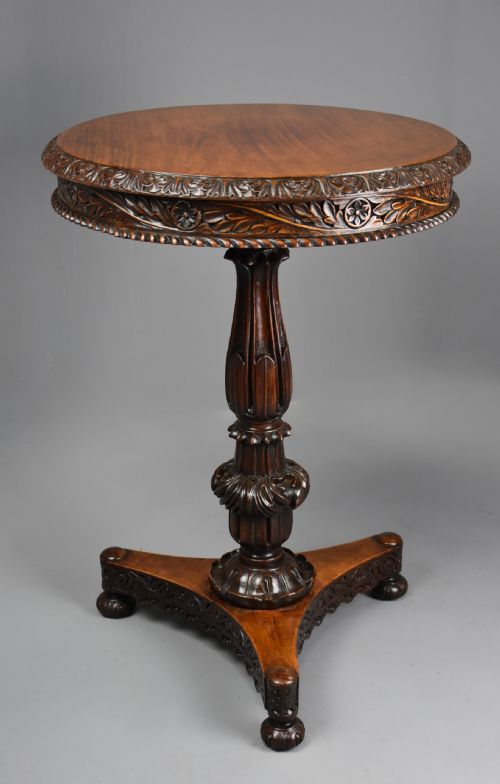
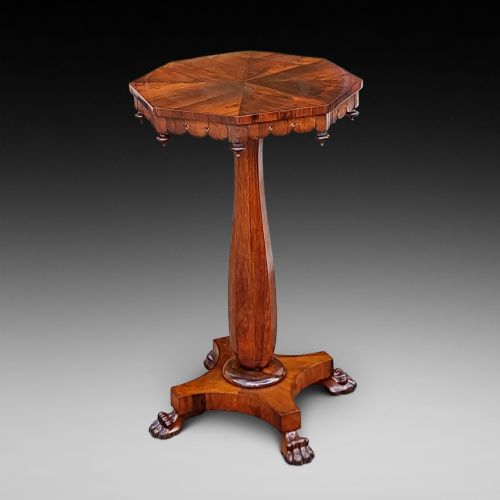
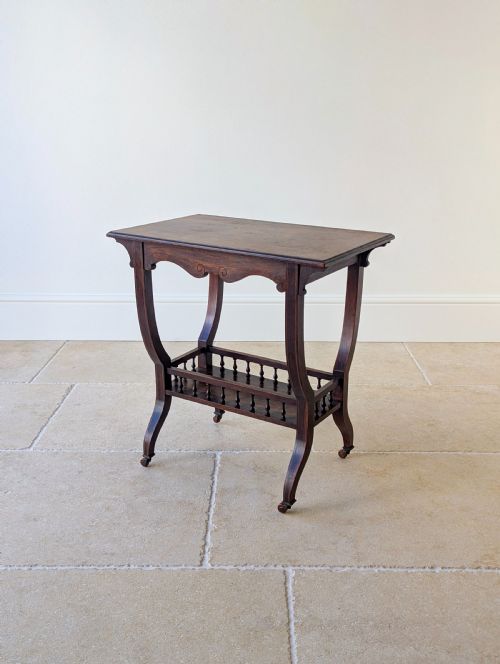
A carved rosewood lamp table is a low or mid-height stand designed to hold a reading light, vase, or decorative object beside a chair or sofa. These pieces span the nineteenth and early twentieth centuries, drawing on Regency, Victorian, Edwardian, and Chinese Export traditions.
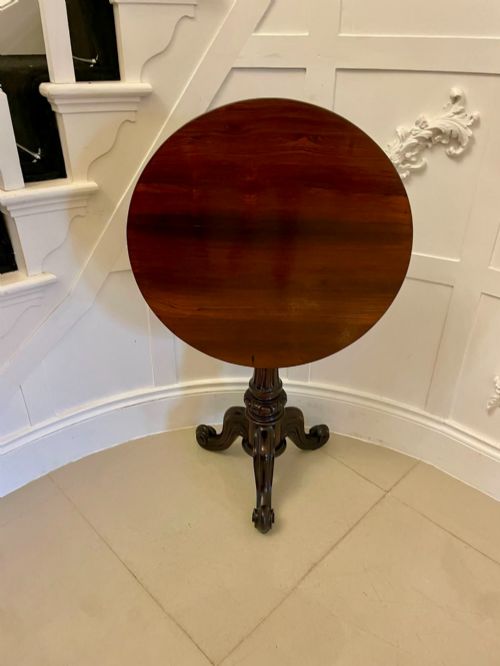
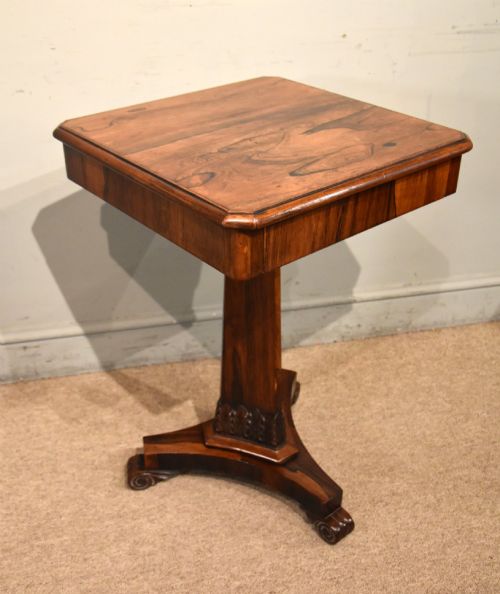
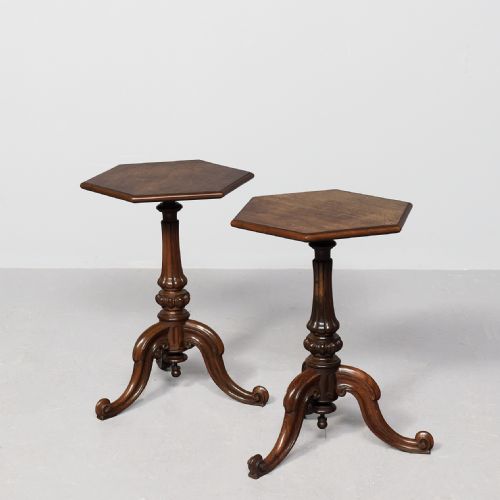
The version most commonly met on this page is the occasional or side table, often circular or square in top form and resting on a carved pedestal or four legs. Many examples cross over in function with sewing tables, plant stands, and jardiniere stands.
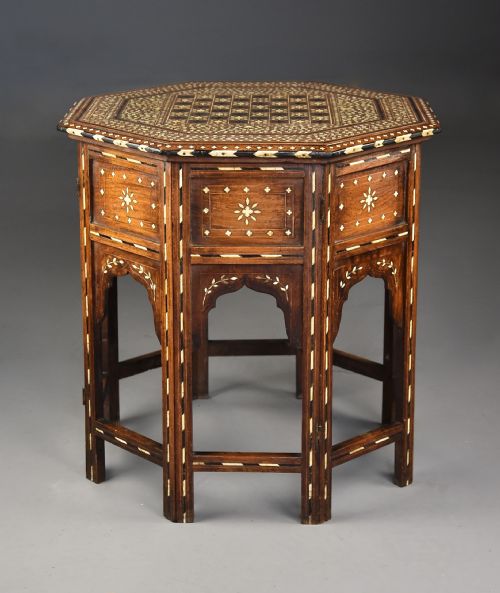
Origins stretch from British workshops influenced by George Bullock to Chinese Qing Dynasty workshops and Anglo-Indian centres such as Hoshiarpur. Buyers encounter forms ranging from simple tripod bases to heavily inlaid octagonal surfaces.
How they were made
Construction relies primarily on dense rosewood and related hardwoods, selected for their deep colour and weight. Secondary materials such as brass, marble inserts, bone inlay, and ebony add contrast and structural reinforcement to specific regional forms.
Carving is executed directly into the solid timber or applied through intricate pierced panels, particularly in Anglo-Indian and Chinese export pieces. Turning and joinery form the central pillars and stretcher bases of the British Regency and Victorian examples.
Carved Rosewood Lamp Table Retail Price Guide 2026
Typical asking prices for carved rosewood lamp table among the pieces listed under this phrase on Sellingantiques today, from the lower quarter to the upper quarter. They describe what is for sale here now, not the wider market.
Some nineteenth-century Indian pieces arrive with folding detachable legs, built for travellers who still required a lamp table on the move.
What varies in quality
Quality rests in the crispness of the carving and the selection of the timber grain. Finer examples display deeply undercut foliage or geometric patterns that retain sharp edges, whereas lesser pieces show softer, more shallow moulding.
The integrity of the construction distinguishes standard production from superior workshops. Solid rosewood framing, well-fitted marble tops, and tight joinery at the pedestal joints separate high-status tables from simpler utilitarian stands.
The Carved Rosewood Lamp Table Glossary
- Rosewood
- A dense, heavily grained timber prized for its dark reddish-brown colour and durability. It takes a high polish and forms the primary material for these tables.
- Jardiniere stand
- A tall, slender table intended to hold a flower pot or heavy ceramic bowl. These share similar heights and top dimensions with lamp tables.
- Huali
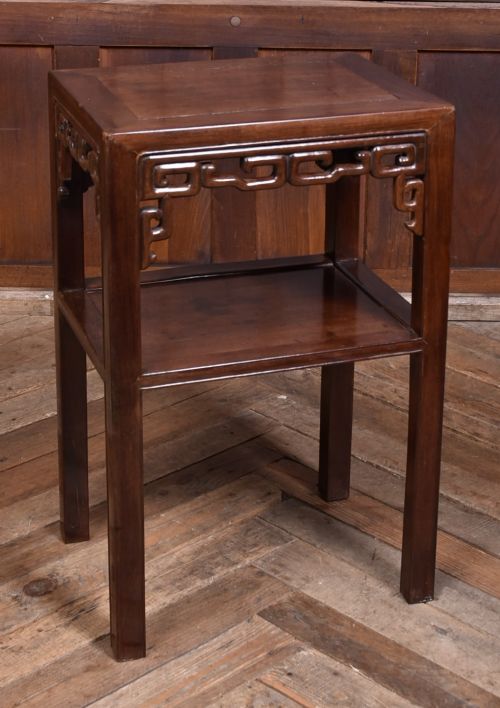
- A traditional Chinese hardwood often grouped with rosewood. It provides significant weight and a rich natural grain to Qing Dynasty stands.
- Work table
- A multi-purpose piece incorporating storage compartments or a bag for sewing materials beneath the top. Many double as lamp tables in modern interiors.
- Stretcher
- A horizontal wooden bar connecting the legs of a table to increase stability. They often feature central bosses or turning in nineteenth-century examples.
Carved Rosewood Lamp Table: Frequently Asked Questions
Where should I place a carved rosewood lamp table?
These tables suit corners, hallways, and beside low seating where their height allows easy access to a surface lamp. Keep them away from direct heat sources and strong sunlight to protect the dark timber finish.
Pairing a circular or square top with a heavier armchair balances the visual weight of the carved base in a traditional or mixed interior.
How do I clean the carved sections?
Dust accumulated in deep carvings requires a soft-bristled brush or a dry cloth to prevent build-up in the recesses. Avoid heavy commercial liquids or silicone polishes that can darken the grain improperly.
Apply a traditional beeswax sparingly once or twice a year to nourish the rosewood and maintain a natural sheen across the carved surfaces.
Can these tables support heavy lamps?
The dense hardwood construction provides natural stability, making most nineteenth-century examples capable of holding standard table lamps and decorative objects securely. Pedestal bases with tripod feet offer a balanced footprint on flat flooring.
Ensure the table sits level on carpets or floorboards so that weight distribution remains even across the legs or central column.
How do I tell Chinese export tables from British Victorian ones?
Chinese export and Qing Dynasty pieces utilise huali and dense hardwoods with distinct traditional motifs, often incorporating marble inserts or deep panel carving. British Victorian and Regency tables rely on European classical turns, mahogany carcases veneered in rosewood, or solid rosewood pedestals.
Anglo-Indian pieces stand apart through extensive bone inlay and intricate all-over floral piercing across the entire structure.