
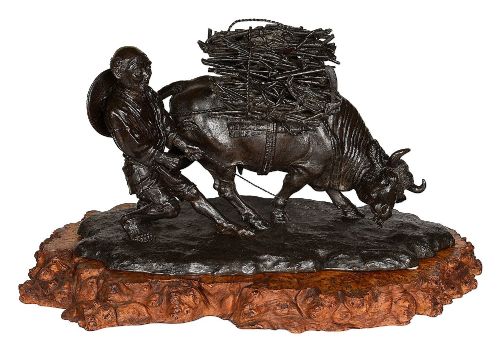
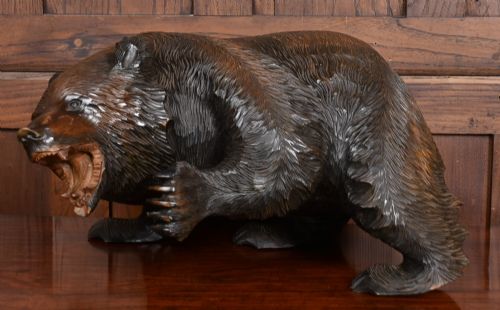


Dark Wood Statuette
These dark wood statuettes range from Black Forest bears to Meiji period animals, offering rich character and distinct regional carving traditions.
Dark Wood Statuette
A dark wood statuette brings together centuries of global sculpture, spanning European folk art, Anglo-Indian studies, and Japanese Meiji period carvings. You encounter subjects ranging from domestic animals and fierce wildlife to historical figures and religious icons.
The selections on this page draw heavily from the nineteenth century, alongside earlier eighteenth-century examples and twentieth-century works from the nineteen-thirties. Formats vary from small okimono and netsuke to substantial Black Forest animal sculptures and seated figures.
Makers and workshops from diverse cultural backgrounds utilise their native timber resources to shape these decorative pieces. Whether looking at an African tribal fertility figure or a walnut carving from the European tradition, each object presents a distinct sculptural narrative.
Materials and construction methods
Carvers work with various dense timbers including walnut, boxwood, oak, ebony, and general hardwood, sometimes augmented with bone, ivory, or dark stain. These materials allow for intricate detailing, from the fur of a bear to the folds of historical garments.
Makers combine hand-chiselling and carving techniques to bring out the natural grain and deep colour of the wood. Many pieces rely entirely on subtractive woodwork, while others incorporate inlaid bases or mixed media elements such as bronze components.
Several bears populate the nineteenth-century selection, standing ready to guard your desk.
Assessing sculptural standard
Quality rests upon the precision of the carving and the vitality captured in the subject, separating routine decorative items from masterworks. Proportions, anatomical accuracy, and the expressive depth of faces or animal forms reveal the hand of a skilled sculptor.
The condition of the wood surface and the preservation of fine details dictate the standing of a piece. Original patination and thoughtful integration of natural timber characteristics distinguish the superior examples.
Valentino Besarel·Simon Troger·Tomochika
The Dark Wood Statuette Glossary
- Okimono
- A Japanese ornamental carving designed for display on a shelf or in a tokonoma. These figures typically depict animals, deities, or everyday subjects with high craftsmanship.
- Black Forest carving
- European wood sculpture originating from the Brienz region of Switzerland, famously depicting bears and woodland wildlife in realistic poses.
- Boxwood
- A dense, pale yellow hardwood favoured by European carvers for miniature and highly detailed figurative work.
- Netsuke
- A small Japanese toggle used to secure a pouch or basket to a kimono sash, often carved from wood with an integrated cord channel.
Dark Wood Statuette: Frequently Asked Questions
What is a dark wood statuette?
A dark wood statuette is a small figurative sculpture carved from dense timber, representing animals, humans, or mythological subjects across various cultural traditions.
These pieces function primarily as decorative objects or desktop studies, showcasing the distinct aesthetic choices of their period of origin.
How do I identify Black Forest carvings?
Black Forest carvings are typically rendered in walnut or oak, featuring naturalistic woodland animals such as bears, deer, and dogs with deep texturing.
Many of these nineteenth-century European pieces exhibit dynamic poses and originate from regional Swiss workshops.
What distinguishes Meiji period wood carvings?
Meiji period Japanese wood carvings display remarkable attention to fine detail, often depicting wildlife, folk figures, or cultural motifs like rabbits and tigers.
These works reflect the high standards of Japanese craftsmanship during the late nineteenth and early twentieth centuries.
How should I care for wooden sculptures?
Wooden sculptures require stable indoor humidity levels and protection from direct sunlight to prevent timber cracking or surface fading.
Gentle dusting with a dry, soft cloth preserves the natural patination without stripping historical finishes.