


Dark Wood Showcase
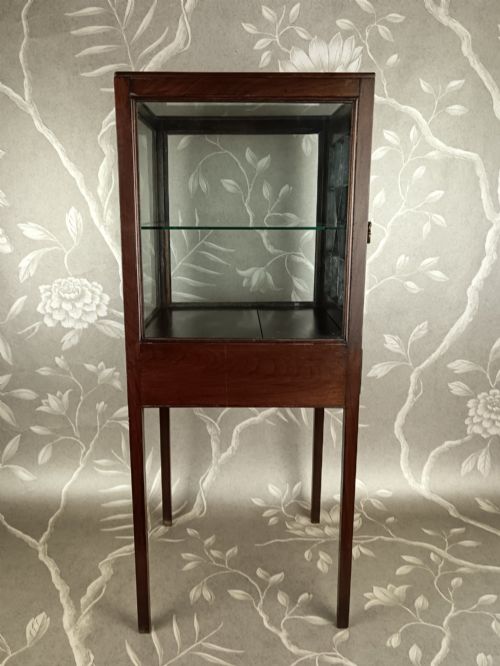
A dark wood showcase organises treasured objects behind glass, bringing period craftsmanship and practical display into a room.
Dark Wood Showcase
When you search for a dark wood showcase, you are looking at glazed cabinets, vitrines, and display tables designed to hold and protect collections. The selections available encompass freestanding Victorian and Edwardian examples alongside specialised shop display counters and wall cabinets.
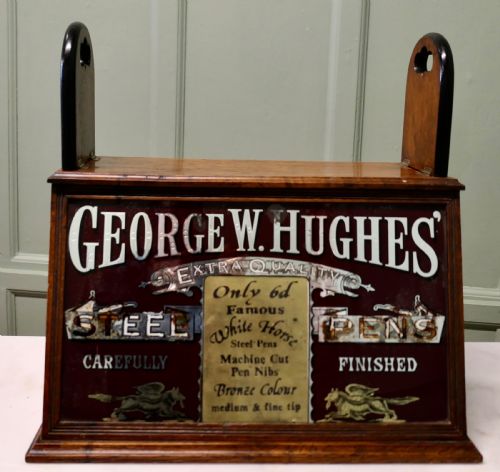
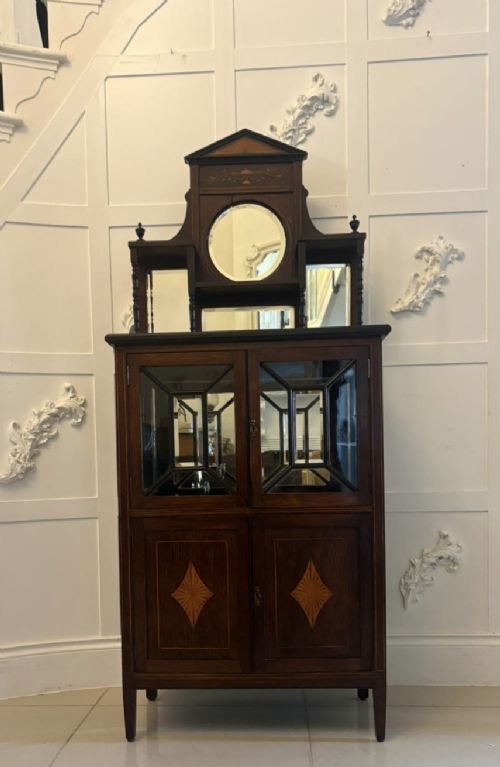
Mahogany forms the principal dark timber across the periods, appearing alongside satinwood, cherrywood, and hardwood frames. These pieces range from domestic drawing-room cabinets with mirror backs and inlaid details to commercial retail vitrines bearing historic advertising and hand sign writing.
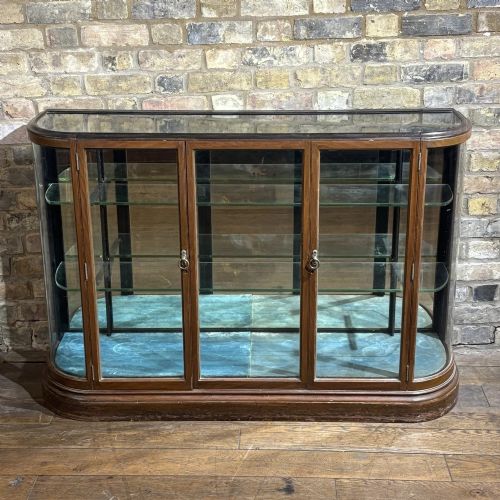
The styles span the late nineteenth and early twentieth centuries, drawing on Georgian, Queen Anne, Chippendale Revival, and Art Nouveau design vocabularies. Many items reflect commercial origins from sweet shops and haberdasheries, while others serve domestic interior display.
Materials and construction
Makers utilised solid mahogany and hardwood frames joined with glass panels to create transparent enclosures for objects. Satinwood inlay frequently decorates Edwardian surfaces, contrasting with the dark body of the timber.
Interiors often incorporate mirrors to reflect light through the displayed items, complemented by fabric, felt, or velvet linings on shelves and table bases. Brass hardware secures doors and fastening points, while specialised shop counters integrate sturdy timber bases beneath glazed upper sections.
Several cabinets retain their original commercial sign writing for chocolates, guns, and pencils.
Factors determining quality
The refinement of timber selection and inlay work separates standard utility pieces from finer examples. Subtle details such as curved bow ends, satinwood stringing, and integrated mirror backs demonstrate higher levels of cabinet-making skill.
Commercial provenance and original branding, such as hand sign writing for confectioners or watchmakers, add distinct character to shopfitting cabinets. The integrity of the original glass and the smoothness of door mechanisms further define the standing of each piece.
F. Sage and Co. London·Breitling·Cadbury's
The Dark Wood Showcase Glossary
- Vitrine
- A glass-sided display cabinet intended for the exhibition of porcelain, curiosities, or fine objects. These cabinets rely on transparent panels to maximise visibility from multiple angles.
- Bijouterie table
- A shallow display table with a glazed top designed for small valuable items, jewellery, or medals. They often stand on slender legs and lift or open to allow access.
- Display dome
- A blown glass cover mounted on a base to protect fragile objects from dust and handling. They preserve delicate specimens and ornaments in domestic settings.
- Shopfitting cabinet
- Commercial display furniture built for retail environments such as apothecaries, tobacconists, and sweet shops. These units frequently feature maker markings or period advertising.
- Satinwood inlay
- Decorative woodwork technique inserting contrasting pale timber into mahogany surfaces. This detail characterises Edwardian cabinet work and lighter decorative schemes.
Dark Wood Showcase: Frequently Asked Questions
What is a dark wood showcase used for?
These cabinets and tables serve to exhibit collections, porcelain, curiosities, and decorative items while protecting them from dust. Domestic examples house personal treasures in living spaces, while commercial variants originally showcased goods in retail shops.
Many pieces incorporate glass panels on multiple sides and mirrored backs to enhance illumination. This design allows objects to be viewed clearly from various angles within a room.
How do I date a dark wood showcase?
Dating relies on observing construction methods, timber choices, and stylistic details such as Edwardian inlay or Art Nouveau curves. Pieces originating from retail environments often bear maker plaques or period advertising on the glass and woodwork.
Commercial shop counters and wall cabinets generally date from the late nineteenth century into the 1930s. Domestic vitrines and bijouterie tables frequently span the Victorian and Edwardian eras.
Where should I place a display cabinet?
Position these cabinets away from direct sunlight to protect delicate contents and prevent timber fading. Placing them near natural light sources helps illuminate the interior glass shelves.
Freestanding vitrines and wall-mounted cabinets suit living rooms, studies, and hallways. Countertop models and display tables function well on existing surfaces or as standalone accent pieces.
How do I care for mahogany and glass?
Clean the glass panels with standard glass cleaner applied to a cloth rather than sprayed directly near the wood. Dust the mahogany framework regularly with a soft, dry cloth.
Avoid using silicone-based polishes on antique timber surfaces. Maintaining stable room humidity prevents the timber and internal fabric linings from deteriorating.