

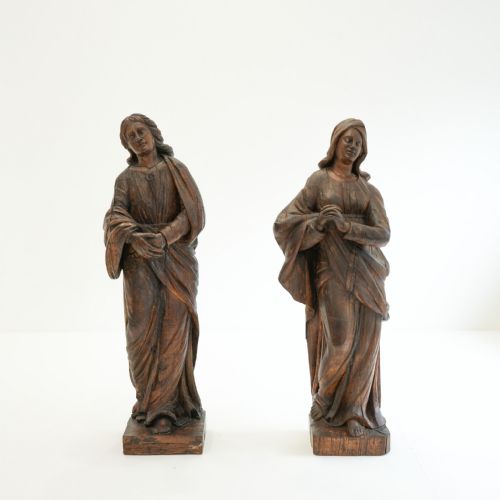


Dark Wood Saint
A dark wood saint is a devotional sculpture or panel carved from oak, limewood, or hardwood, offering tangible depth to historic sacred art collections.
Dark Wood Saint
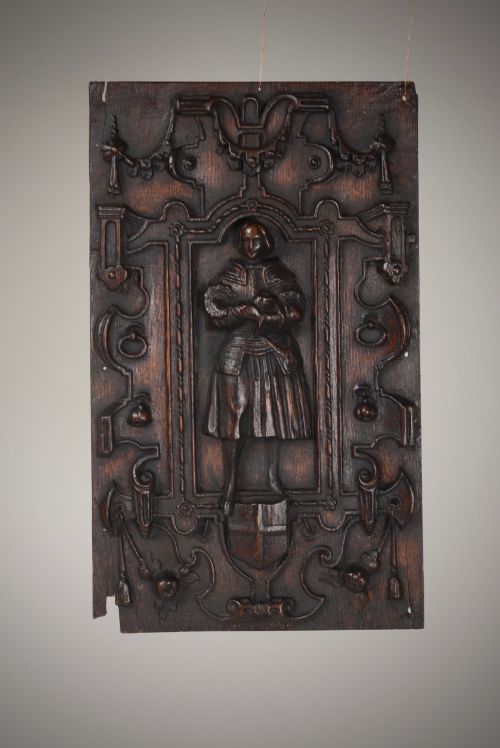
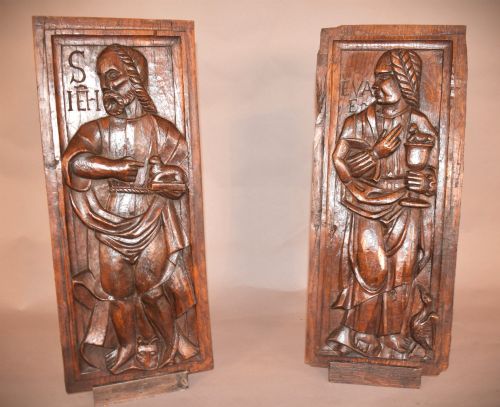
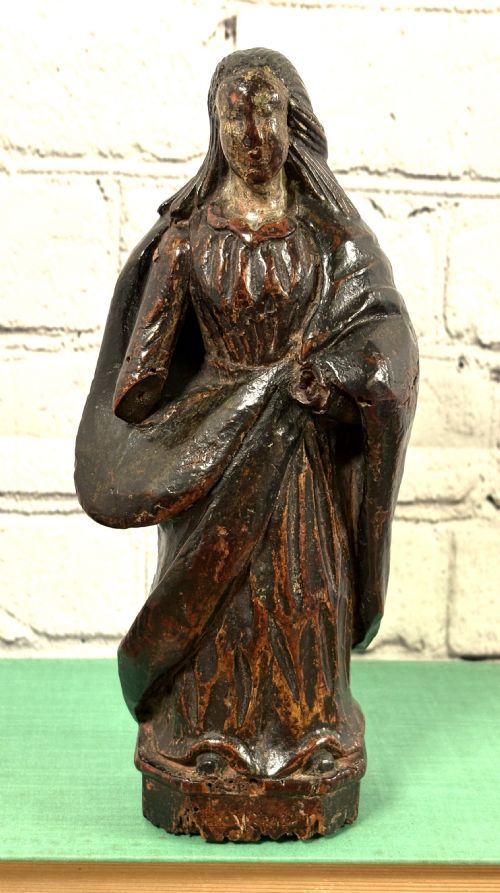
A dark wood saint encompasses freestanding statues, donor figures, and relief panels produced across several centuries of European and colonial craftsmanship. These representations range from small limewood figures to large architectural carvings executed in oak or heavier hardwoods.
Buyers browsing this selection will frequently encounter seventeenth-century and eighteenth-century works, alongside sixteenth-century Late Gothic pieces and nineteenth-century revival items. Subjects span traditional ecclesiastical figures such as Saint John, Saint Nicholas, and Saint Peter, often accompanied by characteristic attributes.
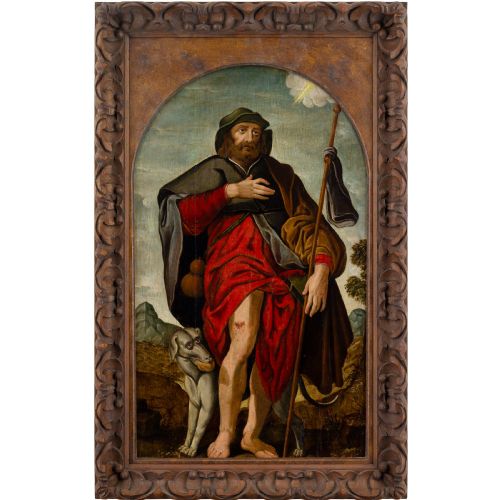
The category extends beyond standalone sculpture to include framed panels, reverse glass pictures, enamel plaques, and painted wooden icons originating from regional traditions including the Upper Rhine, Italy, and Spanish colonial workshops.
Materials and construction methods
Carvers utilised dense regional timbers like oak, limewood, and assorted hardwoods, shaping the material with gouges and chisels to achieve high relief or freestanding volume. Grain patterns and natural timber tones remain visible on many surfaces, occasionally supplemented by traces of historic polychrome or gesso preparation.
Assembly methods for larger figures often involved joining seasoned planks or blocking out timber before detailed facial expressions and drapery folds were defined. Panel works incorporated pegged framing techniques, while related media such as Limoges enamel and reverse glass painting employed specialised firing and backing processes.
Dark Wood Saint Retail Price Guide 2026
Typical asking prices for dark wood saint among the pieces listed under this phrase on Sellingantiques today, from the lower quarter to the upper quarter. They describe what is for sale here now, not the wider market.
The listings span four centuries, featuring materials from oak and limewood to enamel and oil on canvas across multiple European regions.
Evaluating sculptural depth and condition
Surface integrity and the preservation of original tool marks distinguish high-grade historical carvings from heavily restored or later replacement elements. The depth of relief in panels and the articulation of hands and attributes further separate workshop output.
Gaspar de Figueroa Workshop
The Dark Wood Saint Glossary
- Limewood
- A fine-grained timber favoured by European carvers for its uniform density and suitability for intricate detail work without splintering.
- Polychrome
- The application of multiple colours and metallic leaf to the surface of wood sculptures, often surviving in fragmentary layers.
- Donor figure
- A representation of the person who commissioned a religious work, typically shown kneeling or in a posture of reverence beside a saint.
- Gesso
- A plaster-like mixture applied to wooden panels or figures to prepare a smooth surface for subsequent gilding or painting.
- Relief
- A sculptural technique where figures project from a flat background plane, varying in depth from shallow to high relief.
Dark Wood Saint: Frequently Asked Questions
Where were these devotional carvings originally displayed?
Most pieces originated in churches, private chapels, or domestic shrines as focal points for prayer and contemplation. Relief panels often formed parts of larger altarpieces or church furniture.
Surviving figures frequently show signs of regional liturgical use and shifting architectural contexts over the centuries.
How should I care for antique wood sculptures?
Keep wooden carvings away from direct sunlight, radiators, and rapid humidity fluctuations to prevent the timber from splitting or warping. Dust gently with a dry, soft brush rather than using liquid polishes.
Maintaining a stable indoor climate preserves both the bare wood and any remaining traces of historical polychrome or gesso.
What does a cherub at the feet indicate?
A cherub or putto positioned near a saint often serves as an iconographic attribute identifying specific holy figures or symbolizing heavenly presence. These secondary motifs add narrative depth and compositional balance to the sculpture.
Sculptors integrated these smaller figures to frame the primary subject and guide the viewer's eye upward.