




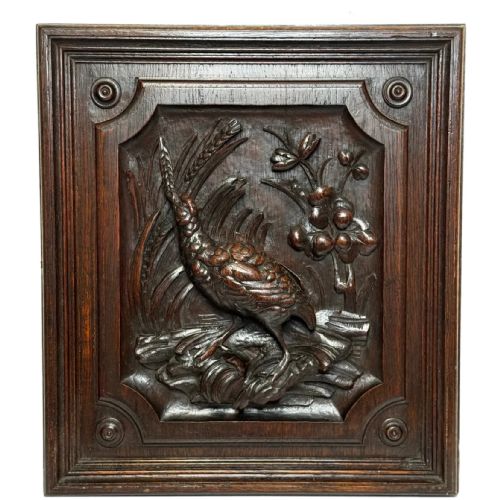
Dark Wood Relief Sculpture
Dark wood relief sculpture brings depth and historical narrative directly to walls, offering carved figures and panels fashioned from oak and hardwood.
Dark Wood Relief Sculpture
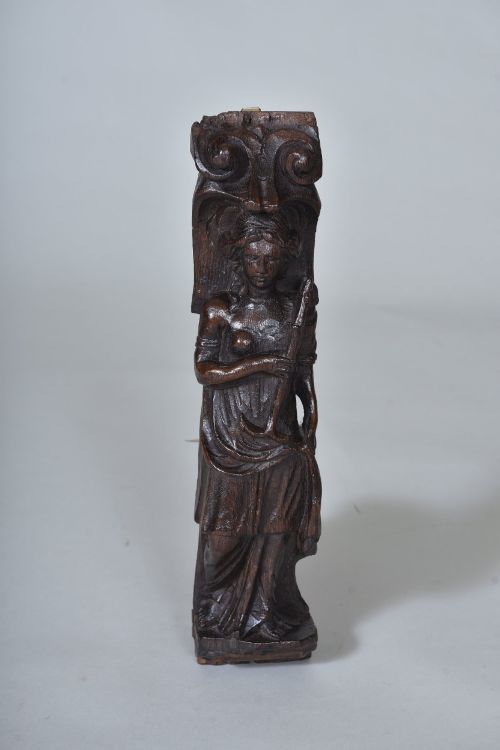
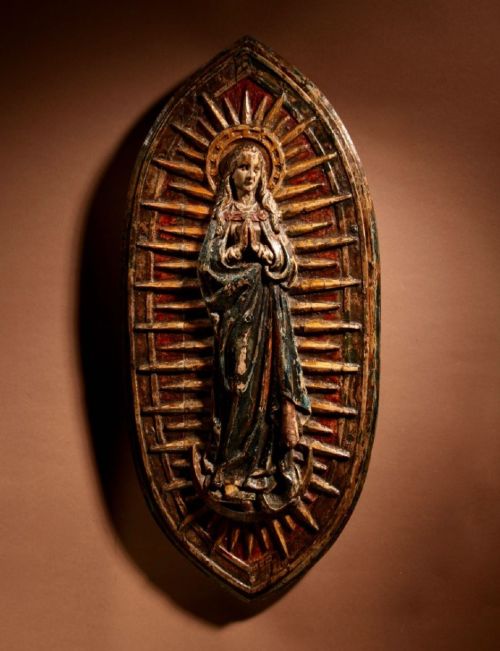
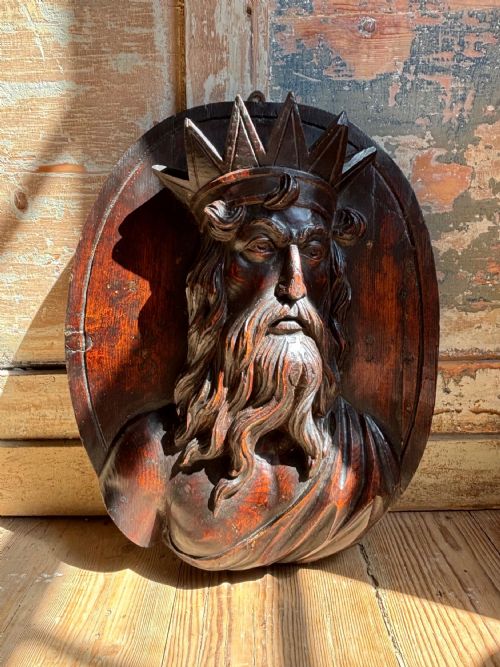
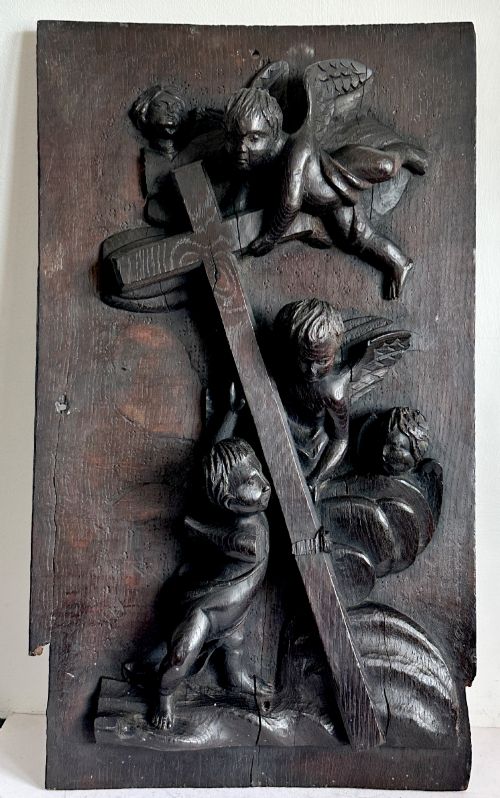
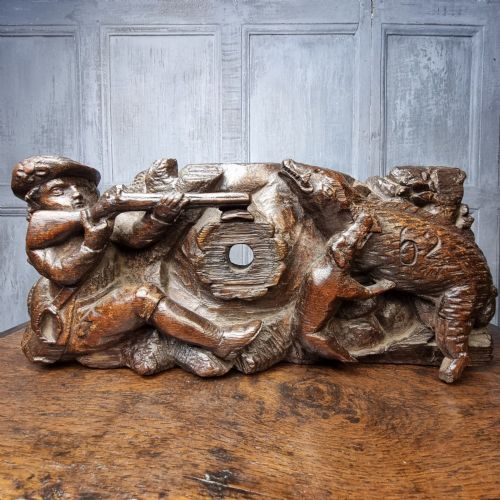
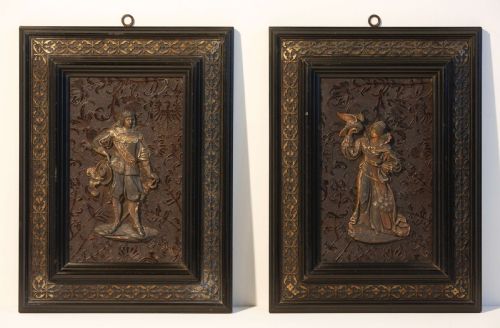
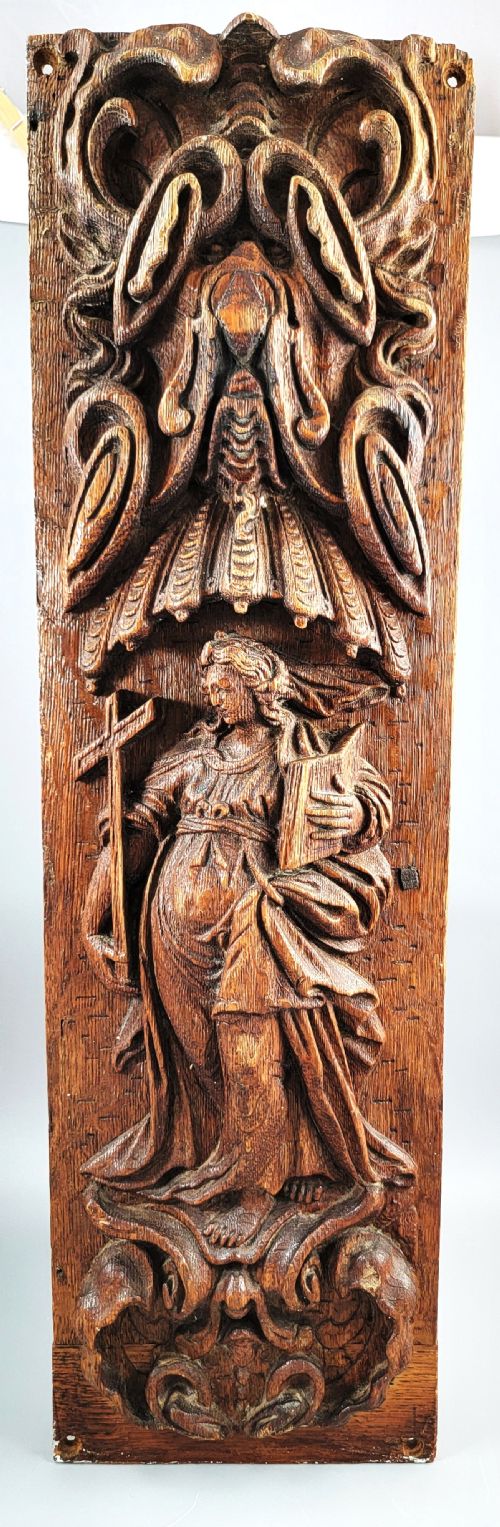
When you search for dark wood relief sculpture, you encounter wall panels, architectural salvage, and plaques spanning the sixteenth to the nineteenth centuries. These items range from ecclesiastical fragments and overdoor panels to hunting trophies and allegorical depictions.
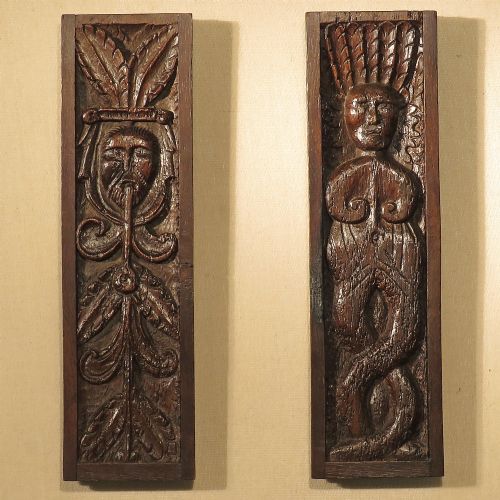
Oak dominates the selection, joined by walnut, tiger oak, and various hardwoods, often shaped into religious motifs, mythological figures, and Green Man designs. You are most likely to meet seventeenth-century oak carvings and Victorian interpretations on this page.
What varies in quality
Depth of carving and clarity of expression separate standard production from masterwork execution. The crispness of undercut details and the natural movement within drapery or figures reveal the sculptor's command over the material.
The integration of the composition within its architectural or panel format dictates visual balance. Finer examples retain their original surface patination without excessive later intervention or structural loss.
Carved wooden serpents, watchful cherubs, and stone-faced Green Men peer out from centuries past, proving that walls have literally held company for generations.
Edward Pearce
The Dark Wood Relief Sculpture Glossary
- Relief sculpture
- A sculptural technique where the sculpted elements remain attached to a solid background of the same material. High relief projects significantly from the background, creating strong shadows.
- Architectural salvage
- Building elements and decorative fragments rescued from older structures before demolition or alteration. These often include panels, overdoor carvings, and sculptural masks.
- Green Man
- A sculptural motif consisting of a face made of, or surrounded by, leaves and vines. It symbolises rebirth and appears frequently in medieval and later wood carvings.
- Polychrome
- The practice of decorating architectural elements, sculpture, or pottery in a variety of colours. On wood panels, remnants of paint or gesso provide historical clues about original appearance.
- Tiger oak
- Quarter-sawn oak timber displaying prominent medullary rays that create a distinctive stripe or flake pattern resembling tiger stripes. This cut provides both stability and decorative visual texture.
Dark Wood Relief Sculpture: Frequently Asked Questions
How do I hang a heavy relief panel safely?
Heavy oak and hardwood wall sculptures require secure fixing directly into wall studs or solid masonry using appropriate brackets or batten systems. Weight distribution must be calculated carefully before mounting antique carvings.
Professional installation prevents strain on historical timber frames and ensures the piece remains stable against the wall surface.
Where were these carved panels originally displayed?
Many of these pieces originated as architectural elements within churches, manor houses, and civic buildings. Overdoor panels, altarpiece fragments, and wall plaques formed part of larger interior decorative schemes.
Later Victorian and Black Forest pieces were designed specifically for domestic interiors, libraries, and hunting lodges as decorative focal points.
How should I clean and maintain antique wood carvings?
Maintenance involves gentle dusting with a soft, dry brush to remove particles from deep recesses without disturbing the patina. Avoid using liquid polishes, water, or modern cleaning chemicals on historic timber.
Keeping pieces away from direct sunlight and excessive humidity fluctuations preserves the natural wood and prevents warping or splitting.
How can I tell a seventeenth-century panel from a later copy?
Period pieces display tool marks, timber shrinkage, and oxidation consistent with age, along with construction methods appropriate to the era. Iron nails, peg joints, and the natural depth of the wood grain provide evidence of authenticity.
Examining the back of the panel often reveals the original adze marks or hand-sawn surfaces that distinguish older work from revival pieces.