
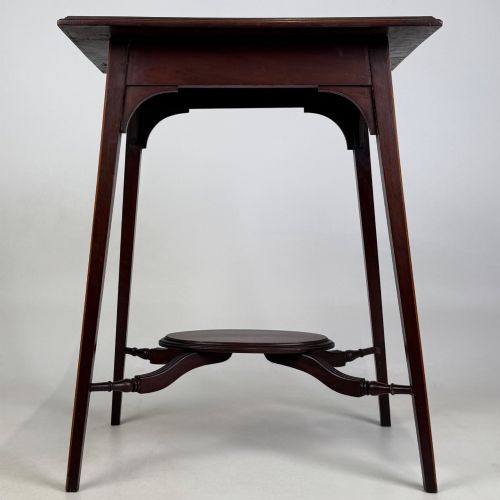
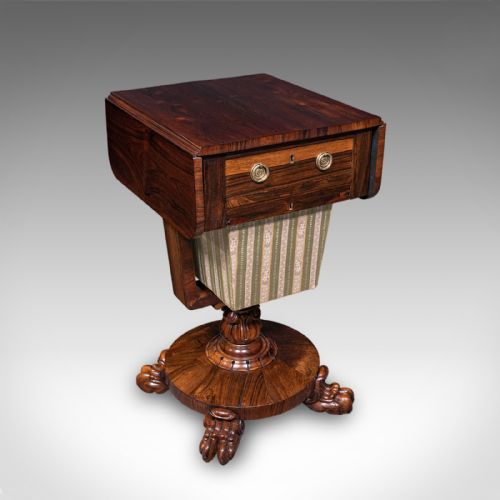
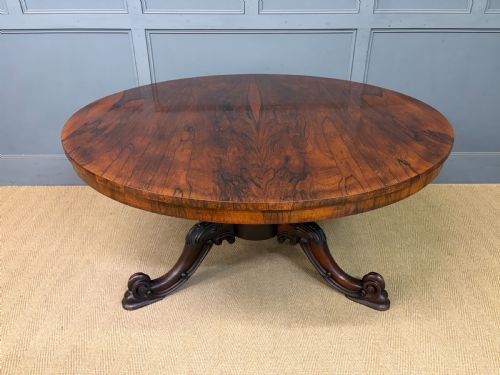
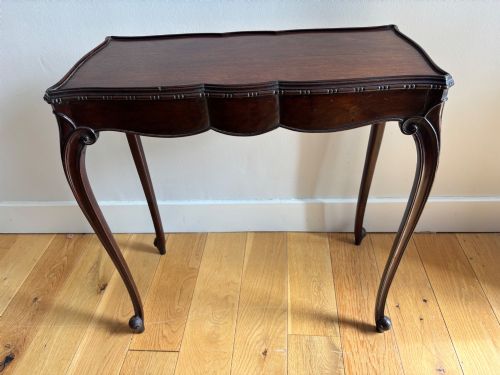


Dark Wood Parlour Table
A dark wood parlour table is a reception room centrepiece designed for display and gathering, built in timbers like rosewood and mahogany.
Dark Wood Parlour Table
When you search for a dark wood parlour table, you encounter a variety of nineteenth and early twentieth-century forms used in formal rooms. These range from occasional tables and sewing tables to large centre tables and tea tables.
The pieces listed on this page span the Victorian and Edwardian eras, alongside Regency, William IV, and Aesthetic Movement examples. Rosewood and mahogany dominate the selection, appearing in round, oval, and octagonal shapes.
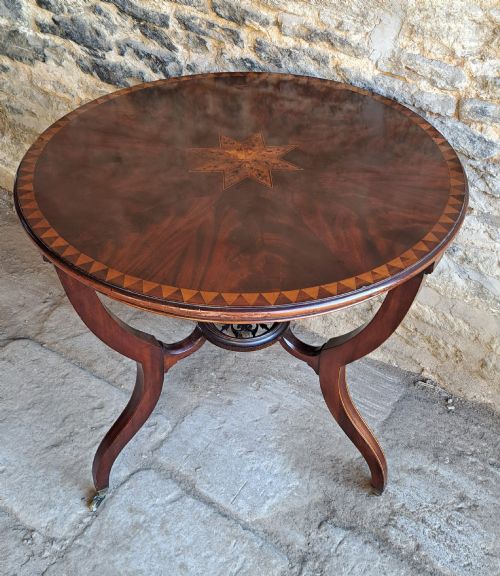
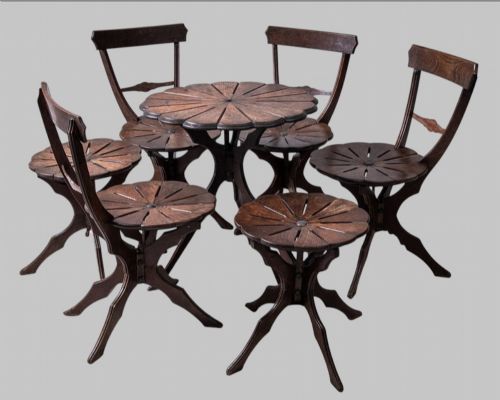
Many of these tables feature tiered designs or drop leaves, while others form part of larger parlour suites or include marquetry inlay. They function as versatile display surfaces that anchor a room's seating arrangement.
Materials and construction methods
Cabinetmakers utilised dense timbers such as rosewood, mahogany, walnut, and coromandel to build these parlour tables. These woods provided a stable foundation for intricate surface decoration and polished finishes.
Craftsmen applied boxwood inlay, satinwood stringing, and marquetry patterns directly onto the timber tops. Brass fittings and carved oak or walnut elements also appear across the selection.
Alpine folk art occasionally sneaks into the parlour, reminding us that someone carved a bear just to hold your tea.
Distinctions in construction and design
The quality of a parlour table rests on the selection of the timber and the precision of the inlay work. Finer examples display carefully matched grain patterns and crisp carving in rosewood or mahogany.
Superior pieces incorporate secondary woods and robust joinery that maintain structural stability over generations. The integration of materials like coromandel, macassar ebony, and delicate marquetry indicates a higher standard of workshop production.
The Dark Wood Parlour Table Glossary
- Occasional table
- A small, portable table designed for auxiliary use in a parlour or drawing room. These pieces appear frequently in Edwardian and Victorian listings.
- Centre table
- A freestanding table intended to be viewed from all sides, typically placed in the middle of a room. These often feature shaped rosewood or mahogany tops.
- Marquetry
- Decorative veneer patterns formed by fitting together small pieces of wood, ivory, or metal. Makers used this technique to create floral or geometric designs on table tops.
- Aesthetic Movement
- A late nineteenth-century design style focusing on artistic visual value rather than narrative content. Pieces from this movement often utilise coromandel and walnut.
- Loo table
- A large round or oval parlour table used for card games and social gatherings. They typically feature a tilting mechanism on a central pillar base.
Dark Wood Parlour Table: Frequently Asked Questions
What is a parlour table?
A parlour table is a nineteenth-century freestanding or occasional table used for display, sewing, or social gatherings in reception rooms.
These pieces utilise dark timbers like rosewood and mahogany, often featuring carved details or inlaid marquetry.
How do I style a parlour table?
You can place a parlour table in the centre of a room or against a wall as a side or occasional table.
They provide a stable surface for lamps, books, or decorative objects while adding period character to an interior.
What woods were used for these tables?
Cabinetmakers primarily used dense tropical hardwoods including rosewood, mahogany, coromandel, and macassar ebony.
They frequently added contrasting stringing and inlay in lighter materials such as boxwood and satinwood.
How do I identify a Victorian parlour table?
Victorian parlour tables often feature rich rosewood or walnut surfaces, turned central pillars, and elaborate marquetry inlay.
They span from mid-nineteenth-century centre tables to later Edwardian occasional and two-tier designs.