




Dark Wood Needlepoint Screen
A dark wood needlepoint screen turns a practical hearth accessory into a piece of decorative furniture, offering both warmth deflection and intricate textile art.
Dark Wood Needlepoint Screen
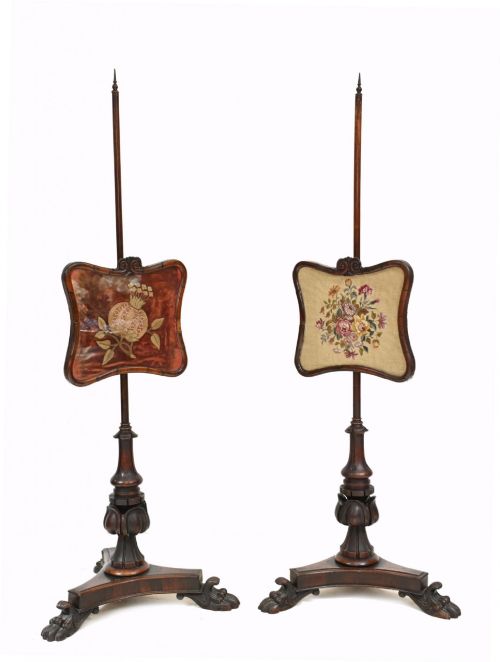
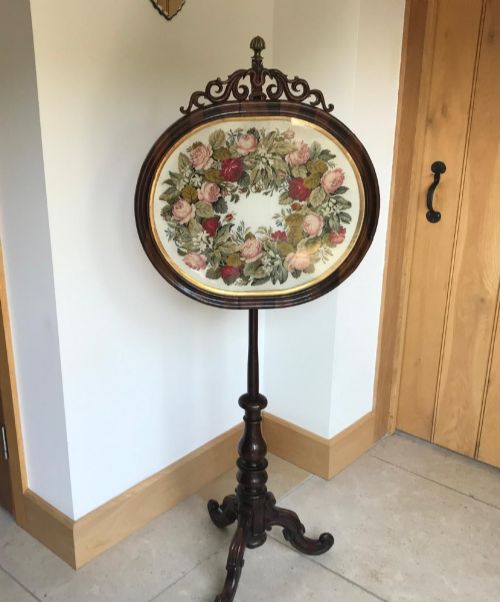
A dark wood needlepoint screen is primarily represented here by pole screens and firescreens originating from the Georgian, Regency, and Victorian periods. These pieces combine rich dark timbers with hand-worked wool tapestry panels designed to shield a room's occupants from the direct heat of an open fire.
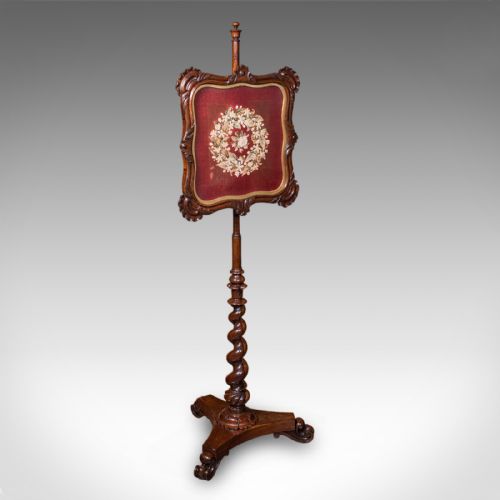
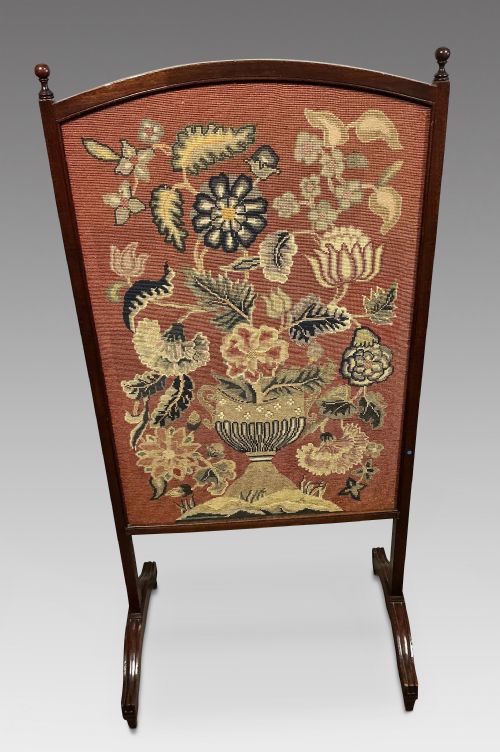
The form typically divides into upright pole screens with adjustable vertical panels mounted on tripod bases and larger standing firescreens or room dividers. Most examples rely on heavy hardwoods such as mahogany and rosewood to anchor the frame while displaying detailed floral, heraldic, or figural needlework.
How they were made
Cabinetmakers utilised dense timbers like mahogany, rosewood, and goncalo alves, turning slender support poles and carving intricate tripod bases with scroll or paw feet. These structural elements demand stable joinery to support the weight of the central frame without tipping.
The textile panels employ wool and tapestry needlepoint techniques, stretched taut within dedicated wooden frames or secured behind protective glass. Artisans embroidered botanical motifs, coats of arms, and pictorial scenes directly onto canvas backgrounds.
Dark Wood Needlepoint Screen Retail Price Guide 2026
Typical asking prices for dark wood needlepoint screen among the pieces listed under this phrase on Sellingantiques today, from the lower quarter to the upper quarter. They describe what is for sale here now, not the wider market.
What varies in quality
The distinction between standard examples and finer pieces rests upon the crispness of the timber carving and the density of the needlepoint stitching. Heavier woods combined with balanced tripod proportions indicate higher workshop standards during the nineteenth century.
Panel execution defines the visual appeal, where intricate pictorial needlework or heraldic depiction demonstrates greater artisanal skill than repetitive geometric patterns. The smoothness of the adjustable mechanism on pole screens also separates superior designs from simpler variants.
The Dark Wood Needlepoint Screen Glossary
- Pole screen
- A vertical firescreen featuring a sliding panel mounted on a central turned pillar with a tripod base. This design allowed the user to adjust the height of the textile shield to block radiant heat from the hearth.
- Firescreen
- A stationary screen placed before an inactive fireplace to conceal the grate or manage draughts. Unlike pole screens, these larger panels do not typically adjust in height.
- Needlepoint
- A form of canvas work embroidery executed with wool yarn using counted stitches. It provides both structural durability and rich coloured detail for decorative panels.
- Goncalo alves
- A dense exotic hardwood valued for its striking contrasting grain patterns. It appears on select Regency period furnishings.
- Tripod base
- A three-legged support structure commonly utilised on nineteenth-century pole screens to ensure stability on uneven floors.
Dark Wood Needlepoint Screen: Frequently Asked Questions
What is a pole screen?
A pole screen is a tall, slender furniture piece featuring an adjustable textile panel that slides up and down a central wooden shaft.
Historically placed near hearths, they allowed people to shield their faces from excessive fireplace heat.
How do I date a firescreen?
Dating relies on examining the timber species, turning styles on the pole, and the specific characteristics of the needlework panel. Regency and William IV pieces often display heavier rosewood framing and distinct classical carving on the base.
Victorian examples frequently introduce more elaborate foliate carving and darker mahogany or walnut finishes alongside floral tapestry.
Were these screens only used for fires?
While primarily designed to block radiant heat in sitting rooms, taller variations served as room dividers or privacy screens. Their decorative panels also functioned as displays of domestic needlework skill.
In modern interiors, they frequently find placement as decorative focal points rather than functional heat shields.
What woods were commonly used?
Cabinetmakers predominantly utilised dark tropical hardwoods such as mahogany and rosewood for their stability and rich colouration. Oak and goncalo alves also appear across specific pieces within the nineteenth century.
These timbers provided the necessary weight for freestanding tripod bases.