


Dark Wood Mirror Back
A dark wood mirror back brings together deep timber tones and reflecting glass, anchoring a room with a sense of Victorian and Edwardian presence.
Dark Wood Mirror Back
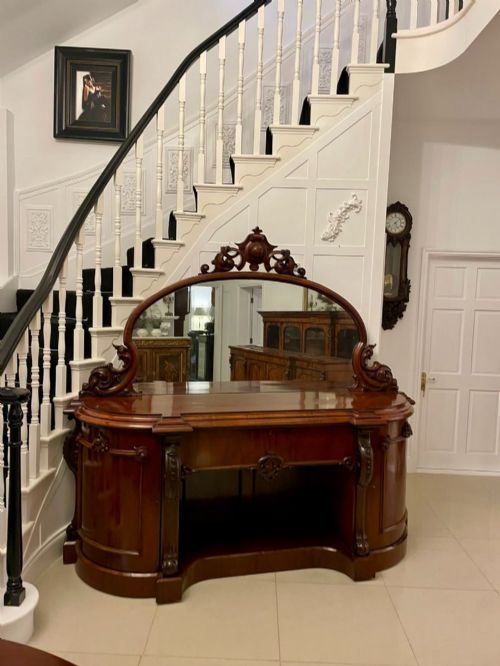
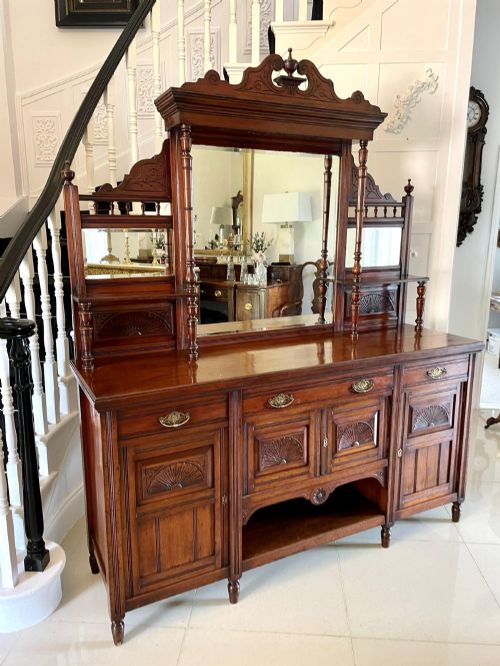
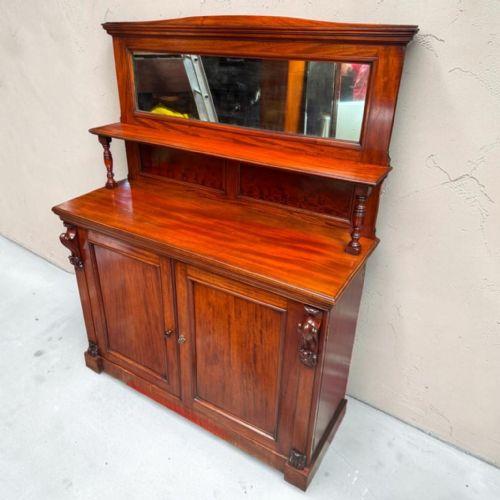
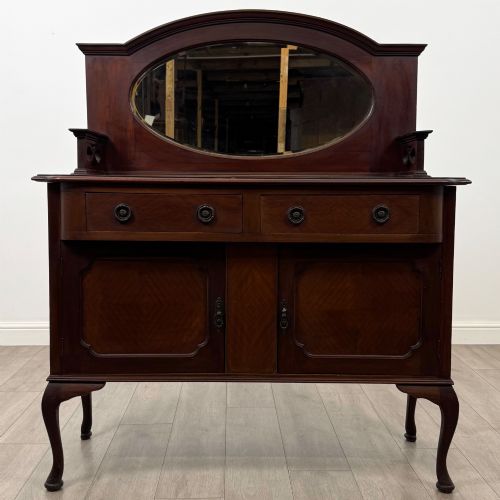
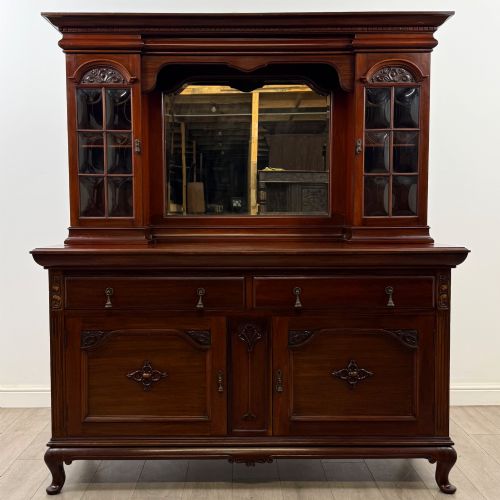
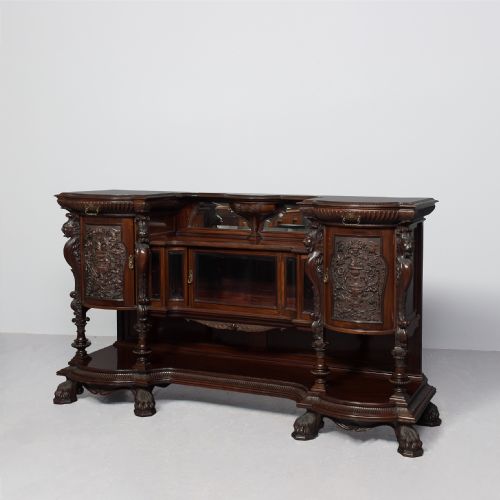
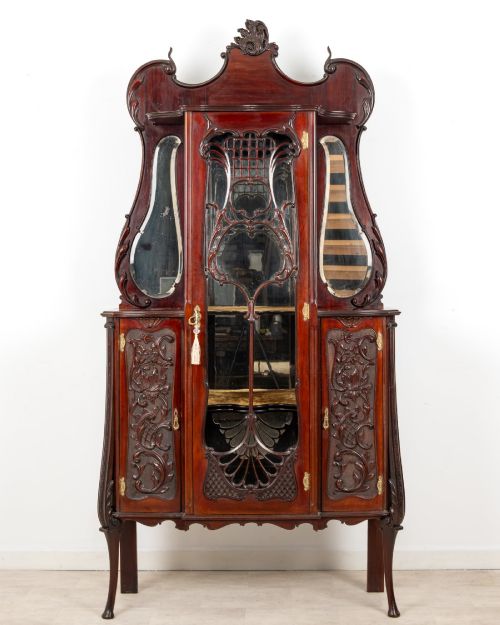
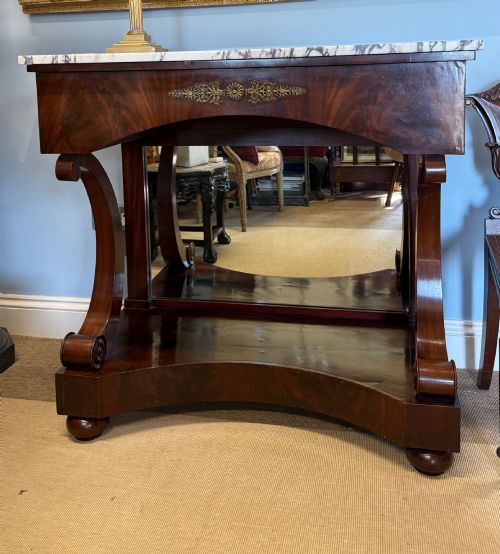
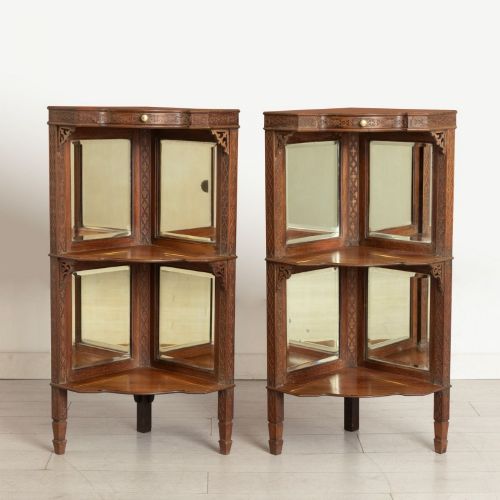
When you search for a dark wood mirror back, you are looking primarily at large case furniture designed to display and reflect light within a principal room. These forms stem predominantly from the nineteenth and early twentieth centuries, spanning the Victorian and Edwardian eras.
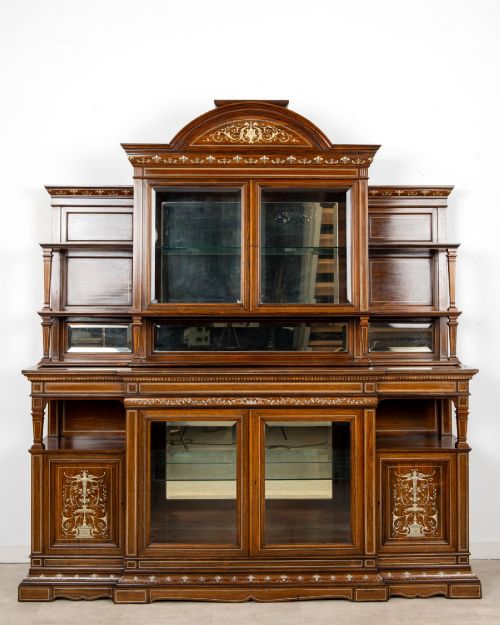
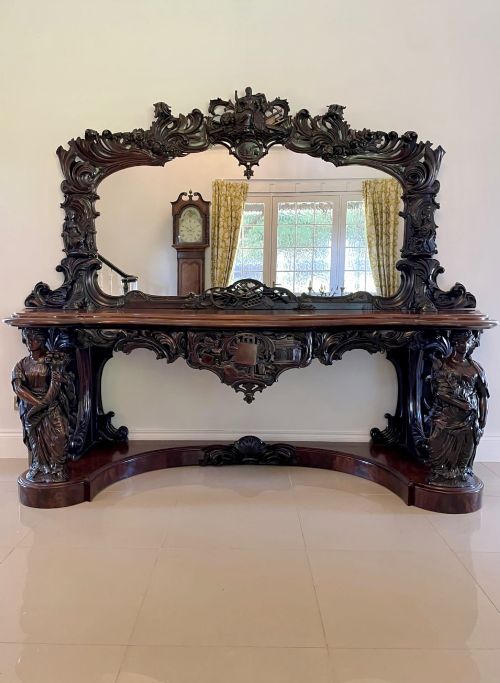
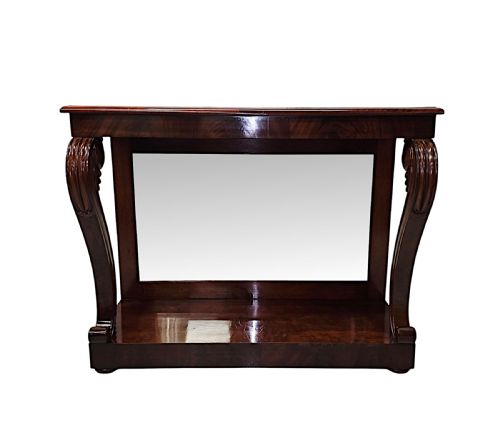
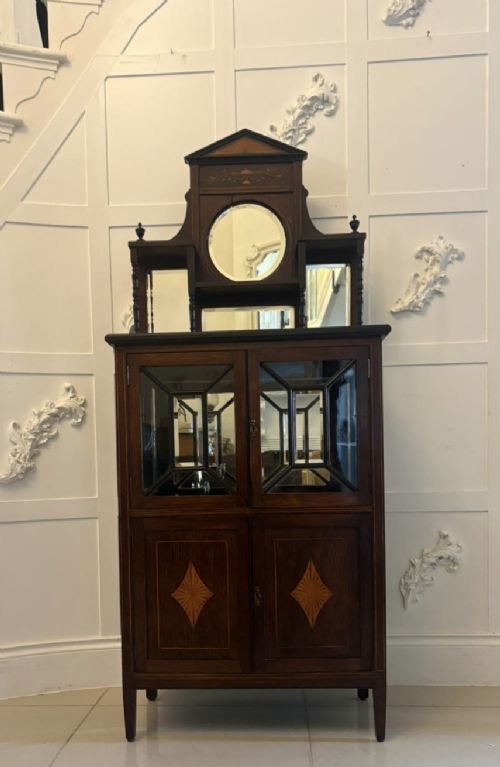
Sideboards, console tables, and display cabinets form the majority of what you will meet on this page. Many incorporate architectural timber frames supporting an upright glass plate, often featuring carved details or marquetry.
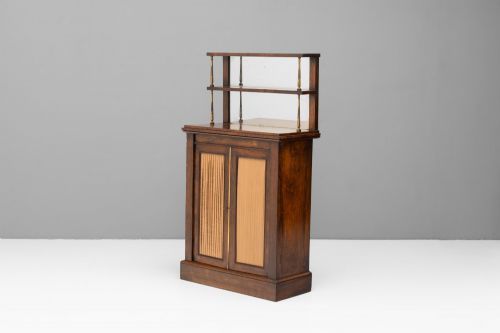
Origins range across British workshops of the 1850s to 1900s, alongside Irish Regency examples and occasional continental influences. The timber used is typically dense and dark, favouring mahogany and rosewood over lighter decorative veneers.
Materials and construction methods
Cabinet makers relied heavily on solid mahogany and rosewood, frequently pairing polished timber with mercury or silvered mirror glass. Secondary elements included brass mounts, marble tops, and occasional satinwood inlay.
Carving was executed by hand, particularly on Victorian Gothic and Rococo revival pieces where deep mouldings and foliate motifs frame the central glass. Frames were jointed securely to support the heavy weight of upright mirrors.
Several sideboards include discreet cellarette drawers originally lined for cooling wine bottles beside the mirror.
Distinguishing quality across the range
The distinction between standard commercial pieces and exhibition work lies in the depth of the carving and the selection of the timber grain. Finer examples display carefully matched mahogany veneers and robust structural joinery that supports heavy superstructure without distortion.
Attribution to known makers or documented workshops elevates a piece, as does the integration of auxiliary materials like inset marble or elaborate brass hardware. Original mirror glass with authentic foxing or heavy bevels denotes a higher grade of production.
Collinson & Lock·Gillingtons of Dublin·Edwards & Roberts·Holland & Sons·Gillows
The Dark Wood Mirror Back Glossary
- Console table
- A wall-mounted or freestanding table designed to stand against a vertical surface, frequently paired with a matching wall mirror or an integrated mirror back.
- Chiffonier
- A compact sideboard developed in the Regency and Victorian periods, typically featuring enclosed cupboards below and a shelf or mirror superstructure above.
- Marquetry
- Decorative patterns formed by the insertion of contrasting pieces of wood veneer into a solid timber ground, common in later nineteenth-century cabinet work.
- Pedestal sideboard
- A heavy dining room base piece featuring flanking cupboards or drawers beneath a long timber top, sometimes surmounted by an architectural mirror back.
Dark Wood Mirror Back: Frequently Asked Questions
What is a dark wood mirror back?
It is a piece of case furniture, such as a sideboard or console table, featuring a timber frame integrated with an upright glass mirror.
These forms became popular during the nineteenth century to amplify light and display decorative objects in Victorian interiors.
How do I date a mirror back?
Dating relies on observing the timber species, the style of carving, and the construction methods used in the cabinet base. Victorian pieces often show heavy revival motifs, while Edwardian versions lean towards lighter satinwood inlays.
The integration of the mirror itself also provides clues, as plate glass manufacturing techniques evolved significantly between the Regency period and the early twentieth century.
Where should I place a console table?
These tables are designed to sit flush against a wall in a hallway, drawing room, or dining space where floor depth is restricted.
Their integrated mirrors help bounce natural light across smaller rooms while providing a surface for lamps or decorative ceramics.
Are these pieces made of solid wood?
Most examples combine solid timber framing with fine wood veneers applied to stable secondary woods to prevent warping over time.
Dense timbers like mahogany and rosewood dominate the construction, often enhanced with brass hardware or marble tops.