
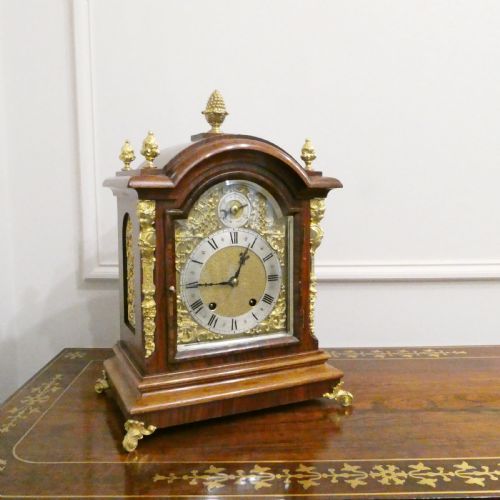


Dark Wood Mantle Clock
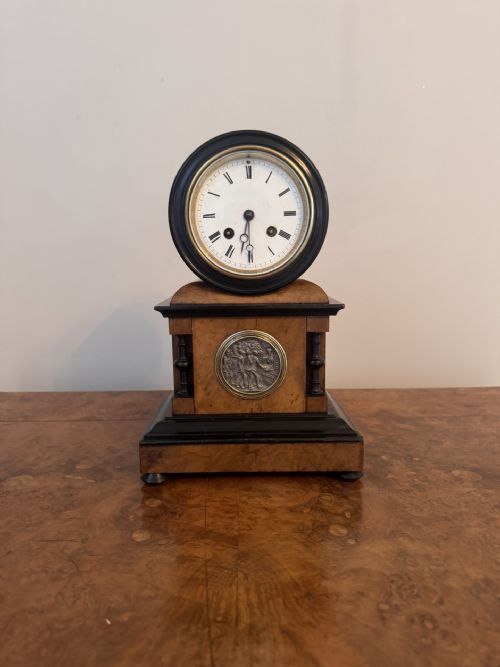
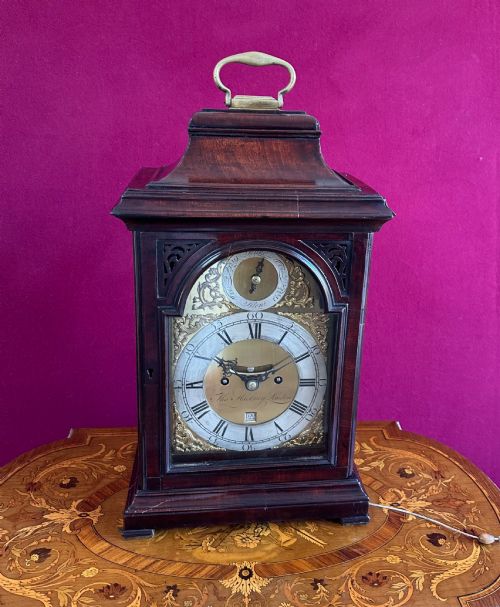
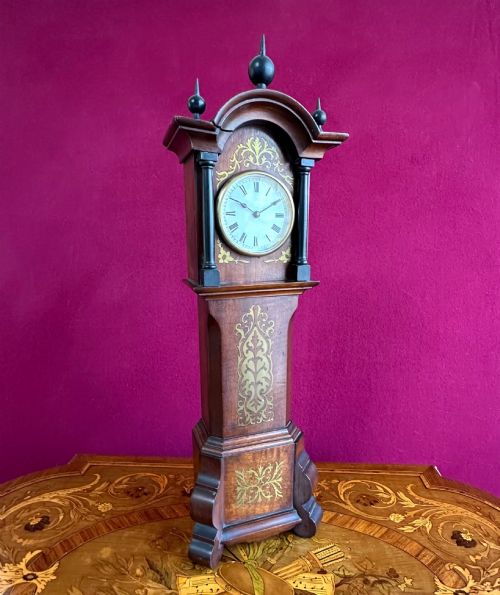
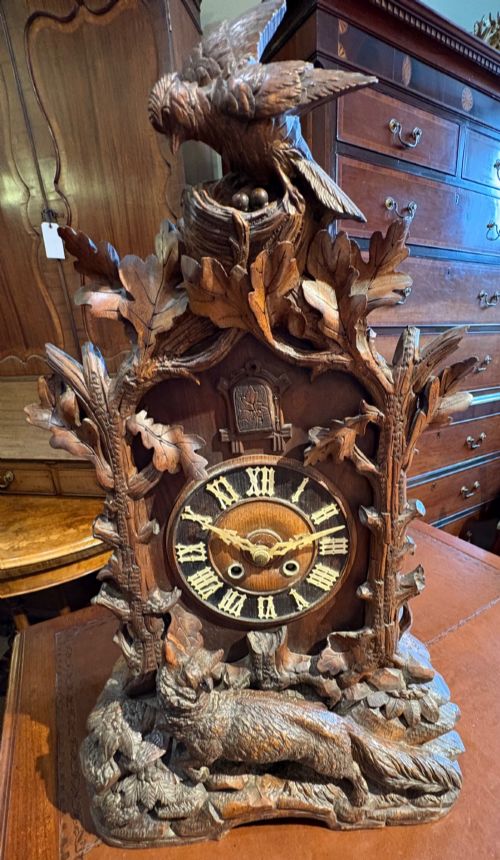
These dark wood mantle clock pieces offer substantial mechanical presence and rich timber patination for any interior.
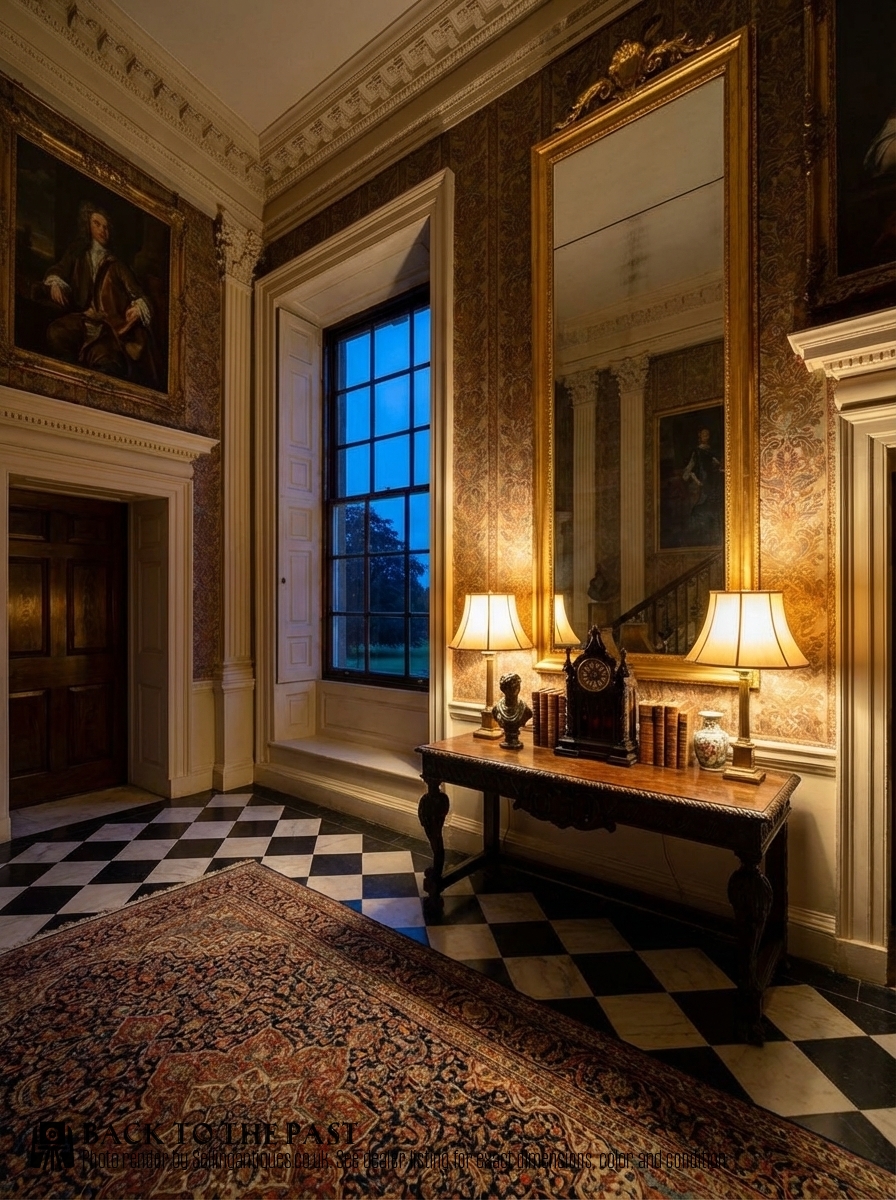
Dark Wood Mantle Clock
A dark wood mantle clock brings period timekeeping into domestic spaces through forms such as bracket clocks, table clocks, and traditional mantel pieces. These objects originate from centuries spanning the Georgian era through to the Edwardian period and the 1920s.
The versions most commonly found here are housed in rich timbers like mahogany, rosewood, and walnut, often reflecting Victorian and Edwardian tastes. Such pieces serve both a functional timekeeping role and act as architectural focal points on shelves and desks.
Quality factors in construction and movement
Superior examples distinguish themselves through the crispness of timber carving, precision brass inlay, and the complexity of the internal movement. Double fusee mechanisms and signed maker plates generally indicate a higher grade of craftsmanship.
The condition of the timber finish, the originality of the dial, and the integration of decorative elements like silver cladding or brass bezels further separate standard production items from workshop masterpieces.
Movements range from simple table timepieces to complex double fusee bracket clock mechanisms.
Schneckenburger·Charles Frodsham·Edwards Of London·Beha·Perigal And Duterrau
The Dark Wood Mantle Clock Glossary
- Fusee
- A conical pulley used in mechanical clocks to maintain an even pull on the movement as the mainspring unwinds. This device ensures more consistent timekeeping.
- Bracket clock
- A portable timekeeper originally designed to sit on a bracket to project sound further into a room. Many examples feature robust carrying handles.
- Verge escapement
- An early type of clock mechanism that regulates the speed of the gear train. It produces a distinctive ticking rhythm.
- Double fusee
- A movement utilising two separate fusee cones, typically dividing the timekeeping train from the striking train. This setup improves accuracy.
- Enamel dial
- A metal face coated with fused glass powder to create a smooth, white surface for painted numerals. These dials resist tarnishing over time.
Dark Wood Mantle Clock: Frequently Asked Questions
Where should I place a heavy wooden clock?
Position your clock on a stable, level surface such as a heavy mantelpiece, sideboard, or dedicated bracket. Unlevel placement can cause the pendulum to stop beating evenly.
Keep the timber away from direct sunlight and strong heat sources like radiators to prevent the wood from drying out and cracking.
What maintenance do these antique movements require?
Mechanical clocks benefit from professional cleaning and oiling every few years to remove accumulated dust and old lubricants. Regular servicing preserves the brass gears.
Avoid attempting internal repairs yourself, as the spring tension requires specialised tools and knowledge to handle without injury.
How do I identify the period of my clock?
Examine the timber choice, case style, and any signature engraved on the backplate or dial face. Georgian and Regency pieces often feature simpler architectural lines compared to elaborate Victorian Gothic designs.
Maker signatures and movement types offer further clues to the decade of manufacture, linking the piece directly to recorded horological workshops.