



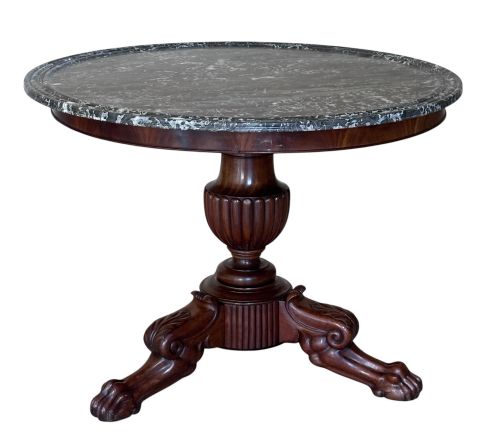


Dark Wood Gueridon Table
A dark wood gueridon table brings French elegance and compact surface utility into a room.
Dark Wood Gueridon Table
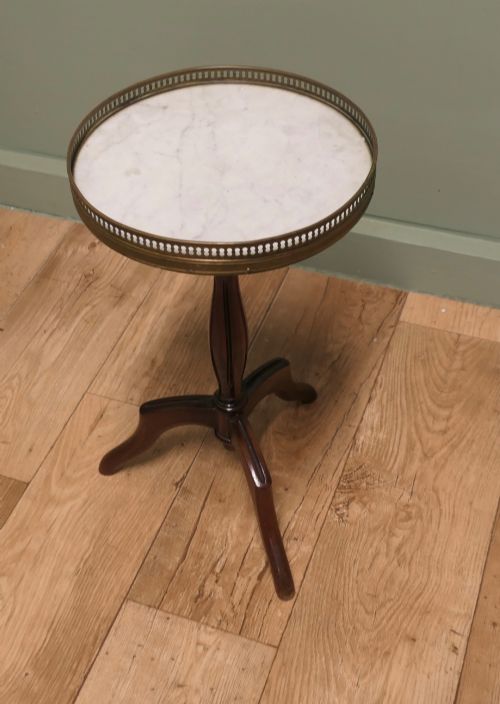
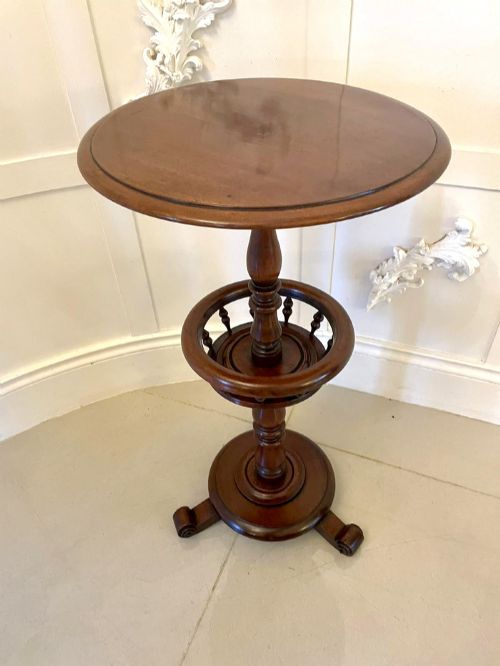
A dark wood gueridon table is a round occasional, lamp, or centre table supported by a single central pedestal or column, originating in France before spreading to British and international workshops. These pieces appear in forms such as lamp tables, wine tables, and occasional tables designed to stand beside seating or anchor the centre of a room.
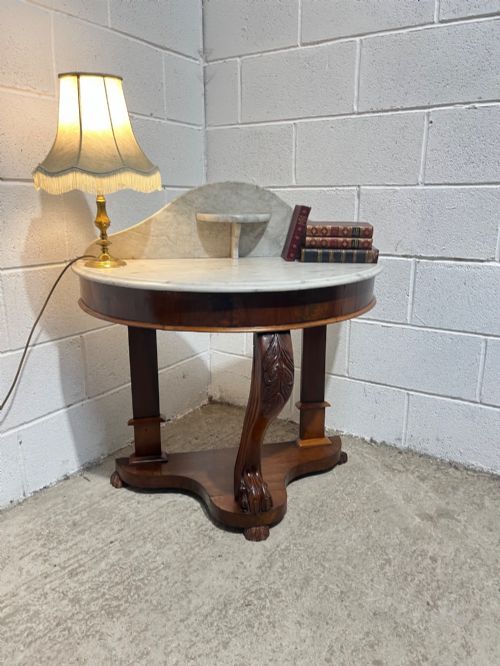
The examples gathered here span from the eighteenth century through the Victorian era, showing French Empire, Louis Philippe, and Victorian French styles. Visitors to this page will most frequently encounter nineteenth-century mahogany and hardwood versions equipped with stone tops.
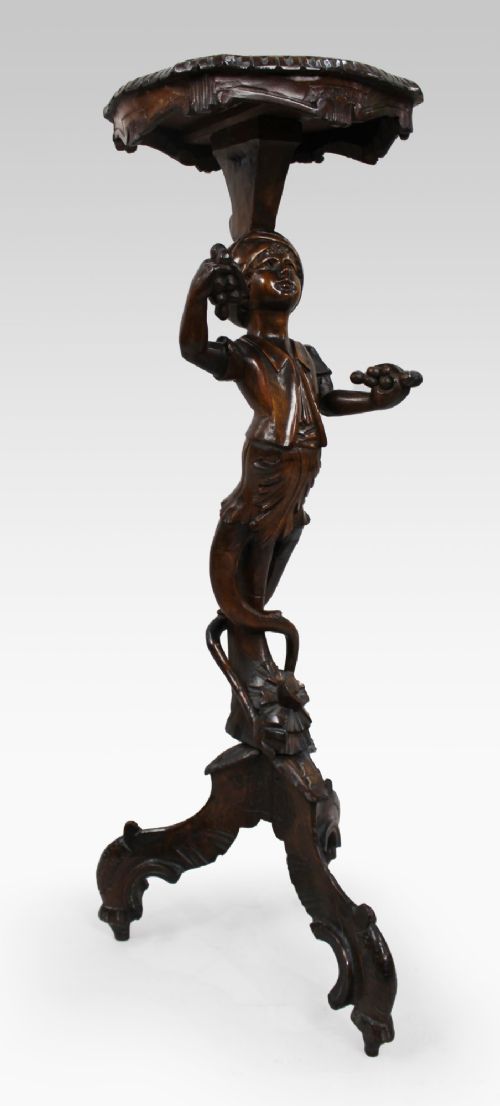
Makers and designers drew upon classical proportions, adapting pedestal supports into figural stands, swan supports, or simple carved pillars. Each dark wood gueridon table demonstrates how a compact footprint can accommodate heavier materials like marble without losing balance.
How they were made
Cabinetmakers utilised dense timbers such as mahogany, oak, coromandel, and walnut to construct the stable central pillars and tripod or platform bases required to hold heavy stone. Wood selection dictated whether the piece could sustain intricate carved figural elements or sleek, polished veneered surfaces.
Surface ornamentation combined natural timber grain with applied metalwork, incorporating ormolu mounts, gilded brass details, and inset marble slabs. Marble tops were fitted precisely into recessed wooden rims, requiring steady masonry skills alongside traditional joinery.
Dark Wood Gueridon Table Retail Price Guide 2026
Typical asking prices for dark wood gueridon table among the pieces listed under this phrase on Sellingantiques today, from the lower quarter to the upper quarter. They describe what is for sale here now, not the wider market.
Some nineteenth-century tables feature crouching figural stands that seem to hold up the entire weight of the world on their shoulders.
What varies in quality
Quality rests upon the harmony of proportions between the central pedestal, the base supports, and the top. Stronger pieces display seamless joinery where the column meets the foot, ensuring the heavy marble or timber top sits completely level.
The execution of decorative elements creates the primary distinction between standard workshop production and high-status examples. Finely chased ormolu mounts, crisply carved wooden figures, and carefully matched wood veneers elevate a dark wood gueridon table from a utilitarian stand to a focal point of interior design.
The Dark Wood Gueridon Table Glossary
- Gueridon
- A small French table supported by a single column or pedestal, typically round. This form originated in the seventeenth century and remained popular through the Victorian period.
- Ormolu
- Gilded bronze applied as a decorative mount to furniture. This technique produces a bright golden finish that contrasts sharply against dark tropical hardwoods.
- Specimen Marble
- A tabletop composed of various coloured marbles arranged in geometric patterns or geometric samples. Such tops demonstrate advanced stone-cutting and assembly techniques.
- Console Table
- A table designed to stand against a wall, frequently secured with brackets. These pieces often feature ornamental legs or pedestals matching the style of companion gueridon tables.
- Coromandel
- A dense, dark brown timber with contrasting black streaks imported from Asia. Cabinetmakers prized this material for high-status nineteenth-century occasional furniture.
Dark Wood Gueridon Table: Frequently Asked Questions
What is a gueridon table?
A gueridon table is a small round freestanding table supported by a single central pedestal or column. These pieces were traditionally used for holding candles, lamps, or drinks.
Over time, the form evolved to include various wood types and stone tops while retaining its compact circular profile.
How were these tables used?
These tables served primarily as movable surfaces for lighting, display, or serving wine in parlours and drawing rooms. Their central pedestal design allowed people to sit close without legs obstructing the chair.
They functioned equally well placed beside upholstered seating or positioned centrally beneath a ceiling fixture.
How do I identify French Empire style?
French Empire style relies on classical antiquity, featuring dark mahogany surfaces, bronze ormolu mounts, and symmetrical pedestal supports. The decorative vocabulary includes motifs such as swans, classical figures, and military trophies.
These elements project a sense of formal grandeur characteristic of the early nineteenth century.
Are marble tops original?
Marble tops on nineteenth-century tables were commonly integrated into the initial design to provide a stable, heat-resistant surface for lamps and drinks. Inspecting the underside reveals whether the wooden rebate accommodates the stone naturally.
Variations in marble colour and thickness help establish period authenticity.
How do I care for dark wood?
Maintenance requires keeping wood away from direct heat sources and strong sunlight to prevent the timber from drying and splitting. Regular dusting with a soft cloth preserves the polished finish.
Occasional application of appropriate wax feeds the grain without building up heavy residue.