


Dark Wood Fireplace Mantel
These dark wood fireplace mantel pieces are striking architectural fittings and mirrors that anchor a room with period character.
Dark Wood Fireplace Mantel
A dark wood fireplace mantel search brings up heavy architectural surrounds and large wall-hanging mirrors designed to sit directly above a hearth. You will most frequently encounter substantial overmantel mirrors alongside occasional fire surrounds and mantel clocks.
The selections span from the 19th century through the Edwardian era, taking in Victorian, Regency, and Chippendale Revival styles. These pieces transform a plain chimney breast into a focal point by adding rich grain and traditional proportions to a living space.
Makers and craftsmen utilised varied dark timbers to suit changing fashions throughout the decades, ranging from formal domestic reception rooms to grand libraries. Each example carries the distinct design language of its period, whether through arched frames or intricate cresting.
Materials and construction methods
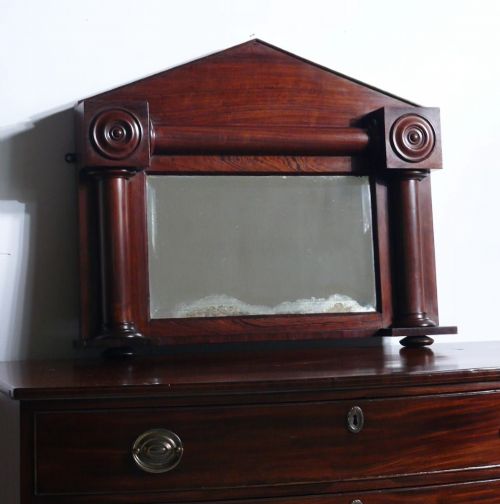
The items rely heavily on dense hardwoods such as mahogany, rosewood, oak, and walnut, often chosen for their deep natural tones and durability. Craftsmen shaped these timbers into robust frames, sometimes enhancing the surfaces with delicate wood inlay or marquetry.
Giltwood, gold leaf, and parcel-gilt accents appear alongside plain wood to catch the light and highlight carved details such as cresting and arches. Structural joinery supports the weight of large glass plates within the overmantel mirror formats.
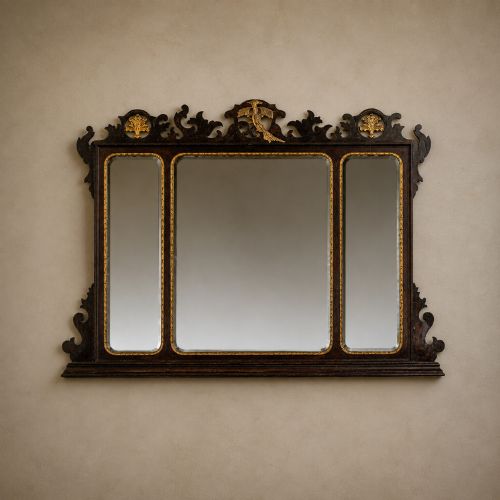
Certain Victorian mirrors sport whimsical Ho-Ho bird cresting perched right at the top.
Differentiating quality across pieces
The distinction between standard examples and superior pieces rests on the depth of the carving and the precision of the joinery. Finer items exhibit crisp execution in decorative elements like Ho-Ho bird cresting or complex framing.
Selection of the timber grain significantly influences the visual weight and richness of an item. Superior pieces feature well-figured mahogany, rosewood, or walnut that has matured gracefully over the centuries.
Budgen Croydon
The Dark Wood Fireplace Mantel Glossary
- Overmantel mirror
- A large mirror designed to hang on the wall directly above a fireplace mantelpiece. These often feature architectural frames to reflect light and fill vertical wall space.
- Marquetry
- The art and craft of applying pieces of veneer to a structure to form decorative designs. It adds pattern and contrasting tones using various woods.
- Fusee movement
- A mechanism used in clocks to ensure even power delivery from the mainspring as it unwinds. This improves timekeeping accuracy across the duration of the wind.
Dark Wood Fireplace Mantel: Frequently Asked Questions
What is an overmantel mirror?
An overmantel mirror is a large wall mirror specifically scaled to hang immediately above a fireplace opening. They were traditionally positioned to bounce candlelight and firelight around a room.
Today, they serve the same function, effectively doubling the apparent light and depth of a drawing room or dining space.
How do I style a dark wood mantel?
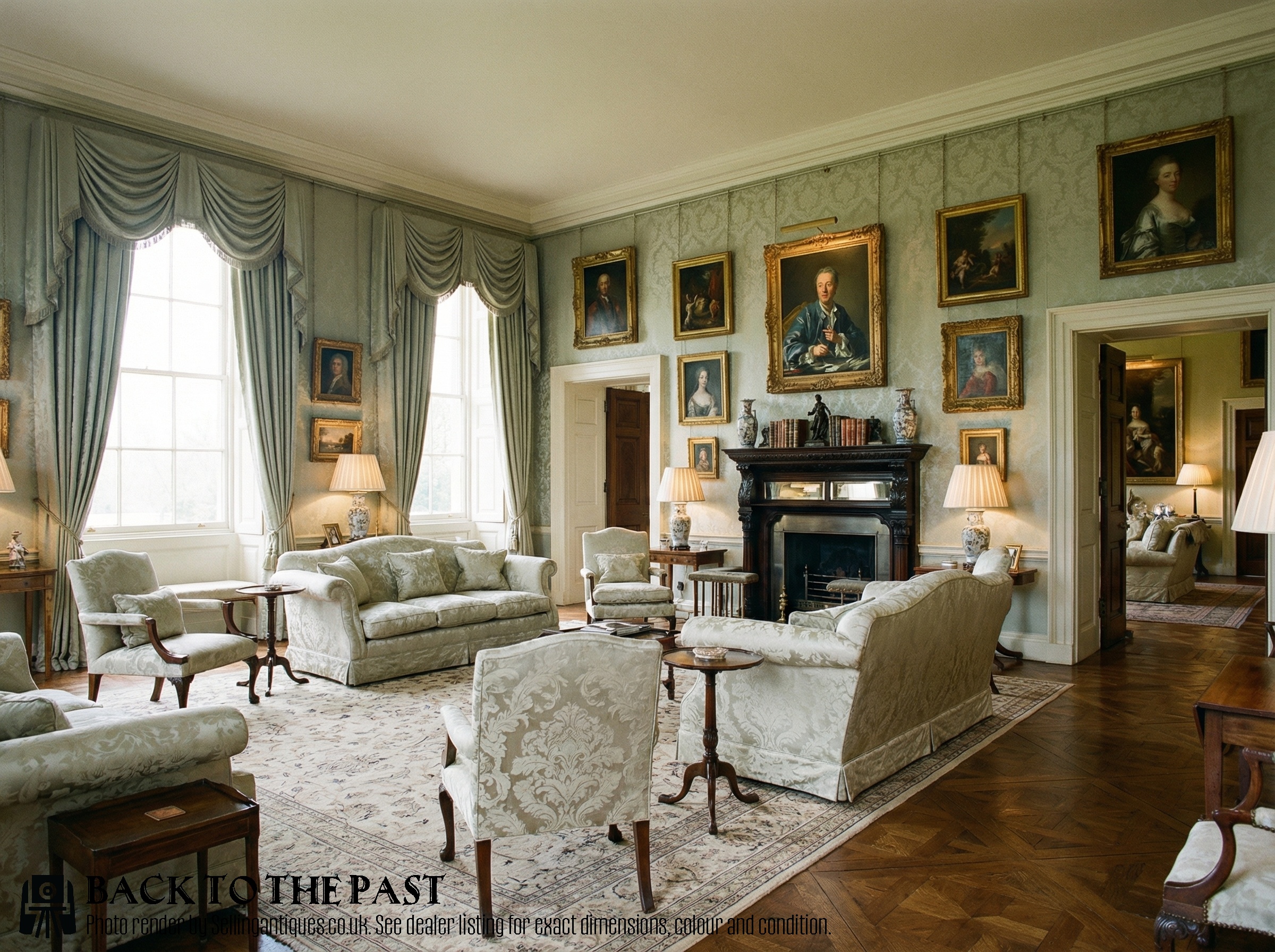
Dark wood frames demand balanced surroundings to keep a room feeling bright and intentional. Pair them with neutral wall colours or complementary period plasterwork to let the timber grain stand out.
Keep mantel displays restrained so the architectural presence of the wood and mirror frame remains the primary focus of the wall.
Are these pieces solid wood?
Construction methods vary between solid timbers and veneered surfaces over secondary woods. Heavier items often combine robust structural framing with decorative veneers on flat panels.
Both solid construction and high-grade veneering were standard practices in period workshops depending on the desired visual effect.
How do I identify a Victorian mantel piece?
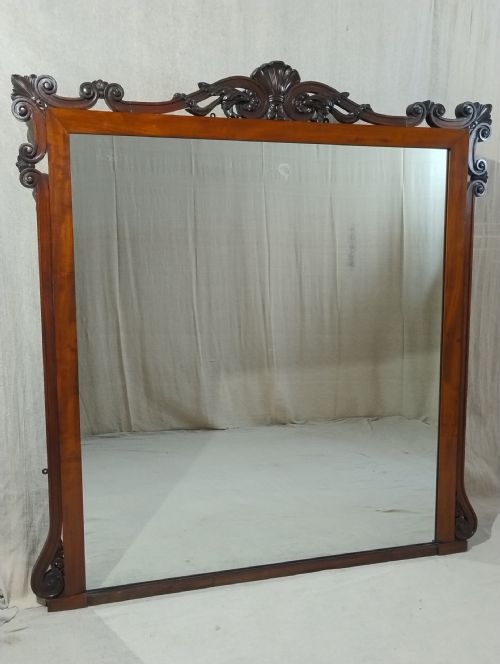
Victorian pieces frequently display substantial proportions, dark mahogany or walnut timbers, and ornate details such as arched tops or carved cresting. They reflect the heavier, more decorative tastes of the 19th century.
Comparing the framing style and joinery techniques to known period examples helps confirm the era of production.