




Dark Wood Figurative Carving
Dark wood figurative carving brings human and animal forms into domestic spaces through centuries of sculptural tradition.
Dark Wood Figurative Carving
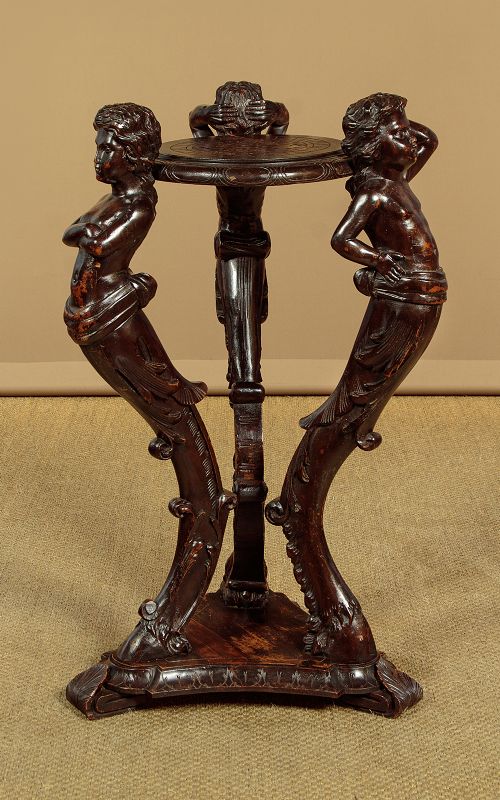
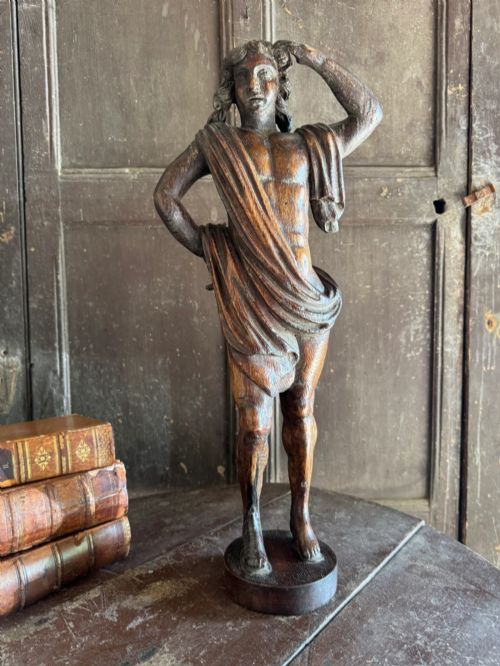
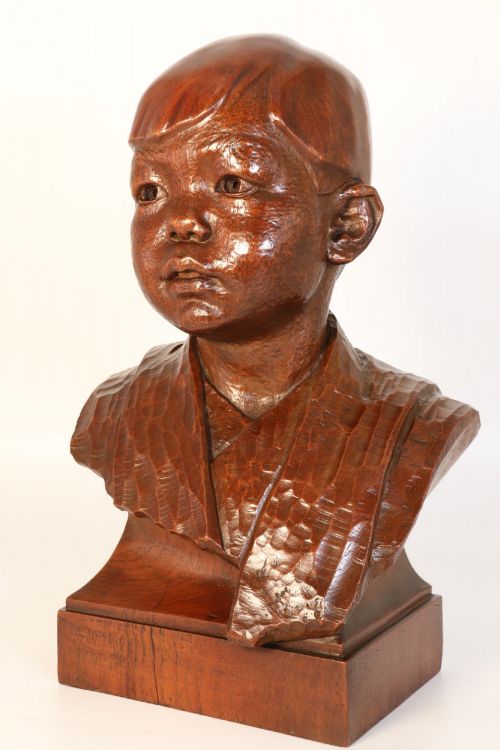
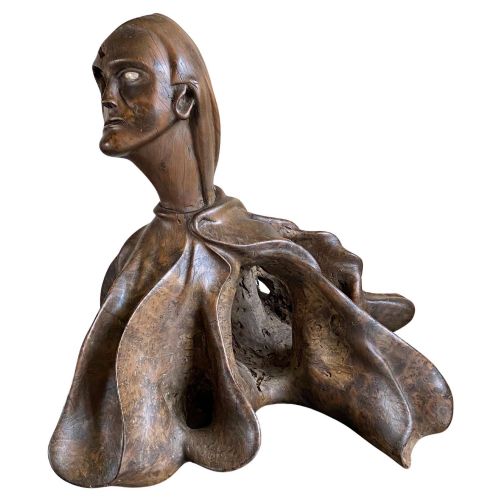
Dark wood figurative carving encompasses sculptural objects, panels, furniture and utilitarian items shaped into human and animal forms from walnut, oak and various hardwoods. When exploring dark wood figurative carving, you encounter pieces ranging from Black Forest nutcrackers and bears to classical figures, tribal busts, and folk art human forms.
The selection spans from the seventeenth century through the Victorian era into the early twentieth century, including Japanese Meiji period works and Balinese modernist pieces. These items serve both decorative and functional roles in interiors, taking the form of wall brackets, side tables, clocks, and candle sticks alongside free-standing sculptures.
You are most likely to meet nineteenth century examples, particularly Black Forest nutcrackers and animal chairs, alongside European and non-European portrait busts and carved architectural panels. The materials lean heavily towards walnut and oak alongside linden wood and dense regional hardwoods.
Assessing quality in carved wood
The selection of the timber dictates the sharpness of the preserved detail, with dense hardwoods like walnut and boxwood holding crisp edges and fine lines over centuries. Original surfaces and patination left by age and handling separate pieces that retain their integrity from those with heavy later interventions.
Dark Wood Figurative Carving Retail Price Guide 2026
Typical asking prices for dark wood figurative carving among the pieces listed under this phrase on Sellingantiques today, from the lower quarter to the upper quarter. They describe what is for sale here now, not the wider market.
Object types range from life-size portrait busts and nutcrackers to side tables, wall panels, and headrests.
George Henry Paulin RBS·Boudewijn Tuerlinckx
The Dark Wood Figurative Carving Glossary
- Black Forest
- A regional style of wood carving originating from the Brienz region of Switzerland, famous for realistic animals, particularly bears, and heavily carved household objects.
- Folk art
- Utilitarian or decorative items created by self-taught or traditional craftspeople, often displaying regional character and direct observation of human or animal subjects.
- Meiji period
- The era of Japanese history lasting from 1868 to 1912, known for highly refined metalwork, ivory, and wood carvings produced for both domestic and export markets.
- Walnut
- A heavy, durable hardwood with a rich dark brown colour and varied grain, favoured by carvers for its stability and ability to hold fine detail.
- Nutcracker
- A mechanical or lever-operated tool, frequently carved in the form of human caricatures or animals within European folk carving traditions.
Dark Wood Figurative Carving: Frequently Asked Questions
What is a Black Forest carving?
Black Forest carvings are detailed wooden sculptures and functional items, such as nutcrackers, clocks, and chairs, typically produced in Switzerland during the nineteenth century. They are known for realistic animal representations, especially bears, rendered in dark walnut and linden wood.
These pieces often combine decorative appeal with practical utility, reflecting the natural landscape and wildlife of the region through deep, expressive carving techniques.
How do I date an old wood carving?
Dating relies on examining the tool marks, timber choice, style of dress, and construction methods relative to known periods like the seventeenth century, Victorian era, or early twentieth century. Wear patterns, patination on the wood surface, and any signatures or stamps provide further chronological markers.
Comparing the sculptural style to documented regional traditions, such as Japanese Meiji work or European folk art, helps narrow the production era.
How were figurative wood panels used?
Figurative wood panels were integrated into architectural interiors, wall cladding, furniture doors, and wall brackets during the seventeenth and eighteenth centuries. They served to decorate domestic and public spaces with narrative scenes, portraits, or allegorical figures.
Over time, many such panels were removed from their original structural contexts and framed as standalone works of art for display.