
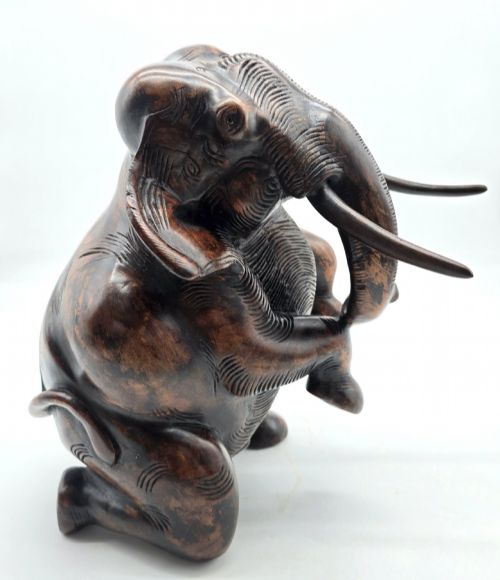
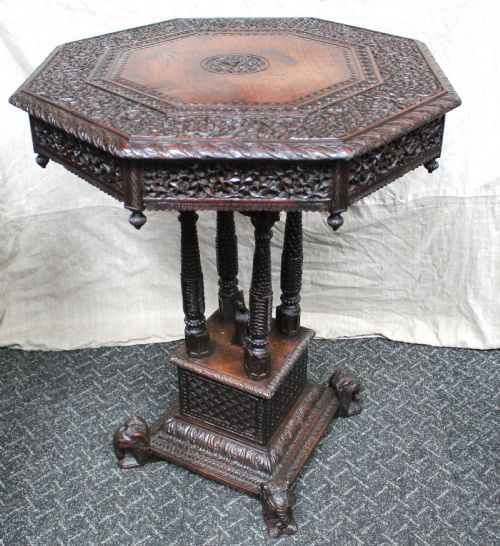


Dark Wood Elephant Carving
A dark wood elephant carving brings the dense character of nineteenth and early twentieth century colonial workshops into a room.
Dark Wood Elephant Carving
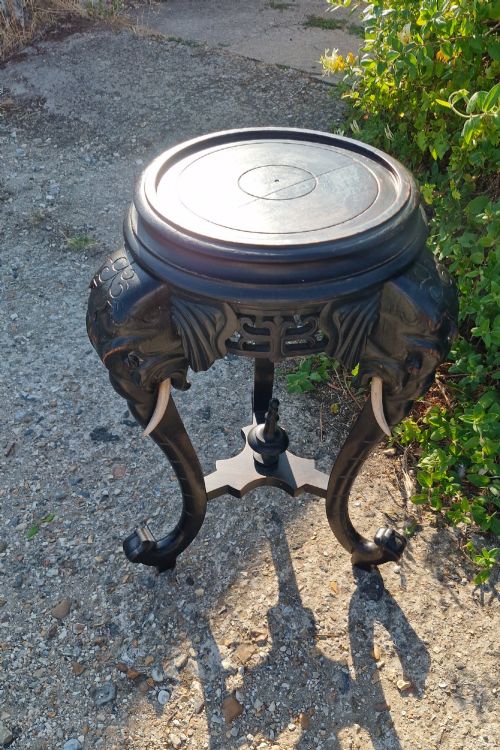
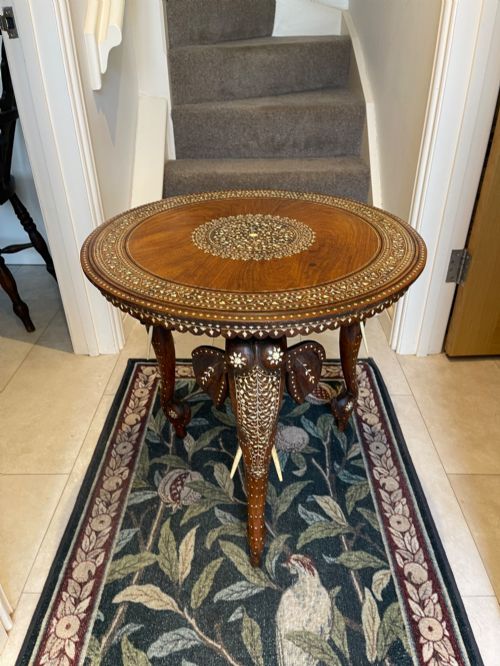
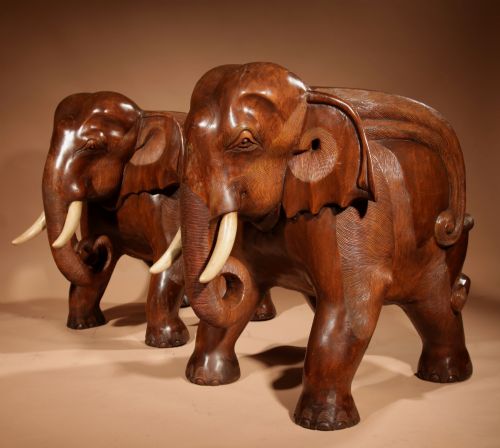
When you search for a dark wood elephant carving, you encounter furniture and decorative figures rooted in the nineteenth and early twentieth centuries. These pieces emerge primarily from Anglo-Indian, Burmese, and Black Forest traditions, spanning the Victorian and Edwardian eras. The selection on this page ranges from substantial occasional and centre tables supported by carved animal forms to detailed figural studies, bookends, and armchairs.
Materials and construction
Carvers utilised dense timbers such as teak, rosewood, ebony, and general hardwood to achieve deep, crisp relief. These heavy woods provided the structural integrity needed for furniture like armchairs and side tables while holding fine detail in sculptural tusks and trunks.
Makers incorporated bone inlay and brass elements to accent the dark surfaces of regional pieces. Woodworkers employed traditional joinery combined with heavy carving, occasionally integrating painted wooden tusks or stands to complete the animal studies.
Several elephants wear painted wooden tusks, showing that early carvers occasionally improvised when natural ivory was absent.
Qualities of craftsmanship
Proportion and structural stability also separate the tiers of quality. Finer examples maintain balance in furniture forms where elephant legs must support tabletops without clumsy reinforcement or awkward stance.
The Dark Wood Elephant Carving Glossary
- Anglo-Indian
- Describing decorative arts and furniture made in India during the British period, frequently combining British forms with local carving traditions.
- Hoshiarpur
- A region in Punjab renowned for intricate woodwork involving dense geometric bone inlay set into dark timber.
- Black Forest
- A style of wood carving originating from the European mountain region, known for realistic animal studies and dramatic furniture elements.
- Raj Period
- The era of British rule in the Indian subcontinent spanning the nineteenth and early twentieth centuries, associated with specific colonial furniture styles.
Dark Wood Elephant Carving: Frequently Asked Questions
What is an elephant table?
An elephant table is a piece of furniture where the legs or central support take the form of carved elephants.
These tables date largely from the nineteenth and early twentieth centuries, originating mainly in India and Burma.
How do I date an elephant carving?
Dating relies on timber choice, tool marks, and stylistic traits associated with periods like the Victorian era or the Raj.
Examining the wear patterns on the dark wood and the style of any inlay helps narrow the decade of origin.
Are elephant bookends common?
Bookends featuring carved elephants appear in several regional styles from the late nineteenth and early twentieth centuries.
Carvers produced these practical library items in dense hardwoods such as ebony and teak.
Where were these pieces made?
The pieces originate primarily from workshops in India, Burma, and European centres like the Black Forest.
Colonial trade and British presence during the nineteenth century facilitated the creation and export of these distinctive items.