
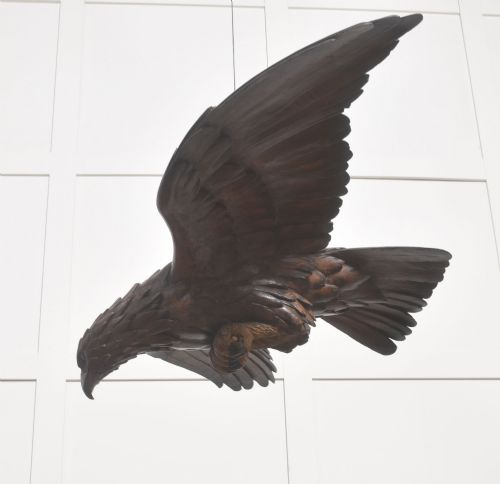

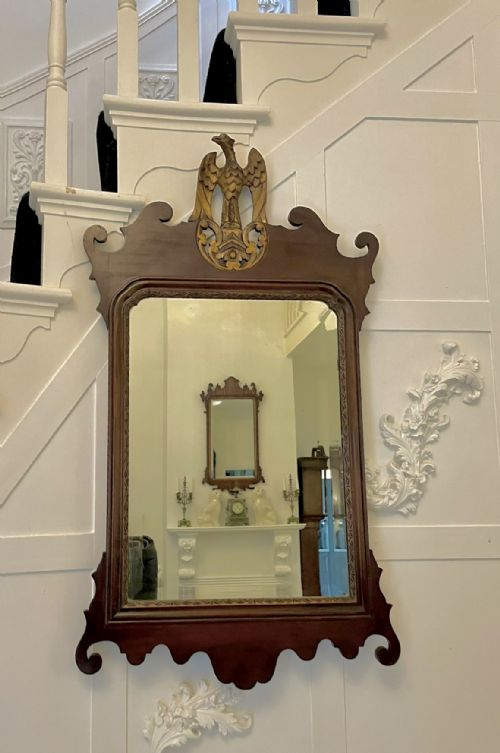
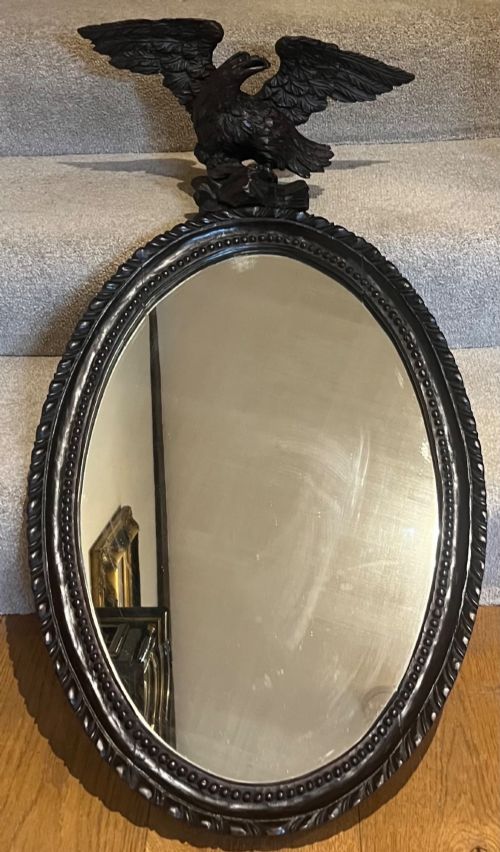


Dark Wood Eagle Carving
These dark wood eagle carving pieces bring together striking natural forms and skilled woodworking, offering an assertive presence for traditional interiors.
Dark Wood Eagle Carving
A dark wood eagle carving typically takes the form of a detailed wall mirror, a substantial sculpture, or an occasional piece of furniture such as an armchair or hall stand. These items emerge predominantly from the nineteenth century, with specific examples spanning from the eighteenth century through to the Edwardian era.
The Black Forest style dominates the selection on this page, alongside English revival forms and ecclesiastical woodwork. Buyers encounter everything from small desk accessories and ink stands to large wall-mounted mirrors framed by sweeping bird wings.
Origin points vary widely across the inventory, ranging from European alpine workshops to English cabinet makers and Japanese metal studios. Each object demonstrates a distinct regional approach to portraying birds of prey in timber and mixed media.
Materials and construction methods
Makers rely primarily on carved wood, utilising dense timbers like mahogany, walnut, and oak to achieve deep relief and sharp feather details. Dark stains and parcel gilt finishes frequently enhance the rich grain and provide contrast against gilded accents or glass mirror plates.
Construction techniques combine traditional hand-carving with fretwork assembly, particularly in wall mirrors and large seating frames. Sculptural pieces often incorporate applied elements or root wood bases, while mixed media works integrate bronze components into the wooden structure.
The listings span from the eighteenth century to the Edwardian era, incorporating mahogany, walnut, oak, and giltwood materials.
Evaluating craftsmanship and condition
The distinction between standard and superior pieces rests entirely upon the depth of the carving and the anatomical accuracy of the bird. Master carvers capture tension in the wings and intensity in the gaze, whereas lesser examples rely on flat planes and repetitive tool marks.
Structural integrity also separates the grades, as items with intricate fretwork or projecting wooden wings endure handling differently over time. Original surfaces and untouched patination elevate an object far above heavily restored or later varnished pieces.
The Dark Wood Eagle Carving Glossary
- Black Forest style
- A nineteenth-century European carving tradition known for realistic depictions of animals and foliage, frequently executed in walnut or lime wood. This style accounts for many of the sculptural animal mirrors and coat racks found in this category.
- Fretwork
- An ornamental design created by cutting patterns through thin boards with a piercing saw, common in mirror frames. This technique allows for lightweight yet ornate borders surrounding central carved motifs.
- Parcel Gilt
- A method where only specific portions of an object receive a gold leaf application, highlighting carved details against a dark wood background. This treatment accentuates the wings and crests of eagle motifs on mirrors and chairs.
- Ecclesiastical
- Pertaining to architecture, furnishings, or artwork created for Christian churches, often featuring religious iconography alongside symbolic animals like the eagle of Saint John. These historical items typically date to earlier centuries.
- Convex mirror
- A circular looking glass with a curved surface that reflects a wide-angle view of the room, frequently surmounted by a carved eagle crest. This form gained popularity during the Georgian and Regency periods.
Dark Wood Eagle Carving: Frequently Asked Questions
Where should I hang an eagle mirror?
These mirrors function best above a fireplace mantelpiece or as a focal point on a plain hallway wall where the carved wood can stand out without visual competition.
Ensure the wall fixings are substantial enough to support the weight of the timber frame and glass plate safely.
How do I care for dark wood carvings?
Dust the intricate feather details regularly with a soft, dry brush to prevent dirt accumulation in the recessed areas of the carving.
Avoid placing wooden sculptures or furniture near direct heat sources or strong sunlight, which can cause the timber to dry out and split.
What periods do these pieces date from?
The inventory consists largely of nineteenth-century items, including Victorian and Edwardian examples alongside Black Forest productions.
A select number of pieces extend back into the eighteenth century, representing earlier ecclesiastical and Georgian cabinet making traditions.
Are these items purely decorative?
While many serve as wall mirrors or freestanding sculptures, several functional objects appear in the selection, including armchairs, stick stands, and ink stands.
These practical items combine everyday utility with elaborate animal carvings typical of their period of origin.