


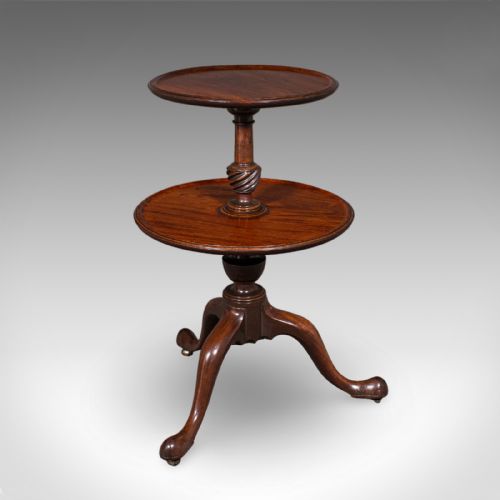


Dark Wood Dumbwaiter
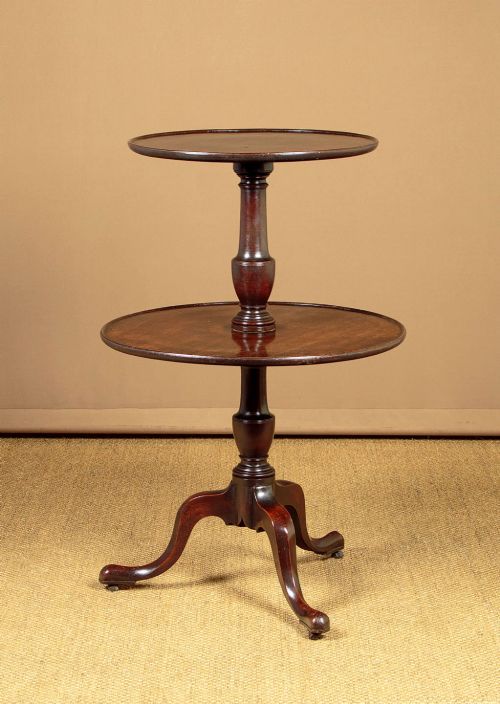
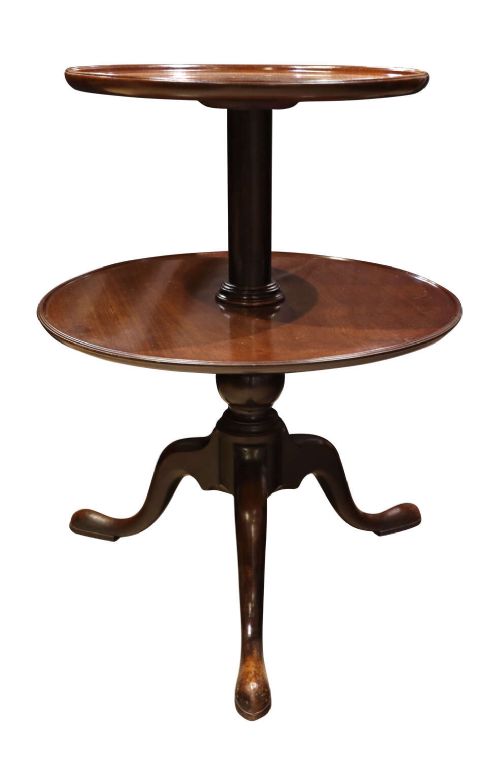
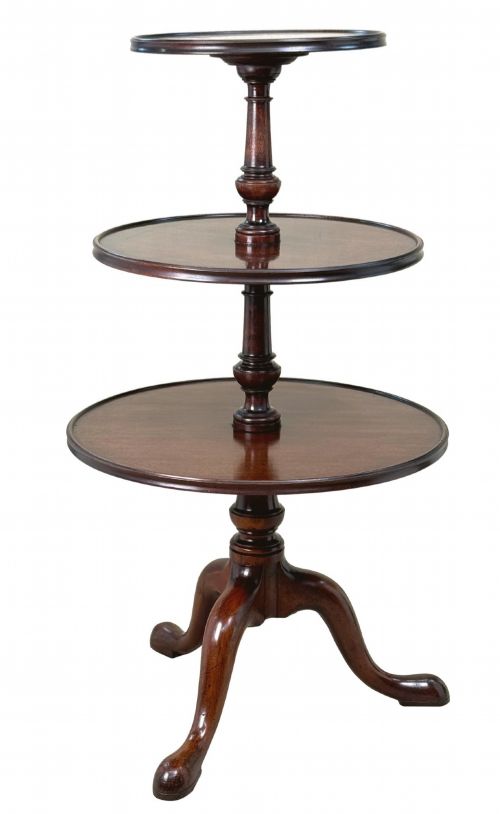
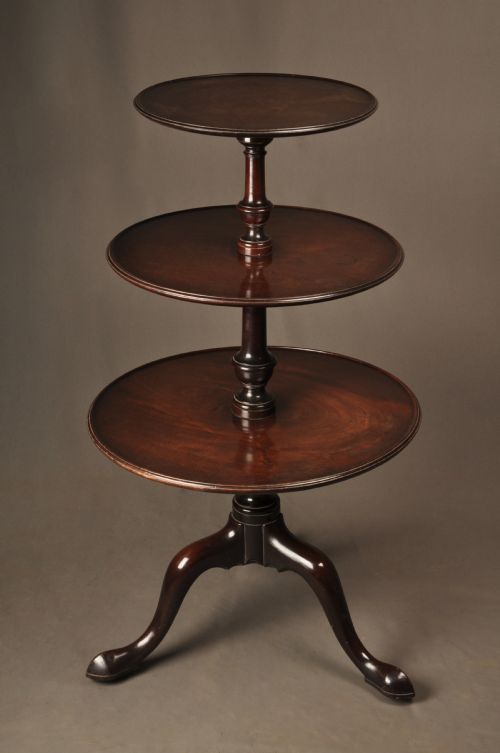
A dark wood dumbwaiter brings tiered elegance to a dining room, offering practical multi-level serving space with rich mahogany grain.
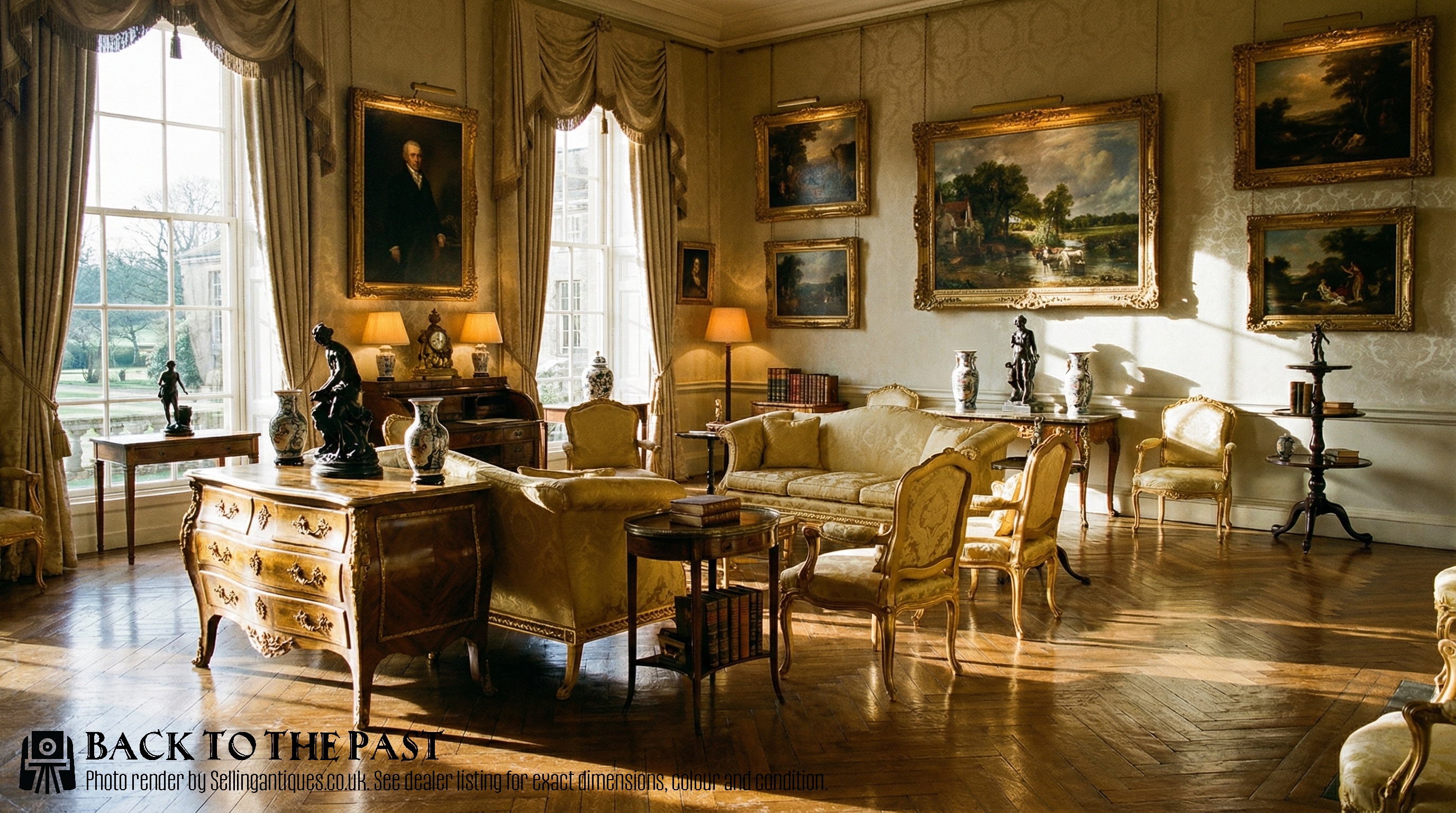
Dark Wood Dumbwaiter
A dark wood dumbwaiter serves as a tiered freestanding table designed to hold dishes, glassware or tea ware without requiring an extra servant at the table. You will most frequently encounter two-tier and three-tier circular models from the Georgian and Regency periods, alongside later Victorian interpretations.
The form relies on graduated circular trays mounted on a central pillar, often supported by tripod legs terminating in brass castors. Examples span from the eighteenth century through the nineteenth century, including later Edwardian revivals and cake stands.
Makers utilised dark timbers primarily, creating functional serving furniture that sits comfortably beside sideboards and dining tables. These pieces range from simple two-tier folding versions to elaborate revolving designs with drop leaves.
Assessing quality in tiered serving stands
Quality rests in the depth of the timber grain, the crispness of turned columns and the stability of the tier joints. Early Georgian and Regency pieces display superior timber selection, often featuring rich, figured mahogany with minimal patching.
The mechanical action of revolving tiers or folding mechanisms distinguishes finer workshops from standard production. Smooth rotation and well-fitted brass hardware indicate careful historical craftsmanship, whereas loose pivots point to heavier wear.
Dark Wood Dumbwaiter Retail Price Guide 2026
Typical asking prices for dark wood dumbwaiter among the pieces listed under this phrase on Sellingantiques today, from the lower quarter to the upper quarter. They describe what is for sale here now, not the wider market.
Object forms span from classic two-tier dining stands to folding cake stands, revolving bookcases and lazy susans.
The Dark Wood Dumbwaiter Glossary
- Dumbwaiter
- A freestanding tiered furniture piece used for serving food and drinks in dining rooms. These tables feature multiple rotating or fixed shelves supported by a central column.
- Tripod base
- A three-legged support structure commonly found beneath the central pillar of circular serving tables. This design ensures the piece remains balanced on uneven floors.
- Tiered table
- Furniture constructed with two or more horizontal surfaces arranged vertically to maximise display space. They appear frequently in eighteenth-century and nineteenth-century dining interiors.
- Etagere
- A set of open shelves used for displaying small items, serving tea or holding books. These pieces often feature lightweight frames suited to drawing rooms.
- Lazy Susan
- A revolving tray placed on a table or integrated into a stand to make passing condiments or dishes easier. They share the rotating mechanism found on many multi-level serving tables.
Dark Wood Dumbwaiter: Frequently Asked Questions
How were dark wood dumbwaiters used?
These tiered stands held extra plates, wine bottles and serving dishes near the dining table to reduce the need for constant servant attendance.
Guests or hosts could easily rotate the graduated trays to reach what they needed during long courses.
Can I use a dumbwaiter as an end table?
The compact footprint and multi-level shelving make these pieces well-suited for holding lamps, books or drinks in a modern sitting room.
Their historical utility translates easily into practical everyday surface space.
How do I distinguish a Georgian dumbwaiter?
Georgian examples typically feature solid mahogany timber, hand-turned central columns and tripod legs fitted with brass castors.
Look for pegged joints and rich, dark patination that develops over centuries of handling.
What is the difference between a dumbwaiter and a cake stand?
Dumbwaiters are heavy serving tables built from dense hardwoods like mahogany or walnut for dining room use.
Cake stands are generally lighter, taller multi-tier folding structures designed for afternoon tea service.