
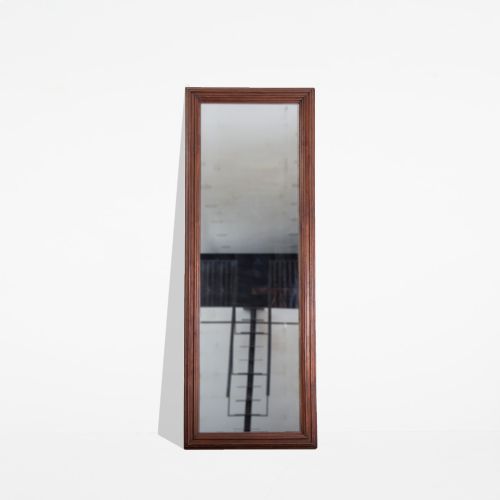
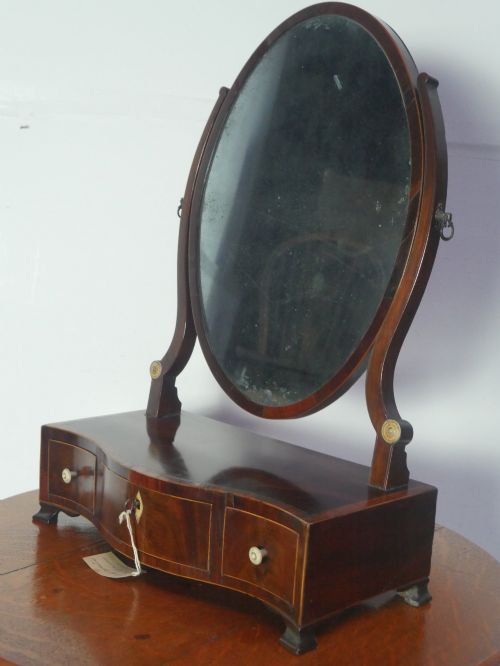
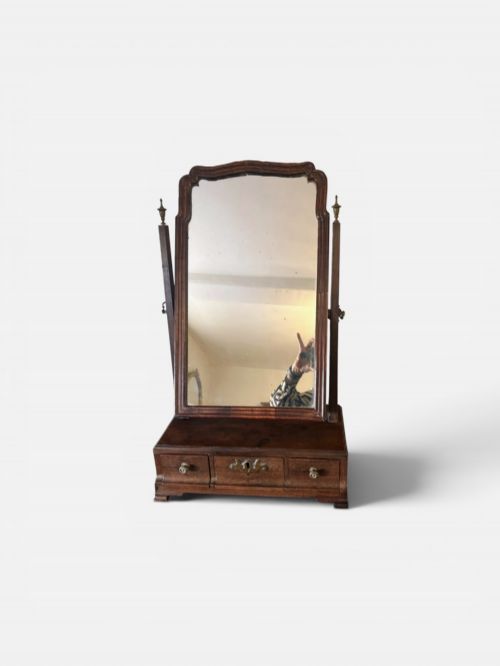
Dark Wood Dressing Glass
A dark wood dressing glass is a moveable mirror designed for personal grooming, offering the practical function of a vanity accessory paired with rich cabinet timber.
Dark Wood Dressing Glass
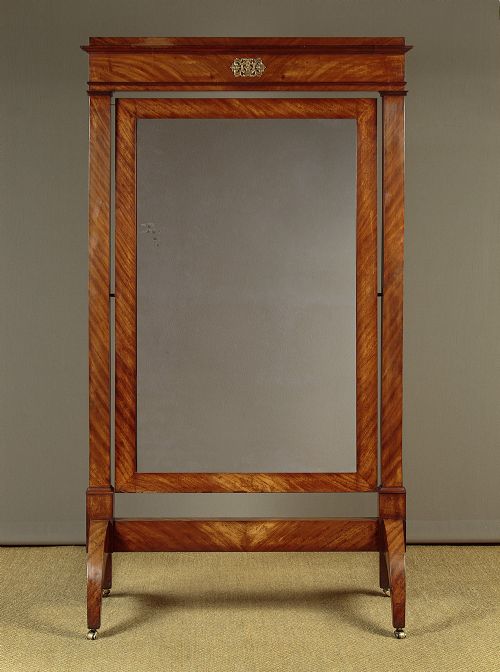
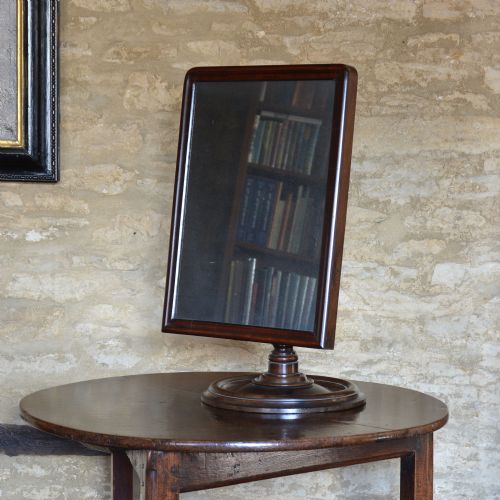
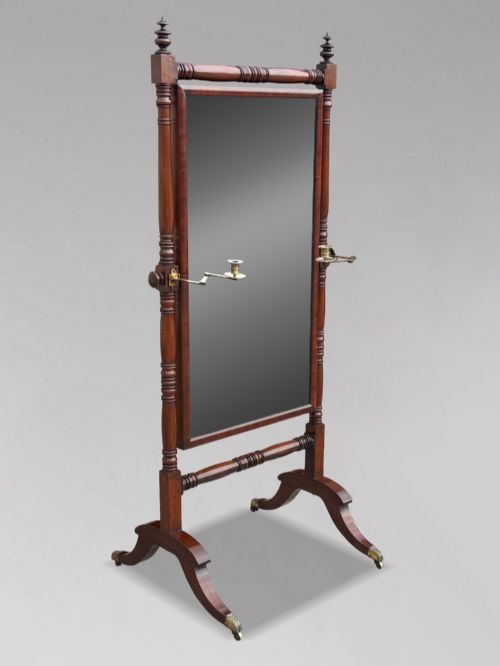
A dark wood dressing glass sits on a table or stands independently on the floor to reflect the user during daily routines. These pieces span several eras, appearing as small toilet mirrors from the Georgian period alongside larger freestanding cheval mirrors dating to the nineteenth century.
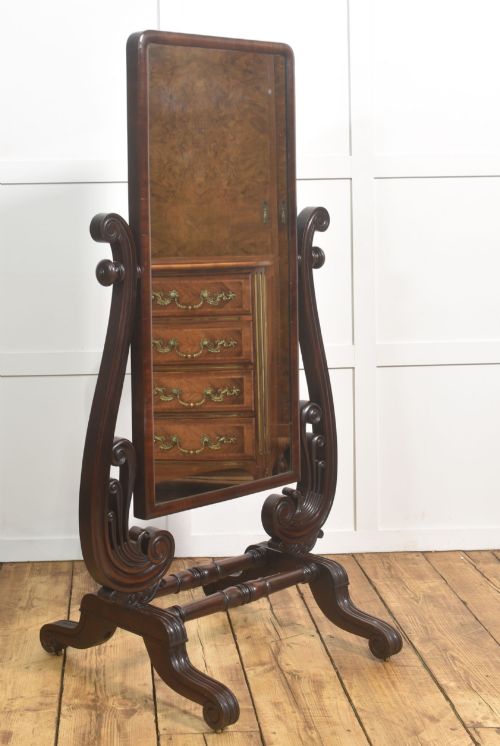
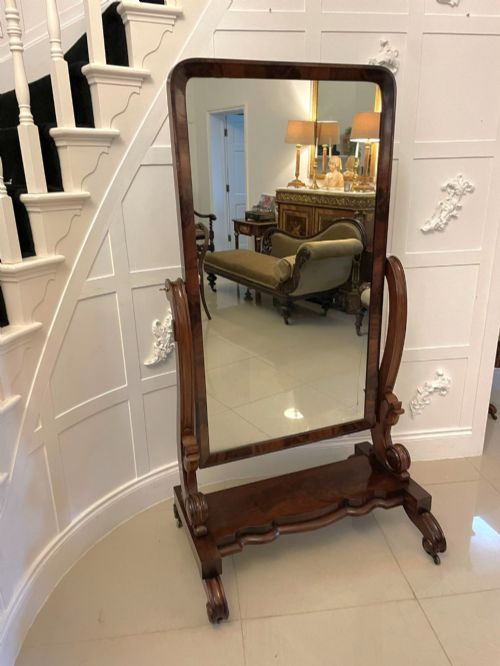
The dominant material seen on this page is mahogany, often shaped into swing frames that tilt on brass pivots. Buyers encounter variations ranging from compact walnut shaving glasses to substantial Victorian and Edwardian cheval mirrors.
Originating across British and continental workshops, these items serve as both functional dressing accessories and substantial decorative furniture for the bedroom.
How they were made
Cabinet makers utilised dense hardwoods such as mahogany and walnut, frequently selecting figured timber for the visible frame and incorporating boxwood stringing or marquetry inlay for contrast. Sheet glass forms the reflective surface, supported by wooden standards and secured with brass fittings.
Construction methods rely on traditional joinery techniques to house the swing mirror plates securely within upright frames. Pivot mechanisms in brass allow the glass to tilt smoothly to the desired angle.
What varies in quality
The standard of a dark wood dressing glass depends upon the selection of timber and the finesse of the joinery. Fine examples display carefully matched wood grain across the entire frame and retain their original brass mounts.
Proportion and stability separate the finer pieces from simpler utilitarian items, particularly in larger freestanding cheval mirrors where the balance of the swing frame is essential.
Heal & Sons
The Dark Wood Dressing Glass Glossary
- Cheval mirror
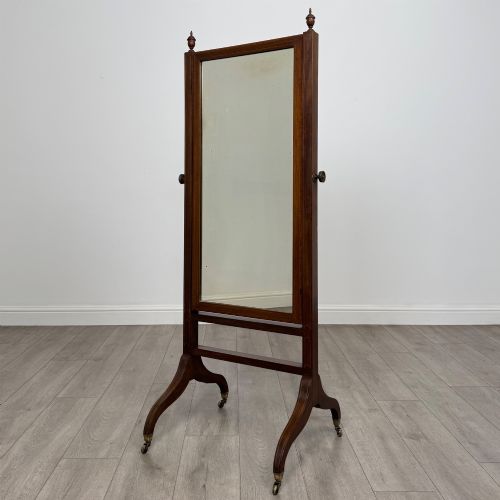
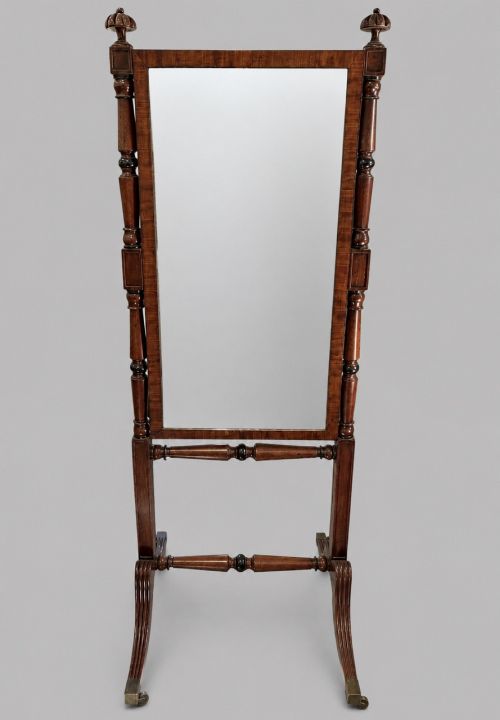
- A full-length swing mirror supported by a freestanding frame with four legs. This large form allows a complete view of attire.
- Toilet mirror
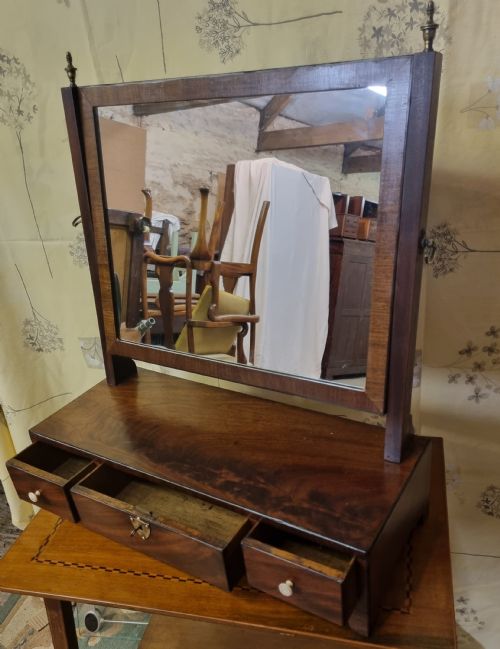
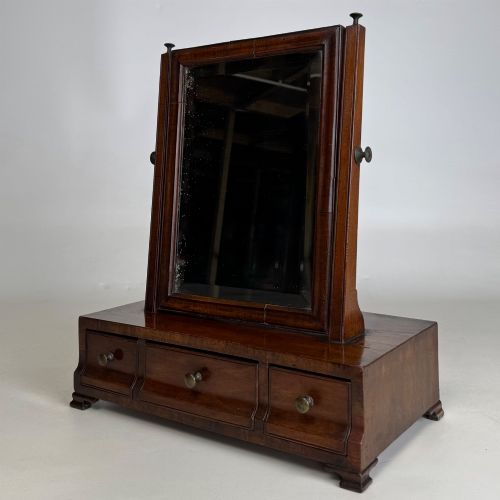
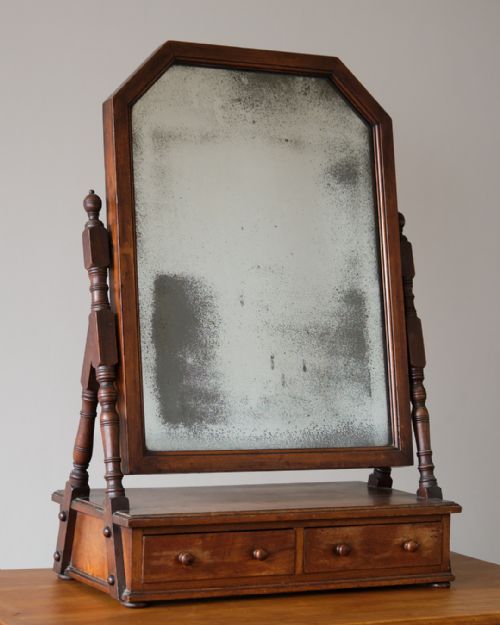
- A smaller tabletop mirror designed to sit upon a dressing chest or table. These pieces often feature small drawers incorporated into the base plinth.
- Swing mirror
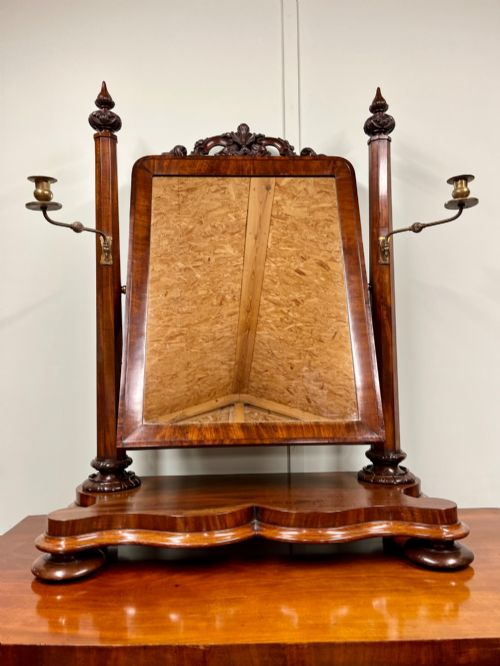
- Any glass mounted on pivot screws within a static frame, allowing the user to tilt the angle of reflection. The design relies on side supports attached to a base or floor standards.
- Marquetry
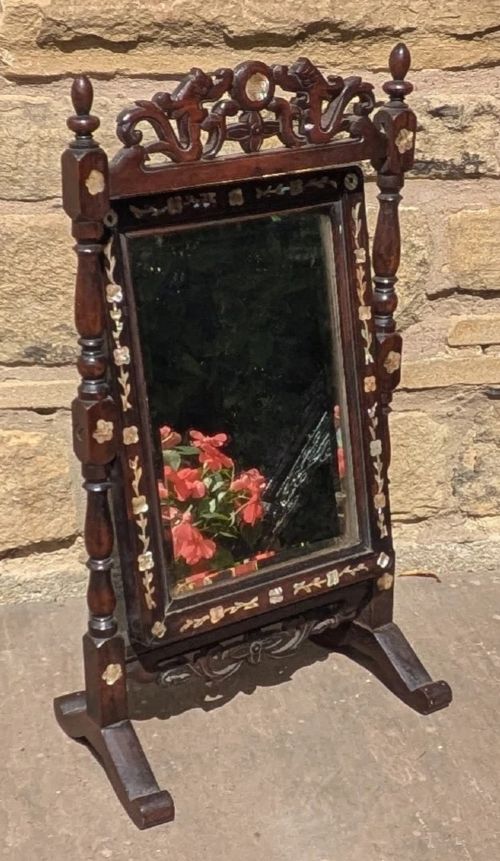
- Decorative inlay work using various coloured woods to form geometric or pictorial patterns on the surface. This technique decorates the frame or base of select dressing glasses.
Dark Wood Dressing Glass: Frequently Asked Questions
What is a dark wood dressing glass?
A dark wood dressing glass is a moveable mirror used for grooming and dressing, typically framed in timbers such as mahogany or walnut. These pieces include both compact table versions and full-length freestanding examples.
Historically, they occupied bedrooms and dressing rooms to provide adjustable reflections before the widespread adoption fitted wardrobe mirrors.
How do I tell a Georgian dressing mirror from a Victorian one?
Georgian dressing mirrors often feature simpler, more restrained proportions with small drawer bases beneath the swing frame. They rely on clean lines and subtle bracket feet.
Victorian examples tend to be larger and heavier, sometimes incorporating more ornate carvings, robust scrolling supports, or full-length cheval frames.
Where should I place a dressing mirror at home?
Tabletop dressing glasses sit comfortably on top of chests of drawers, sideboards, or dedicated dressing tables. They require a stable surface with adequate natural or artificial light.
Freestanding cheval mirrors stand directly on the floor in bedrooms or dressing areas, functioning well where wall-mounted hanging is impractical.
How do pivot mechanisms work on swing mirrors?
Swing mirrors utilise threaded brass screws or pins set into the upright supports that attach to the sides of the mirror frame. Tightening or loosening these pivots allows the glass to hold a specific angle.
Over time, these brass fittings may need gentle adjustment to ensure the mirror stays tilted without slipping forward or backward.