
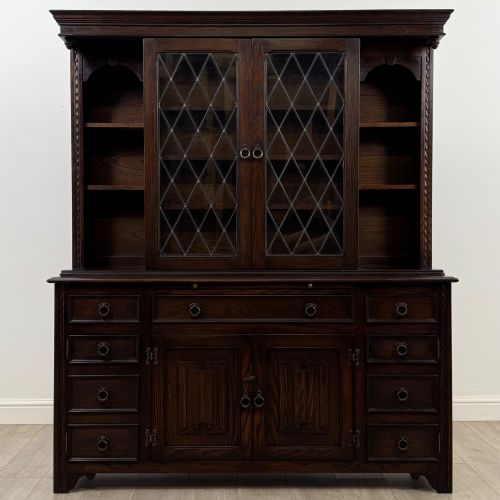
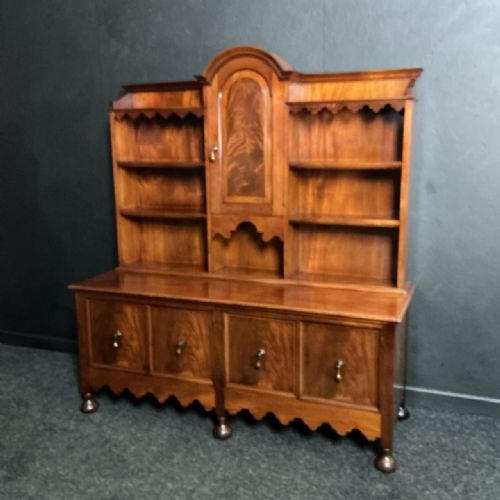
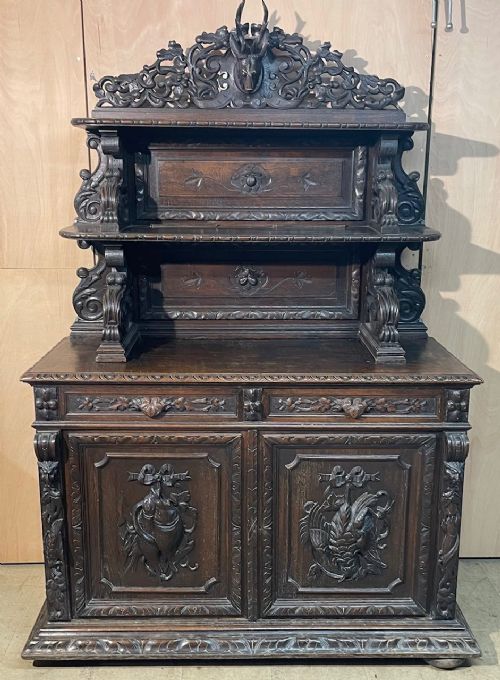
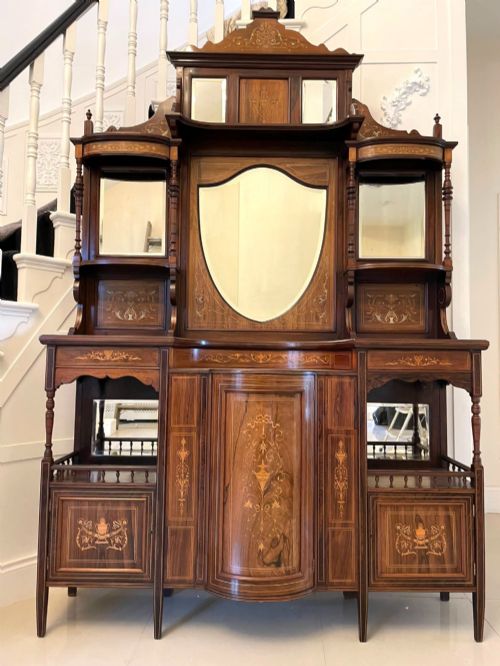
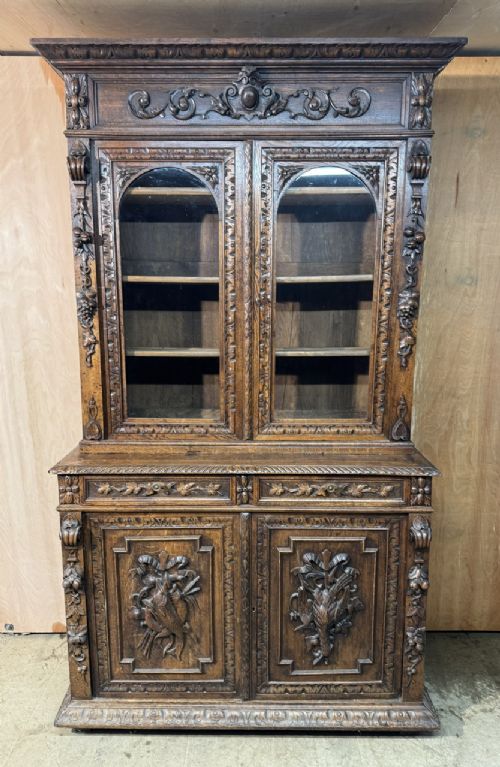
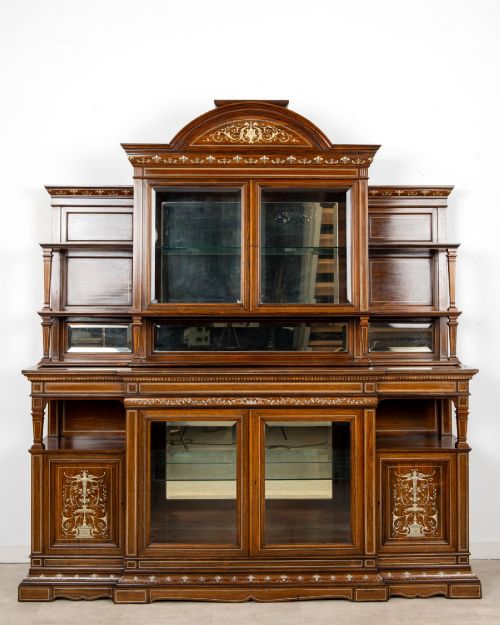
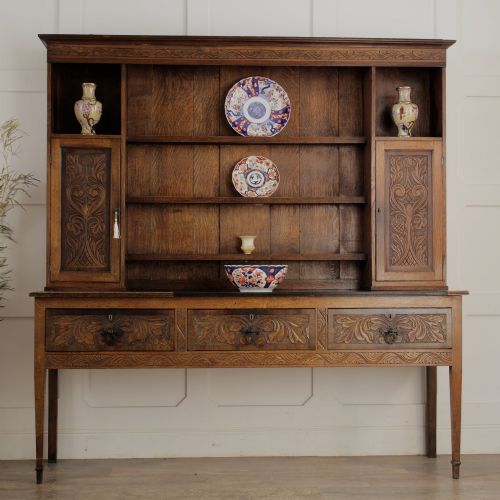
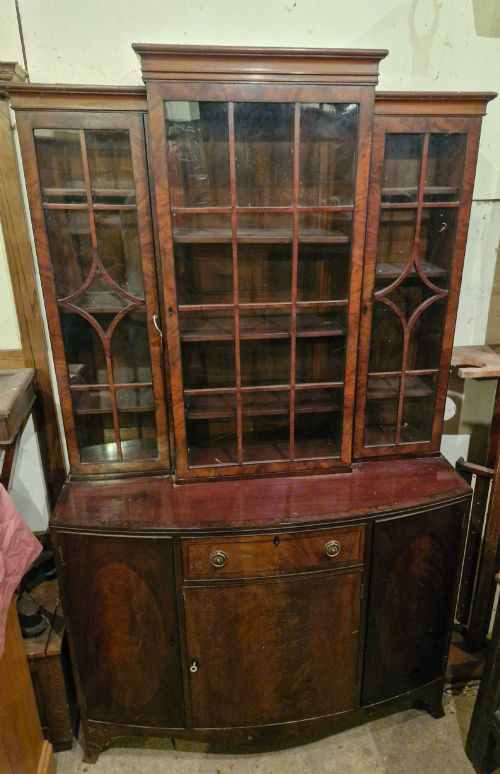
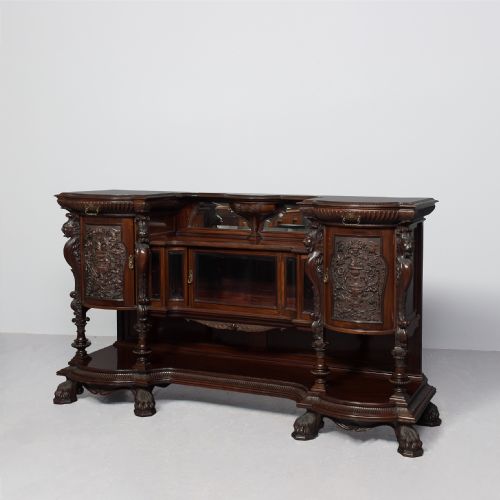
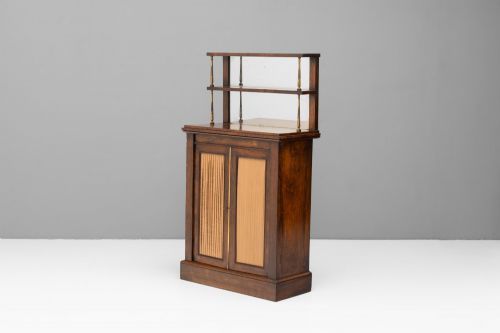
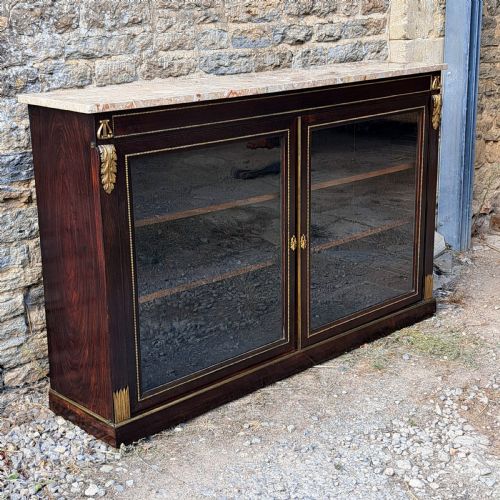

Dark Wood Display Sideboard
A dark wood display sideboard brings grounding weight and visible timber grain to a room, combining storage with surface display.
Dark Wood Display Sideboard
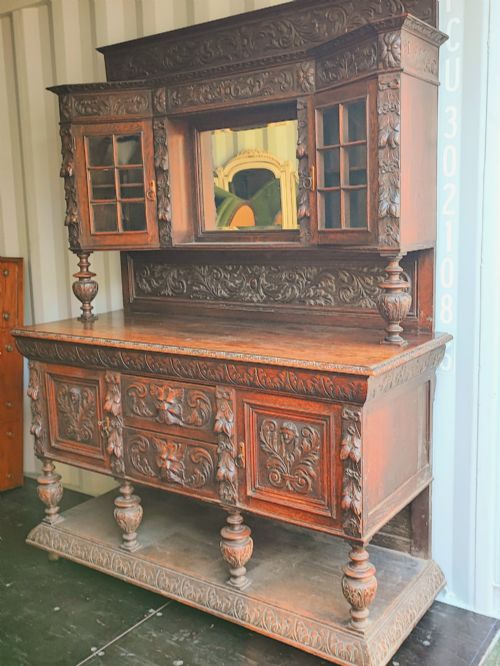
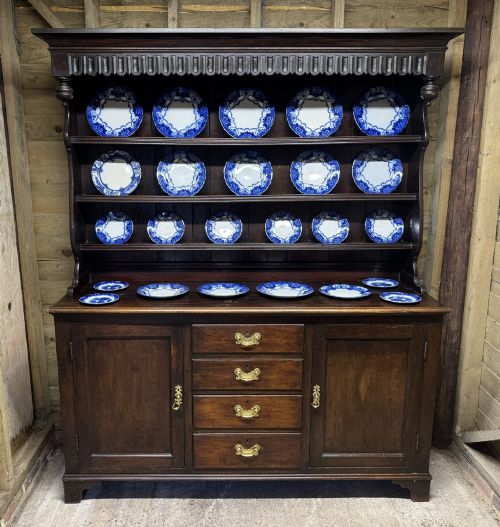
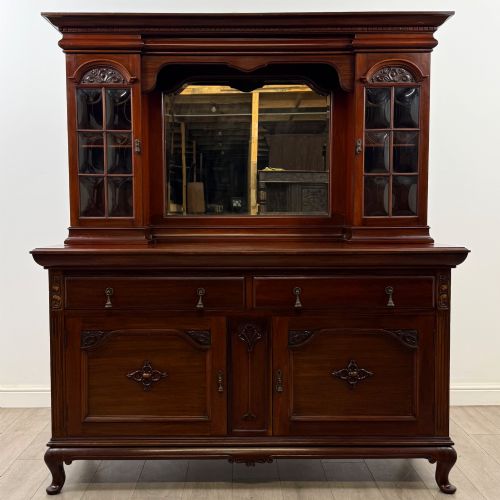
A dark wood display sideboard encompasses substantial storage furniture designed for dining rooms and living spaces, drawing on periods from the Georgian era through to the Edwardian decades. You encounter formats ranging from mirrored chiffoniers and credenzas to glazed cabinets and traditional dressers.
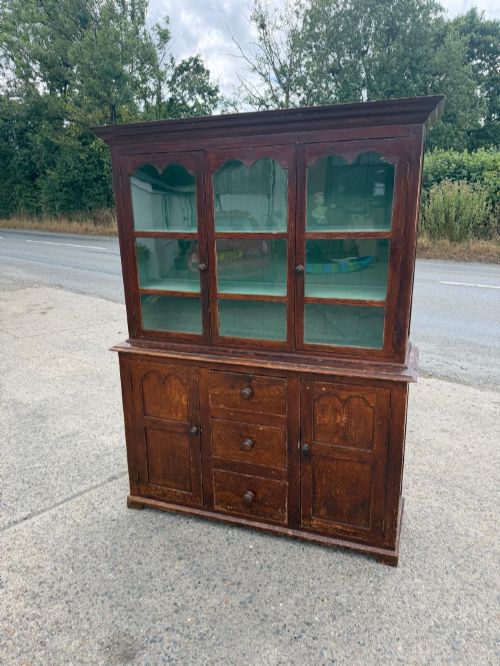
The pieces on this page span the nineteenth and twentieth centuries, incorporating revival movements like Gothic, Jacobean, and Chippendale alongside simpler regional carpentry. Oak and mahogany dominate the offerings, frequently paired with glass doors or open plate racks to showcase contents.
Materials and Construction
Makers utilised dense timbers such as oak, mahogany, rosewood, and walnut, often selecting figured veneers to create patterned surfaces on cupboard doors and friezes. Brass hardware, mirrored backs, and inlaid marquetry provide contrasting detail against the dark wood bodies.
Glass panels are integrated into upper doors to house ceramics and books, while structural integrity relies on traditional joinery within heavy frames and carved bases.
Listings feature items built from oak, mahogany, and rosewood, spanning the Georgian, Victorian, and Edwardian periods.
Grading Quality
The standard of a dark wood display sideboard rests upon the selection of timber grain, the crispness of hand-carved ornamentation, and the subtlety of any marquetry inlay. Pieces featuring figured burr walnut, flame mahogany, or detailed brass work sit at the higher end of the range.
Structural refinement also dictates value, seen in balanced proportions, original glazing, and well-executed joinery that maintains smooth operation in drawers and cabinet doors over centuries of use.
Collinson & Lock
The Dark Wood Display Sideboard Glossary
- Chiffonier
- A low sideboard or cabinet developed in the nineteenth century, typically featuring enclosed cupboards below and a shelf or mirror above. It provides compact storage for dining rooms.
- Credenza
- A sideboard or buffet cabinet lacking legs, often featuring intricate marquetry and curved glass doors. Originating in Italy, it became a grand Victorian drawing room piece.
- Marquetry
- The art of applying decorative pieces of veneer to a structure to form intricate geometric or floral patterns. It requires high skill to fit contrasting woods seamlessly.
- Breakfront
- A cabinet design where the central section projects forward from the flanking outer sections. This architectural arrangement adds depth and visual rhythm to large bookcases and sideboards.
Dark Wood Display Sideboard: Frequently Asked Questions
What is a dark wood display sideboard?
It is a heavy timber storage unit that combines enclosed cupboards with shelving or glass fronts for showing objects.
These items serve as focal points in dining rooms and libraries, housing dinnerware or books while offering a solid surface on top.
How do I date these sideboards?
Dating relies on identifying timber choices, revival styles, and hardware conventions characteristic of specific decades.
Victorian pieces often display rich rosewood and heavy carvings, whereas Edwardian examples frequently incorporate lighter mahogany frames with subtle inlay.
Where were they placed?
They traditionally stood against dining room walls to hold serving dishes, cutlery, and glassware during meals.
Later Victorian and Edwardian examples moved into drawing rooms and hallways to act as display units for decorative ornaments.
How do I care for the timber?
Maintenance requires keeping the wood away from direct heat sources and sudden humidity shifts to prevent veneer lifting.
Regular dusting with a dry cloth and occasional light waxing helps preserve the polished surface of the dark wood.