

Dark Wood Dining Armchairs
Dark wood dining armchairs bring warmth and formal structure to a room, ranging from robust country carvers to refined mahogany seating.
Dark Wood Dining Armchairs
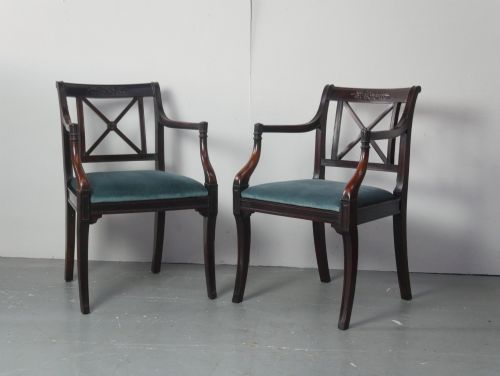
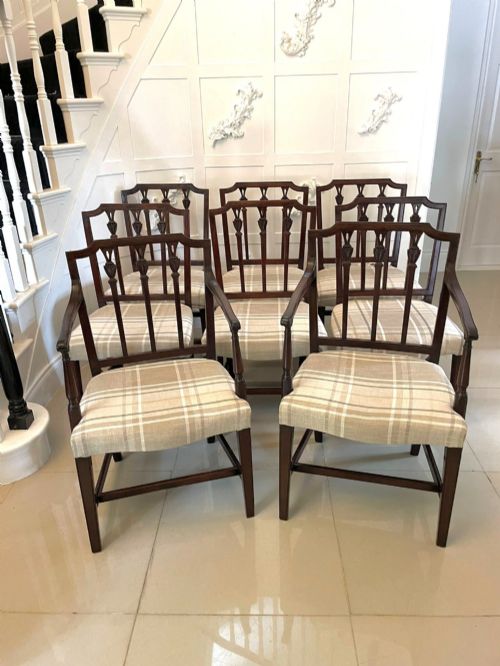
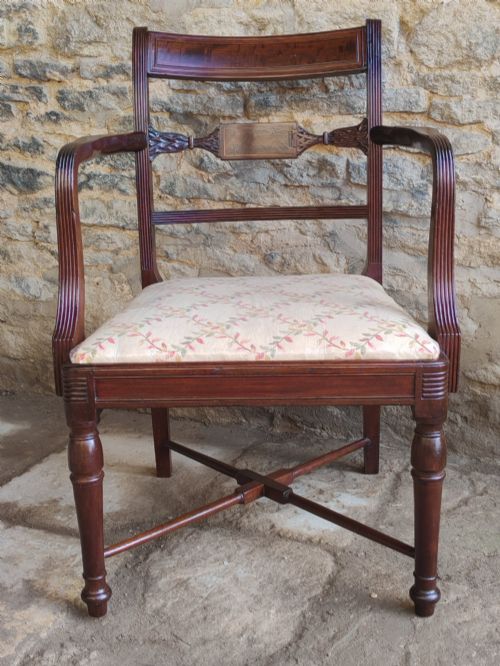
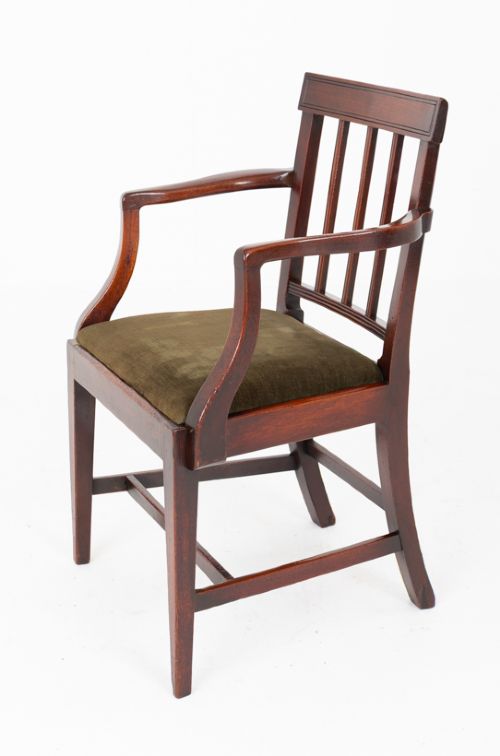
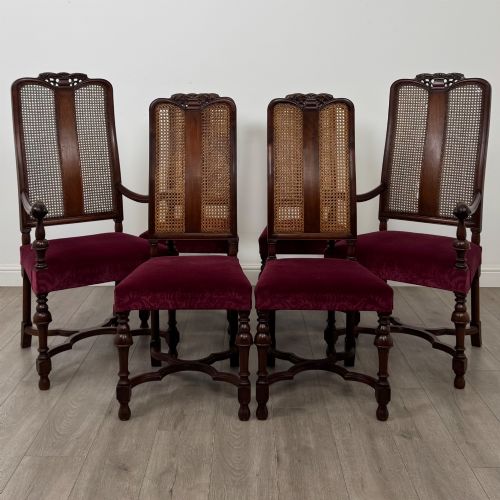
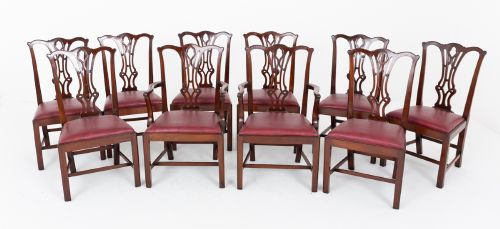
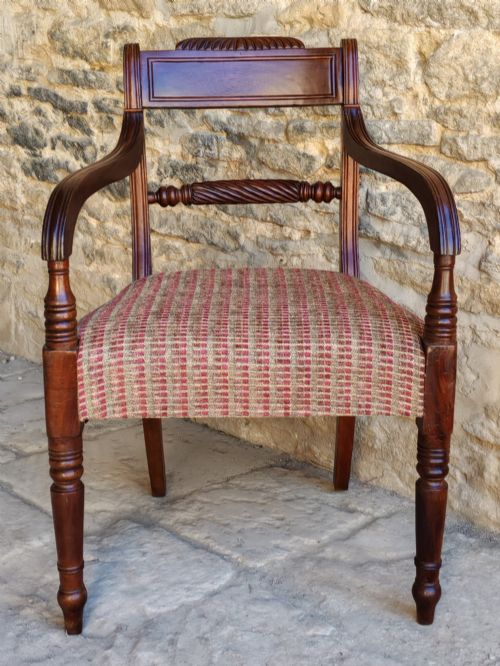
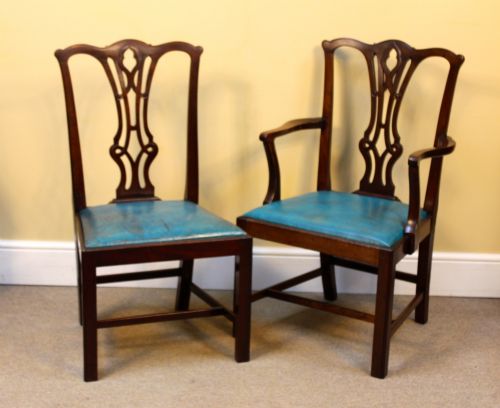
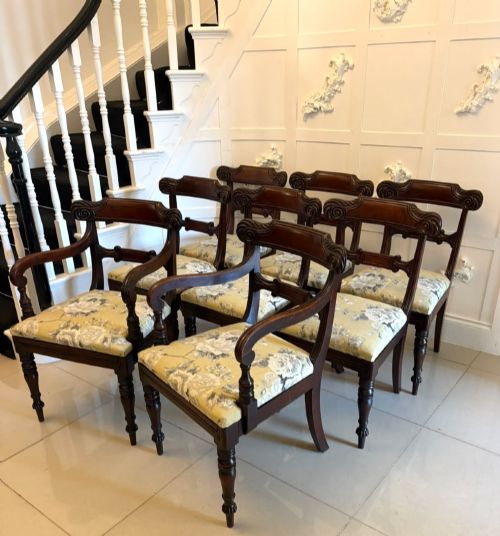
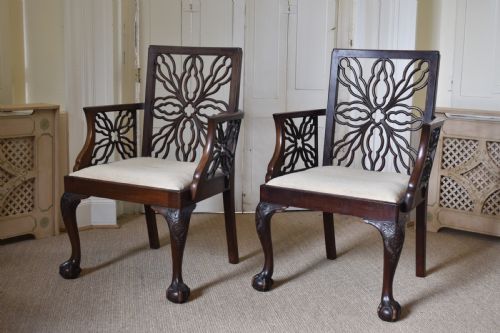
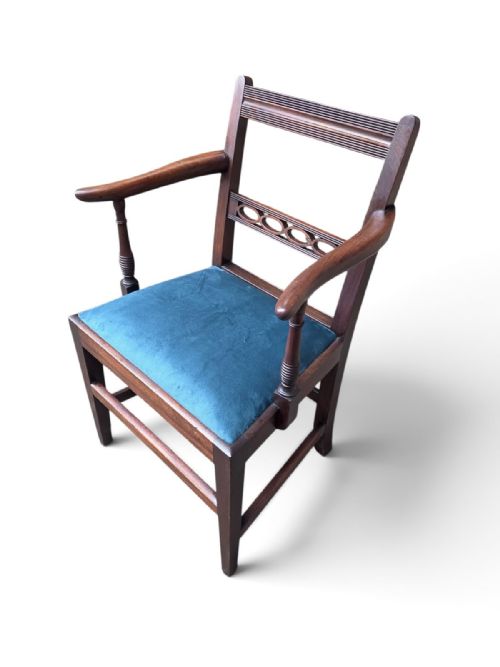
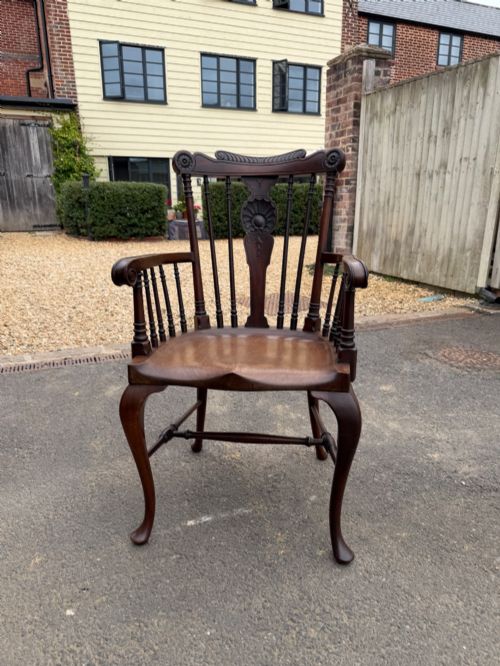
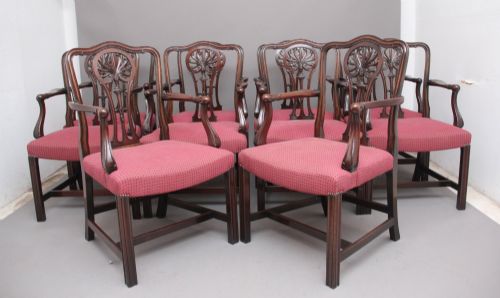
These dark wood dining armchairs encompass seating designed to sit at the head of a table or to pair with matching side chairs. The selection spans the seventeenth, eighteenth, nineteenth and twentieth centuries, taking in Georgian, Regency, Victorian and Edwardian periods.
The materials recorded in the evidence lean heavily towards mahogany, oak, elm, laburnum and ash, often fitted with fabric, leather or velvet upholstery. Forms include carver chairs, Windsor chairs, shield back designs and open armchairs.
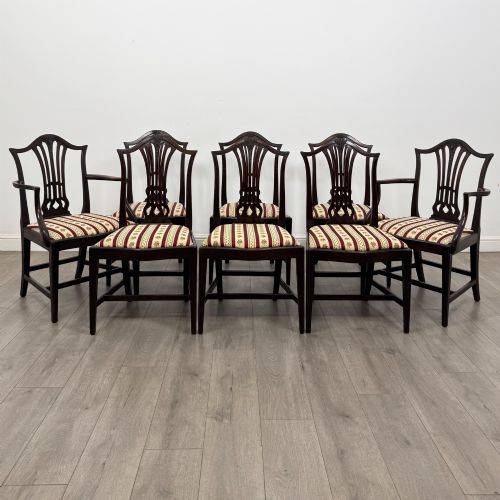
Among these pieces, mahogany examples from the Georgian and Regency eras appear frequently, alongside later revivals of Chippendale and Hepplewhite styles. Country vernacular pieces in elm and ash offer a contrasting, robust aesthetic.
How they were made
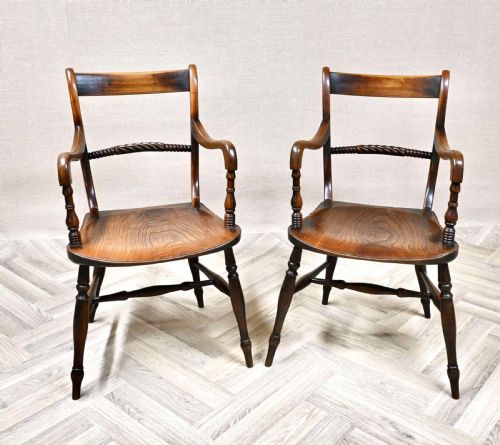
Cabinetmakers and joiners shaped these chairs from dense timbers like mahogany, oak and walnut, turning uprights on lathes and cutting joinery by hand. Country makers utilised local timbers including elm, laburnum, ash and beech for provincial Windsor and ladder-back chairs.
Carved details such as ropetwists, scroll arms and shield backs required precise chisel work on solid timber rather than applied composition ornaments. Upholstered drop-in and fixed seats relied on webbing, horsehair stuffing and durable covering materials like leather, velvet and woven fabric.
Several chairs arrive with hidden ropework twists carved into the timber, offering a tactile surprise beneath the diner's hands.
What varies in quality
The calibre of timber selection dictates much of the distinction between pieces, with dense, finely figured mahogany or well-matched grain in country elm commanding attention. Superior examples display crisp, deep hand-carving along the splats and arms rather than shallow or mechanical shaping.
Structural integrity depends upon the tightness of the original joints and the survival of the frame without excessive timber replacement. Chairs that retain their balanced proportions and harmonious patination present a more unified appearance than those altered or poorly restored over time.
Alfred Allen of Birmingham
The Dark Wood Dining Armchairs Glossary
- Carver chair
- An armchair designed to match a set of dining side chairs, usually placed at the head of the table. These often feature open arms that curve outward to accommodate formal clothing.
- Windsor chair
- A provincial seating form constructed with a solid wooden saddle-seat into which legs and back spindles are wedged. Common regional variations include comb backs and barbacks.
- Shield back
- A chair back shaped like a heraldic shield, popularised by designers in the eighteenth century and revisited during later revival periods. The openwork splat typically curves inward from the frame.
- Ropetwist
- A carved decorative motif resembling a twisted rope, frequently applied to the top rails or arm supports of nineteenth-century chairs. This detail adds texture to otherwise plain mahogany members.
- Carver
- A common term used by dealers and collectors to describe a dining armchair that accompanies a set of simpler chairs.
Dark Wood Dining Armchairs: Frequently Asked Questions
What is a carver chair?
A carver chair is an armchair traditionally placed at the head or foot of a dining table to match the surrounding smaller side chairs. These pieces provide additional support with integrated armrests.
They function as the primary seat in a dining set while maintaining a unified style with the rest of the furniture.
How do I date a mahogany armchair?
Dating relies on observing the structural proportions, timber characteristics, and stylistic markers such as Hepplewhite shield backs or Regency scroll arms. Cabinetmaking techniques and tool marks visible beneath the seat also offer clues to the period.
Comparing the joinery and finish to documented examples helps narrow down the decade of manufacture.
Are these chairs suitable for daily use?
Most antique dining armchairs are robust enough for regular sitting, provided the frame joints remain tight and secure. Periodic checks by a restorer will keep the timber stable under daily conditions.
Choosing chairs with sturdy leg construction ensures they withstand the movement associated with dining room use.
What is the difference between Georgian and Regency styles?
Georgian furniture, spanning much of the eighteenth century, often incorporates classical carved details like ribbon splats and ornate mahogany frames inspired by Chippendale. Regency pieces from the early nineteenth century lean toward heavier classical influences with brass inlays, saber legs, and scroll arms.
Both periods utilise dark hardwoods, but their silhouettes reflect shifting tastes from ornate Rococo and Neoclassical lines toward archaeological revival forms.