
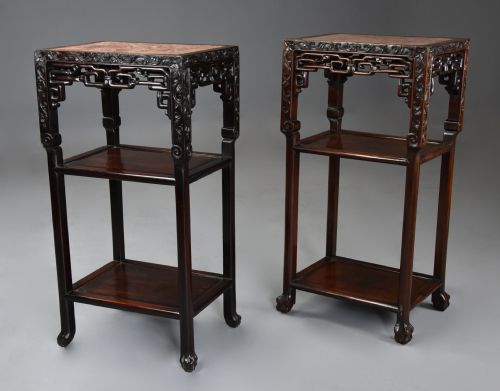
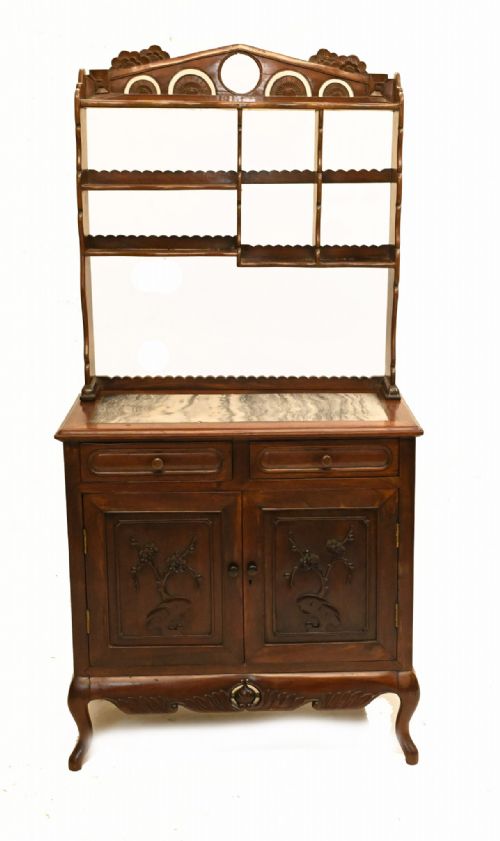
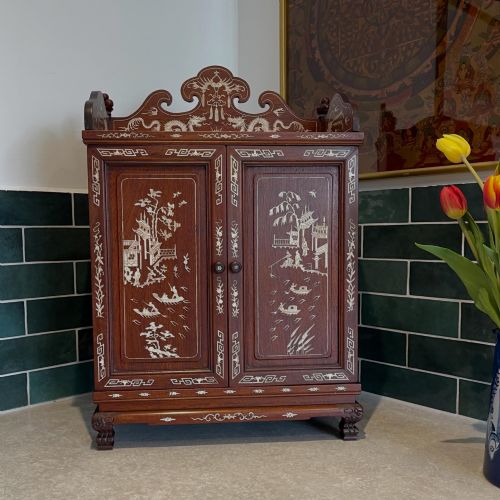


Dark Wood Chinese Cabinet
A dark wood chinese cabinet brings rich timber tones and intricate carving into a room, offering both practical storage and a striking focal point.
Dark Wood Chinese Cabinet
A dark wood chinese cabinet encompasses a varied group of storage pieces, ranging from large compound cupboards to smaller table-top chests. Buyers seeking these items will find examples originating from the eighteenth century through to the early twentieth century, spanning periods such as the Qing Dynasty and the Chinese Republic Period.
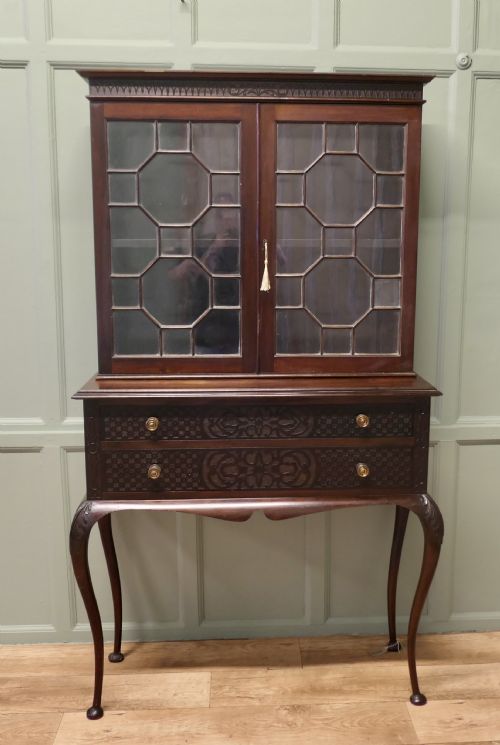
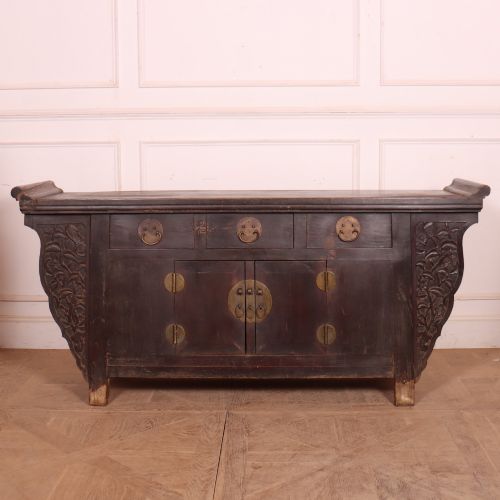
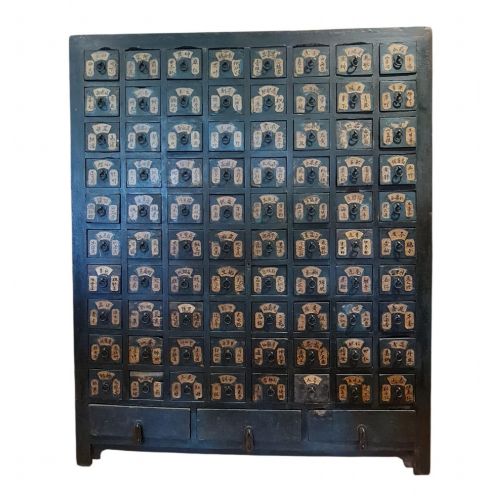
The selection on this page leans heavily towards nineteenth-century pieces alongside items from around nineteen twenty. Forms include apothecary chests with numerous small drawers, glazed display cabinets, sideboards, and smaller occasional cupboards.
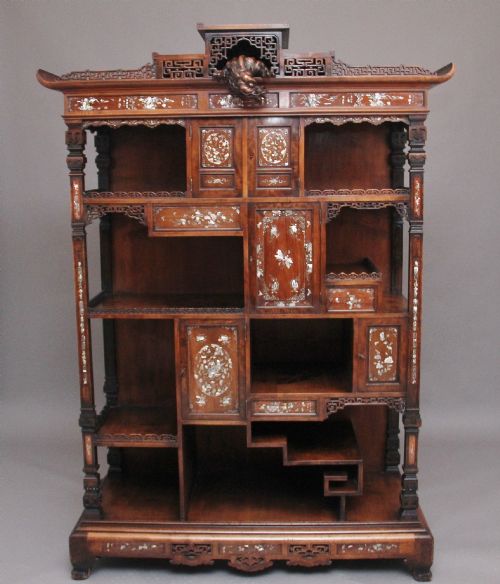
Materials span traditional Asian hardwoods alongside western interpretations influenced by Chinese Chippendale and Japonisme styles. These pieces function equally well as standalone statements in a modern interior or as storage within a traditional setting.
Materials and Construction
Construction relies primarily on dense Asian timbers such as elm, rosewood, camphor wood, zitan, and hongmu, often paired with secondary woods like mahogany. Artisans selected these durable hardwoods for their stability and deep natural grain, sometimes enhancing the surface with lacquer or intricate hand-carved motifs.
Metalwork plays a functional and decorative role, with brass hardware frequently securing doors and drawers. Glass panels appear on later display variants, while marble inserts top certain tables and cabinets to provide a durable and cool surface.
Several apothecary chests squeeze eighty tiny drawers into a single cabinet, ready for a mountain of dried herbs.
Assessing Quality and Craftsmanship
Quality in these pieces rests upon the precision of the joinery and the depth of the carving. Superior examples display crisp, hand-carved dragon motifs or floral patterns that remain sharp, whereas lesser pieces show shallower, more mechanical execution.
The choice of timber heavily dictates the grade of the piece, with dense, heavy hardwoods like zitan and hongmu sitting at the upper end of the scale compared to simpler elm or mixed-wood constructions. Original brass hardware and intact lacquering also elevate the standing of a cabinet.
The Dark Wood Chinese Cabinet Glossary
- Qing Dynasty
- The final imperial dynasty of China, lasting from sixteen forty-four to nineteen twelve. Pieces from this era often feature traditional motifs and exceptional hardwood construction.
- Apothecary Cabinet
- A multi-drawer chest traditionally used for storing medicinal herbs and dried ingredients. These feature dozens of small drawers, each with a specific label space.
- Hongmu
- A category of dense, dark red-brown Chinese hardwoods highly prized for furniture making. The term translates directly to red wood.
- Japonisme
- A late nineteenth-century European artistic movement influenced by Japanese and broader East Asian art. This aesthetic manifested in western furniture echoing eastern forms.
Dark Wood Chinese Cabinet: Frequently Asked Questions
How do I use an apothecary cabinet at home?
These multi-drawer chests offer exceptional organisation for small items such as jewellery, stationery, or craft supplies. Their unique fronts provide a striking visual element in a hallway or living room.
Ensure the cabinet sits against a sturdy wall, as the weight of solid hardwood requires stable placement. Avoid overloading the top drawers to maintain balance.
What is a compound cabinet?
A compound cabinet consists of multiple stackable sections designed to form a tall storage unit. This construction method made large furniture easier to transport within historic homes.
When positioning a compound piece, check that the sections align correctly and sit level on the floor. The upper and lower portions often lock together using traditional joinery.
How do I care for hardwood furniture?
Keep hardwood cabinets away from direct sunlight and heat sources to prevent the timber from drying out. Dust regularly with a soft, dry cloth rather than using silicone-based polishes.
Maintaining a stable room humidity helps preserve the natural oils in dense timbers like rosewood and elm. This prevents the wood from contracting or expanding excessively.
How can I tell the period of a cabinet?
Dating relies on examining the timber species, construction joints, and style of the brass hardware. Eighteenth and nineteenth-century pieces typically utilise traditional mortise and tenon joinery without modern fasteners.
Compare the carving style and surface wear against known examples from the Qing Dynasty or the early twentieth century. Subtle tool marks often indicate hand-working rather than industrial production.