


Late Qing Dynasty Cabinet
These late qing dynasty cabinet pieces bring provincial and court craftsmanship into a room.
Late Qing Dynasty Cabinet
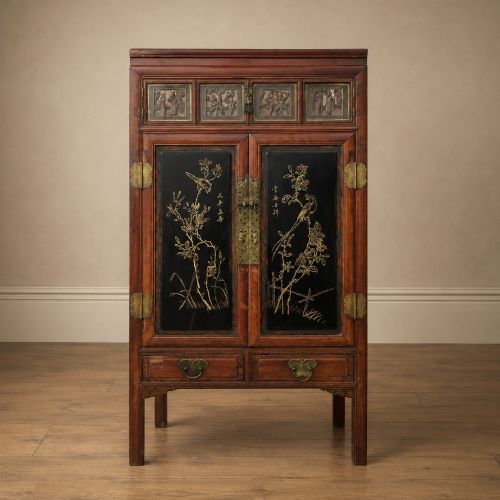
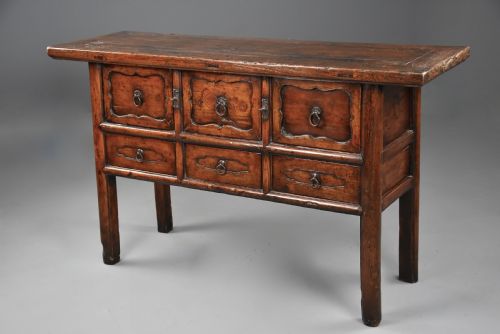
A late qing dynasty cabinet represents the final imperial period of Chinese furniture making, spanning the nineteenth and early twentieth centuries. The pieces on this page appear in various forms, including sideboards, apothecary chests, dwarf cabinets, and display pieces.
Regional diversity shapes these items, originating from specific provinces like Fujian and Shanxi as well as broader stylistic traditions. Buyers encounter everything from rustic provincial elm to profusely carved Hongmu and zitan hardwoods.
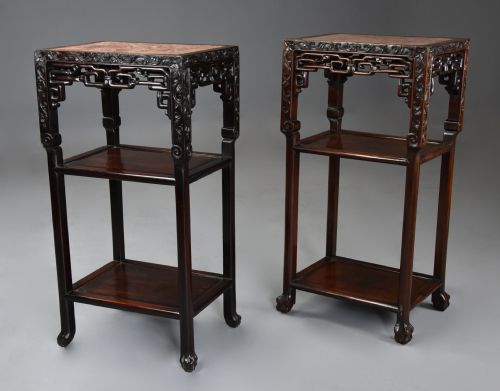
Lacquerwork frequently defines the aesthetic, often combining red and black tones with gilt detailing. Alongside larger sideboards, smaller pot stands and pedestals reflect the varied scale of domestic furnishings from the era.
How they were made
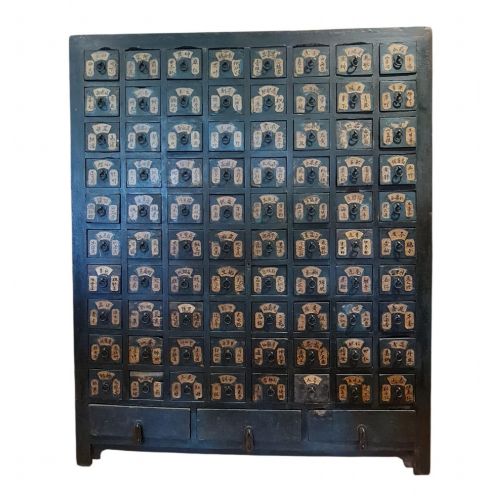
Makers utilised dense timbers such as elm, Hongmu, zitan, and general hardwoods, relying on traditional joinery methods that often dispensed with metal nails. These structural woods provide the robust frames necessary for heavy compound cabinets and apothecary chests with numerous drawers.
Surfaces received elaborate treatments including layers of red and black lacquer, gold leaf application, and intricate hand carving. Brass hardware, such as hinges and lock plates, provides functional contrast against dark wood and lacquered finishes.
An apothecary chest listed here contains eighty individual drawers, ensuring that small items remain securely misplaced forever.
What varies in quality
Depth and precision of the carving separate standard items from superior examples, particularly on hardwood and ebonised surfaces. Relief work depicting dragons or floral motifs demonstrates the skill of the carver.
The condition and complexity of the lacquering dictate the visual impact of painted and gilded pieces. Surviving gold leaf and intact multi-layered finishes elevate the standing of a cabinet.
Choice of material marks a clear distinction, with dense timbers like zitan and Hongmu holding greater substance than softer provincial elm.
The Late Qing Dynasty Cabinet Glossary
- Hongmu
- A traditional Chinese term for dense hardwoods, often translated as red wood. It encompasses several heavy timber species prized for furniture construction.
- Zitan
- An exceptionally dense and heavy exotic hardwood used for high-status Chinese furniture. Its dark surface takes a fine polish without additional staining.
- Shodana
- A term applied to tiered or compartmentalised display cabinets of Asian origin. These pieces feature multiple levels for exhibiting small objects.
- Apothecary chest
- A multi-drawer cabinet historically used for storing traditional herbal medicines and dried ingredients. They are characterised by numerous small compartments.
- Elm
- A domestic timber utilised widely in regional Chinese provincial furniture. It provides a robust structure with a pronounced grain pattern.
Late Qing Dynasty Cabinet: Frequently Asked Questions
What is a late qing dynasty cabinet?
A late qing dynasty cabinet is a piece of furniture made during the final imperial dynasty of China, typically dating from the nineteenth or early twentieth century. These items range from large storage sideboards to small display stands.
Craftsmen produced them in various regional styles using local timbers, lacquers, and traditional joinery techniques. They served practical storage functions in homes and merchant establishments.
How do I use a sideboard today?
A sideboard works effectively in a dining room or living space for storing tableware, linens, or media equipment. The flat top surface provides a practical area for lamps or decorative objects.
Smaller variants fit easily into hallways or bedrooms as accent pieces. Their distinctive finishes introduce texture and colour to contemporary interiors.
What woods were used for these cabinets?
Cabinetmakers employed a variety of materials depending on regional availability and the intended status of the piece. Dense exotic hardwoods like Hongmu and zitan were reserved for finer items.
Provincial workshops frequently utilised domestic elm for its strength and availability. Secondary woods often formed the internal framework of compound cabinets.
How do I identify lacquerwork?
Lacquerwork involves applying multiple coats of processed tree sap to a wooden base to create a durable, smooth surface. Red and black pigments predominate, often enhanced with gold leaf detailing.
Over time, genuine lacquer develops a fine patina and subtle signs of age. Carved lacquer involves building up thick layers before cutting designs into the surface.