


Vintage Oriental Storage Cupboard
A vintage oriental storage cupboard brings rich colour and quiet craft into a room, offering practical concealment alongside painted or carved narrative detail.
Vintage Oriental Storage Cupboard
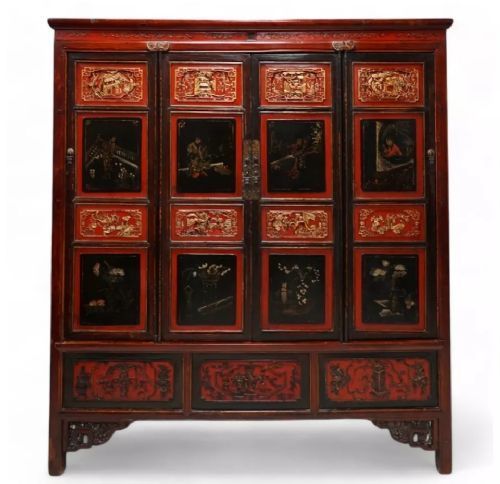
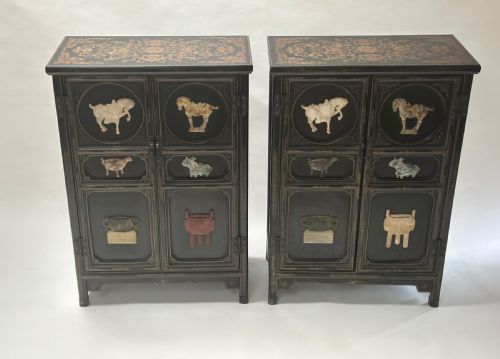
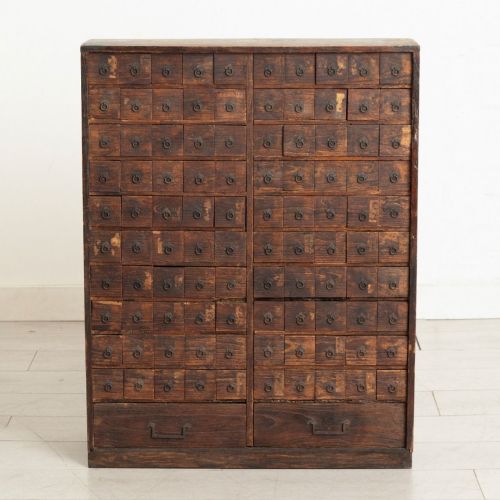
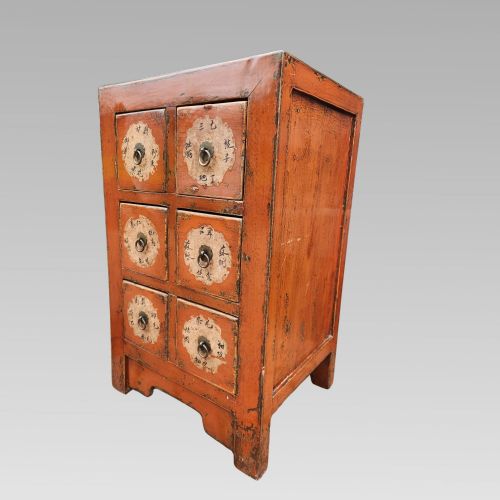
A vintage oriental storage cupboard encompasses diverse regional forms, from Chinese elm marriage cabinets and noodle cupboards to Japanese tansu chests and Korean painted storage pieces. Buyers searching for a vintage oriental storage cupboard will encounter sideboards, corner cabinets, and apothecary chests spanning the nineteenth and early twentieth centuries.
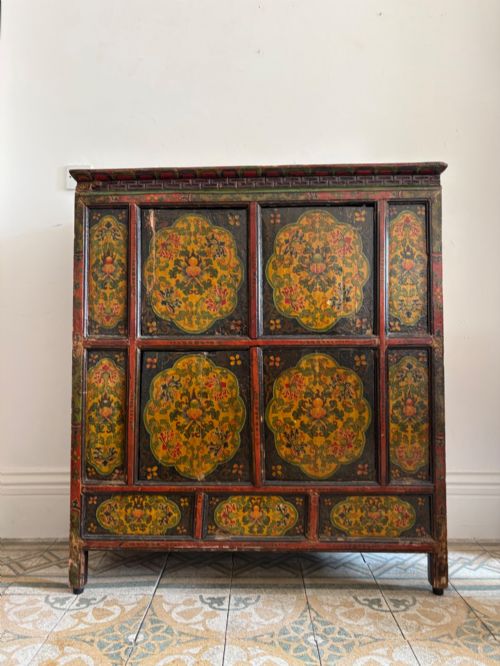
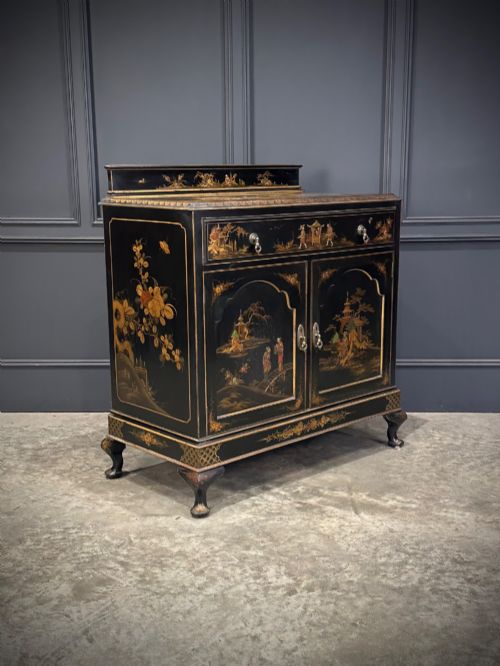
The selection includes pieces rendered in the Chinoiserie style, traditional Chinese provincial designs, Tibetan hand-painted cabinets, and Japanese Meiji period examples. Side cabinets and cocktail cabinets feature prominently alongside taller compound cupboard forms.
Origins stretch across China, Japan, Korea, and Tibet, reflecting distinct local joinery traditions and indigenous timber choices. These storage pieces served domestic, medicinal, and ritual functions before finding a place in contemporary interiors.
Materials and Technique
Makers utilised native timbers such as elm, teak, camphor wood, hardwood, and zitan, building robust frames designed to withstand shifting climates. Elm and heavier hardwoods provide the structural integrity required for large armoires and sideboards.
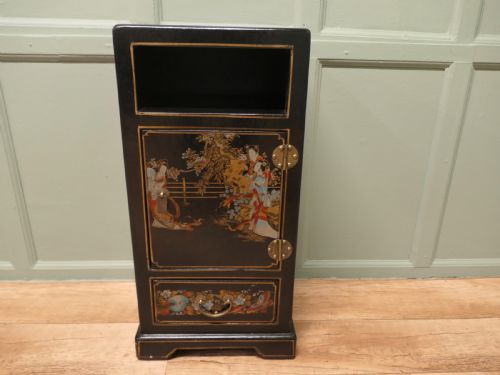
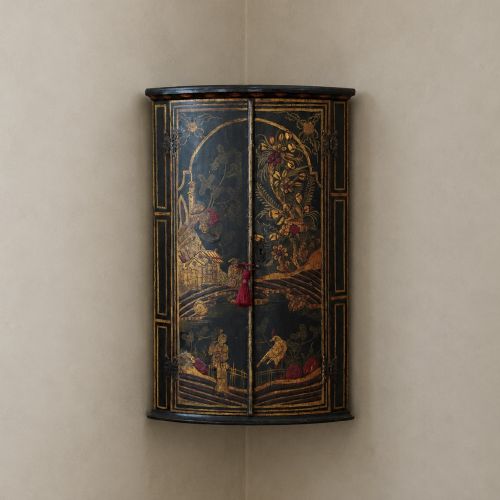
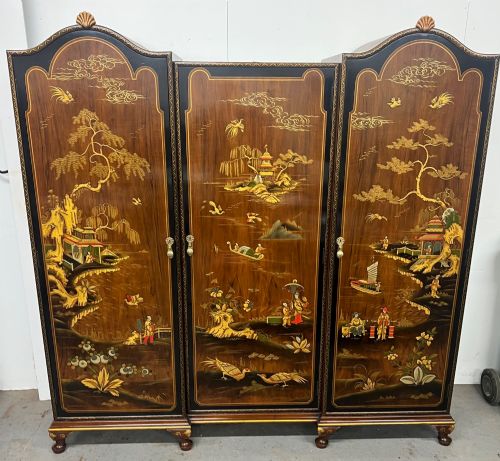
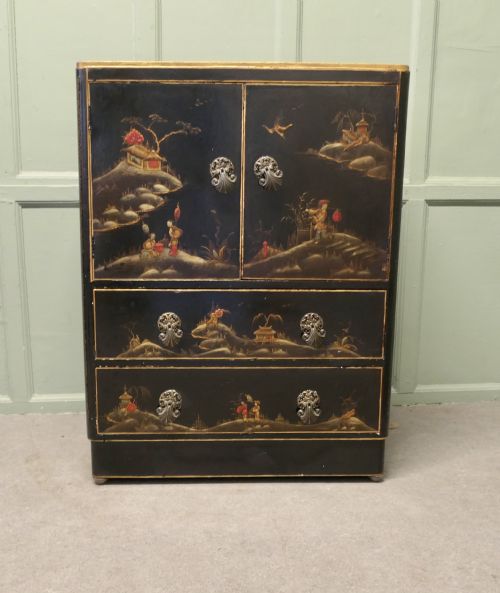
Surfaces frequently receive coats of red or black lacquer, sometimes enriched with gilt detailing, hand-painted floral motifs, or carved figural scenes. Brass and iron hardware, including strap hinges and elaborate circular lock plates, secures the doors and drawers while adding metallic contrast.
Joinery techniques often rely on traditional interlocking systems rather than modern fasteners, allowing the timber to expand and contract naturally. Painted and japanned finishes require successive layers of preparation and pigment applied over wood or gesso grounds.
The selection includes nineteenth-century pieces alongside Edwardian and 1930s revival examples.
Assessing Quality
Quality rests upon the integrity of the timber, the subtlety of the hand-painted or carved decoration, and the survival of original surface finishes. Pieces retaining their early lacquer, gilding, and hardware hold greater visual depth than those stripped or heavily restored.
The precision of the joinery and the weight of the timber distinguish standard utility pieces from finer workshop productions. Cabinets featuring complex internal drawer arrangements, such as apothecary banks or noodle cabinets, demonstrate higher structural ambition.
Condition varies from patinated original surfaces showing gentle wear to more decorative revival pieces executed in Western tastes. The harmony between the original construction and the decorative program dictates the character of each cabinet.
Maples and Co
The Vintage Oriental Storage Cupboard Glossary
- Japanned
- European imitation of Japanese and Chinese lacquering techniques using built-up layers of varnish and metallic dust. This finish gained popularity across various revival periods.
- Tansu
- Traditional Japanese mobile storage cabinetry featuring exposed iron hardware and specialised internal configurations. These pieces were designed for domestic utility and easy transport.
- Chinoiserie
- European decorative style reflecting Chinese artistic motifs, prevalent in furniture decoration and interior design. It often employs painted figures, pagodas, and floral scenes against dark lacquered grounds.
- Zitan
- A dense, heavy Asian hardwood prized for its dark colour and fine grain. Furniture constructed from this material commands attention for its durability and rarity.
- Marriage Cabinet
- Large traditional Chinese cupboard presented to brides as part of dowry furnishings. These pieces typically feature double doors and internal shelving for textiles and valuables.
Vintage Oriental Storage Cupboard: Frequently Asked Questions
How do I style a vintage oriental storage cupboard at home?
These cabinets work effectively as standalone statement pieces in living rooms, hallways, or dining spaces where they provide generous enclosed storage. Allow the painted lacquer or natural wood grain to command visual attention by keeping surrounding decor relatively neutral.
Interior shelving accommodates tableware, linens, or media equipment depending on the internal configuration. Taller cupboards and sideboards ground a room while offering concealed organisation for everyday items.
What is the difference between a tansu and an apothecary cabinet?
A tansu is a traditional Japanese mobile storage chest built for general domestic use, often featuring sliding panels and iron corner braces. An apothecary cabinet contains numerous small drawers originally intended for medicinal herbs and dried ingredients.
Apothecary chests offer segmented storage suited for smaller collections, whereas tansu chests provide broader compartments and flexible internal layouts.
How do I care for lacquered wood furniture?
Lacquered surfaces require gentle dusting with a soft, dry cloth and protection from direct sunlight to prevent fading and cracking. Avoid chemical polishes and excessive moisture, which can damage delicate finishes and painted details.
Maintaining stable indoor humidity levels prevents the underlying timber from expanding and placing stress on the exterior lacquer.
How can I tell the period of these cabinets?
Dating relies on observing construction methods, timber choice, hardware design, and the style of decoration. Nineteenth-century examples often display hand-cut joinery and heavy iron or brass mountings, while early twentieth-century pieces may reflect revival aesthetics or transitional styles.
Regional differences in painting technique and carpentry traditions also help situate a piece within its historical context.