

Dark Wood Book Table
A dark wood book table brings together a surface for reading and storage for volumes, spanning revolving bookcases, reading stands and occasional tables.
Dark Wood Book Table
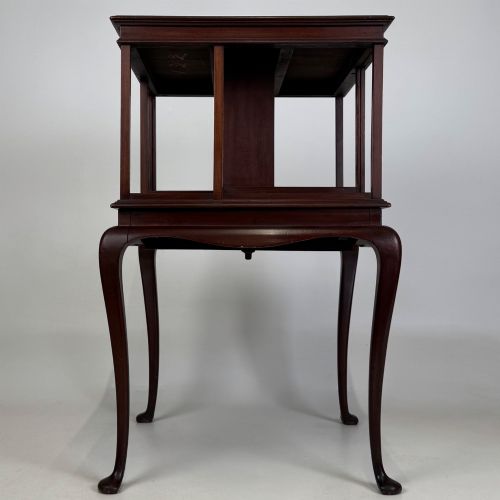
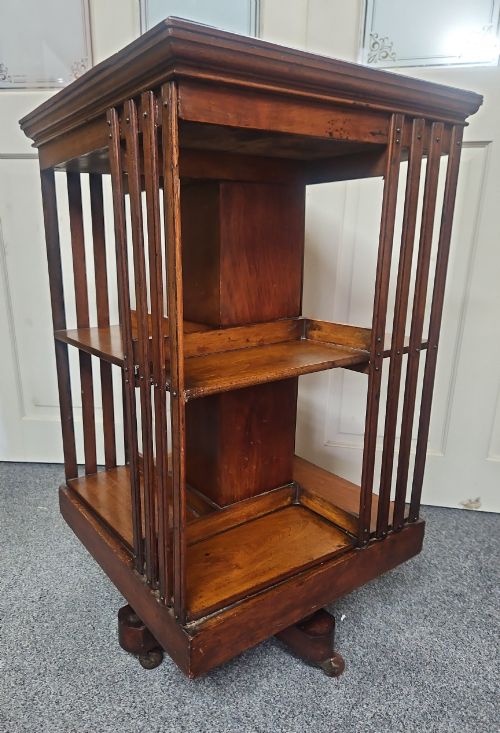
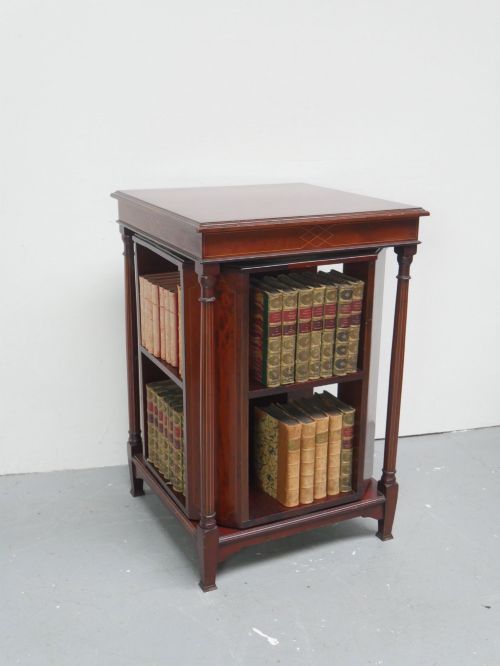
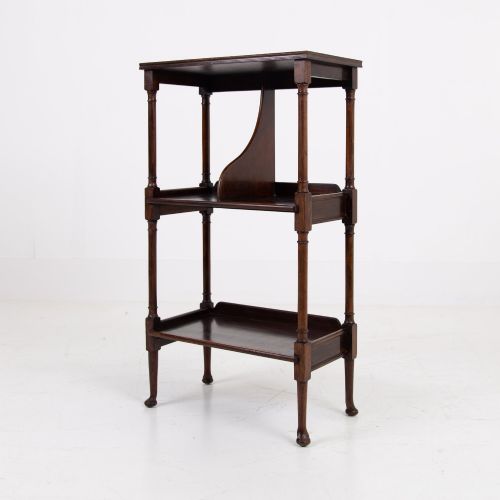
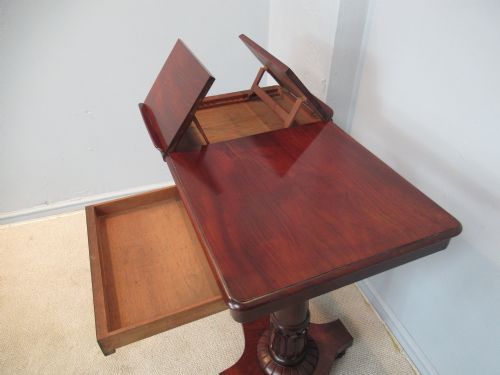
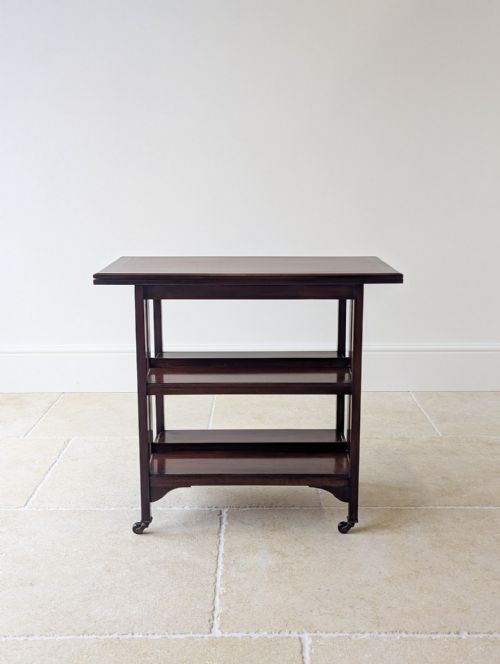
When you search for a dark wood book table, you encounter a variety of forms designed to hold volumes near a chair or bed. These pieces include revolving bookcases, reading stands, side tables with shelf bases and multi-tiered étagères.
The selections span the Victorian, Edwardian and Regency periods, alongside 1930s and 1900s examples. Mahogany and rosewood dominate the material record, often paired with brass fittings or walnut and oak structures.
How they were made
Cabinet makers utilised dense hardwoods such as mahogany and rosewood, applying satinwood inlay for contrast on Edwardian and later pieces. Structural stability relied on traditional joinery, supported by brass castors, hinges and adjustable reading mechanisms.
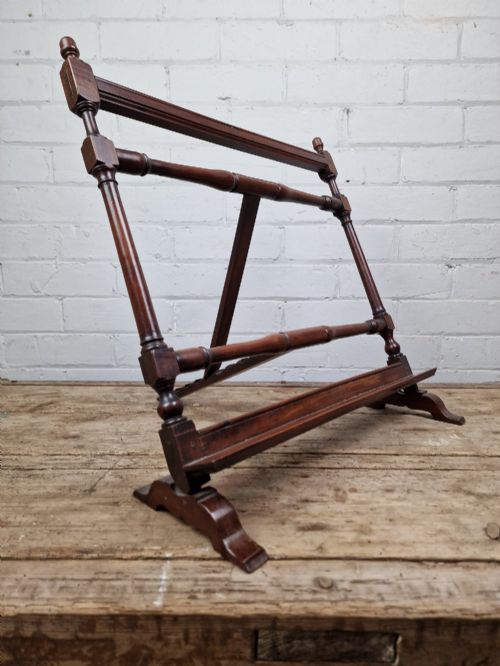
Turning and carving formed the pillars and spindles of revolving bookcases and music stands, while tabletops incorporated solid timber planks or veneered surfaces over secondary woods.
The listings on this site span the 18th century through to the 1930s, featuring mahogany, rosewood, walnut and oak.
What varies in quality
The sophistication of the mechanism dictates the standing of a reading stand or revolving bookcase, where smooth rotation and precise adjustable ratchets separate standard utility from finer workshop output. Timber selection also plays a role, with richly figured mahogany and rosewood veneers marking out better examples.
Fine craftsmanship shows in the crispness of turned spindles, the subtlety of satinwood inlay and the integration of brass mounts, whereas utilitarian items rely on simpler construction without decorative embellishment.
Maple & Co
The Dark Wood Book Table Glossary
- Revolving bookcase
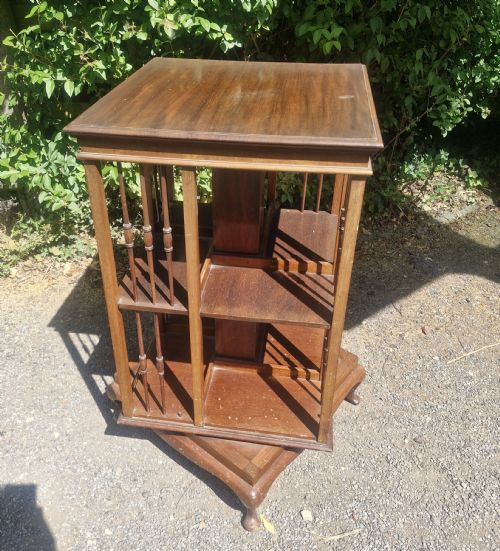
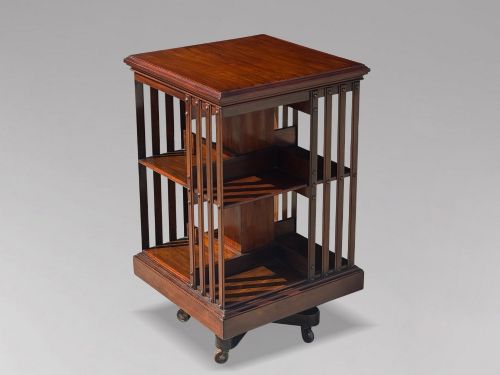
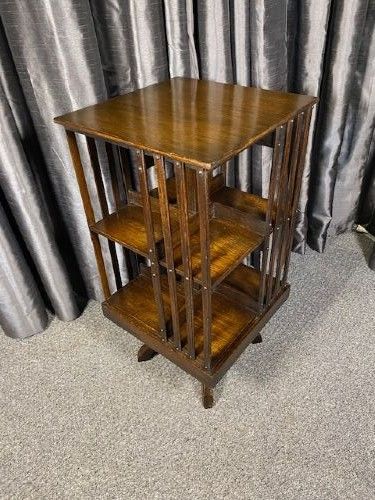
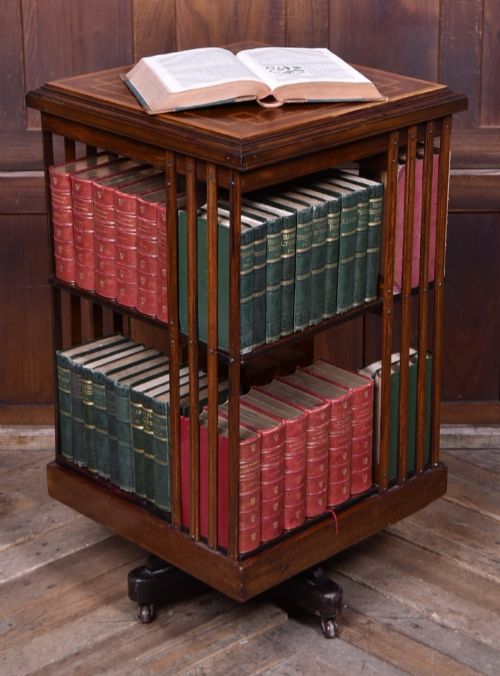
- A freestanding tabletop or floor-standing case designed to rotate on a central pivot for easy access to volumes. This form appears frequently in Edwardian and late Victorian interiors.
- Étagère
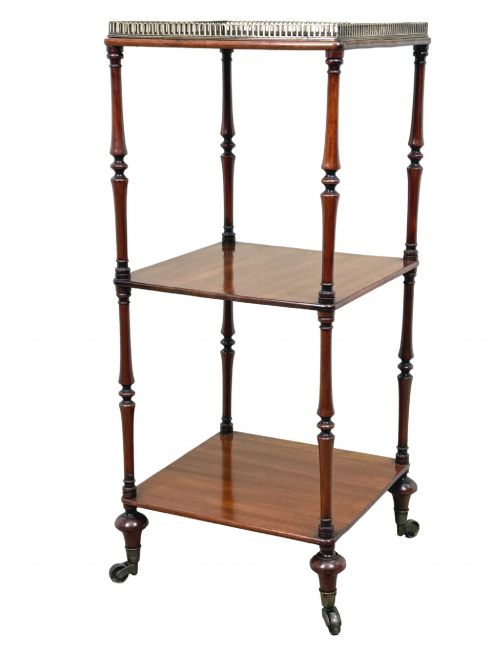
- An open tiered piece of furniture used for displaying or storing books and small objects. These pieces often feature slender supports and multiple open shelves.
- Reading stand
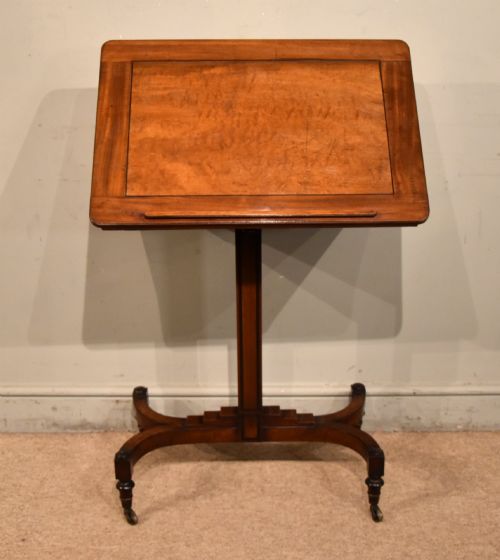
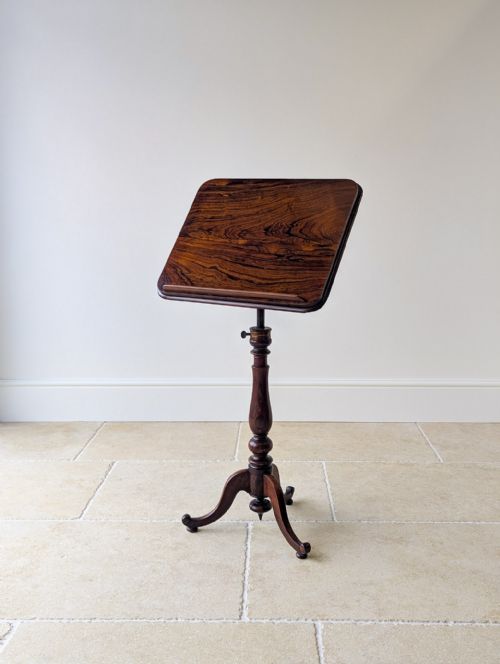
- An adjustable stand designed to hold books or sheet music at a comfortable angle for the reader. Many incorporate hinged ratchets and extending brass components.
- Whatnot
- A multi-shelved open cabinet or stand intended for books and ornaments. The form gained popularity during the 19th century.
- Bird cage table
- An occasional table featuring a tilting mechanism mounted on a pivoting block above the central column. This construction allows the surface to rotate and fold flat.
Dark Wood Book Table: Frequently Asked Questions
What is a revolving bookcase?
A revolving bookcase is a rotating unit designed to hold volumes within arm's reach of a desk or armchair. The rotating action relies on an internal pivot or bearing mechanism concealed beneath the shelves.
These pieces emerged in various sizes, ranging from compact table-top versions to large floor-standing models produced during the Victorian and Edwardian eras.
How were reading tables used?
Reading tables provided an adjustable surface for holding heavy volumes, ledgers or sheet music at an ergonomic angle. Users adjusted the height and slope using mechanical ratchets and brass supports.
Such pieces were common in libraries, drawing rooms and studies where people spent hours reading or writing.
What woods are most common?
Mahogany and rosewood appear most frequently across these listings, alongside walnut, oak and satinwood inlay. These dense timbers provided the structural strength required for supporting heavy book collections.
Cabinet makers valued them for their rich grain patterns and suitability for fine polishing.
How do I date a piece?
Dating relies on stylistic markers, construction methods and timber choices associated with periods such as Regency, Victorian and Edwardian. For instance, satinwood inlay and lighter frames point toward the early 20th century, while heavier rosewood and turned pillars often indicate earlier 19th-century origin.
Hardware like brass castors and adjustable ratchets also offer clues to the decade of manufacture.