






Dark Wood Bed Frame
A dark wood bed frame anchors a bedroom with rich tone and presence, drawing on centuries of cabinet-making skill.
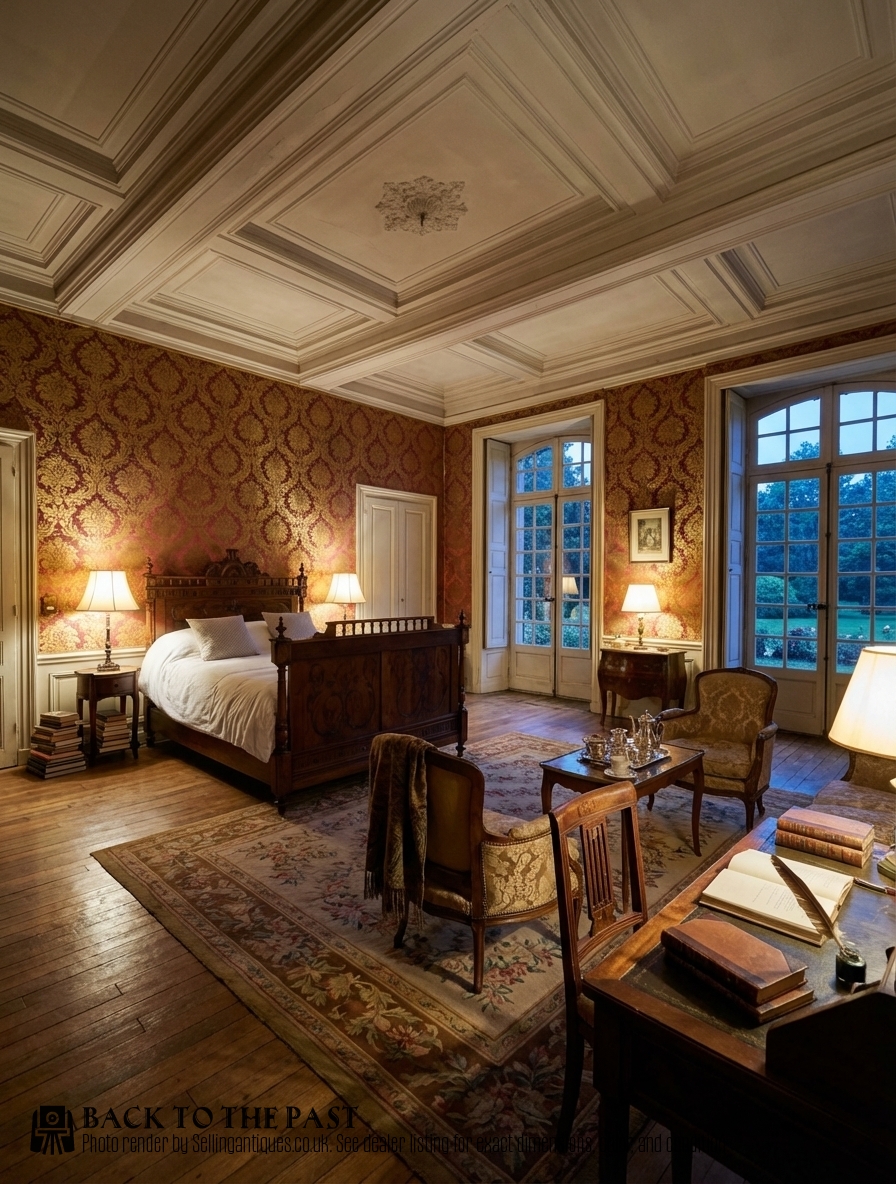
Dark Wood Bed Frame
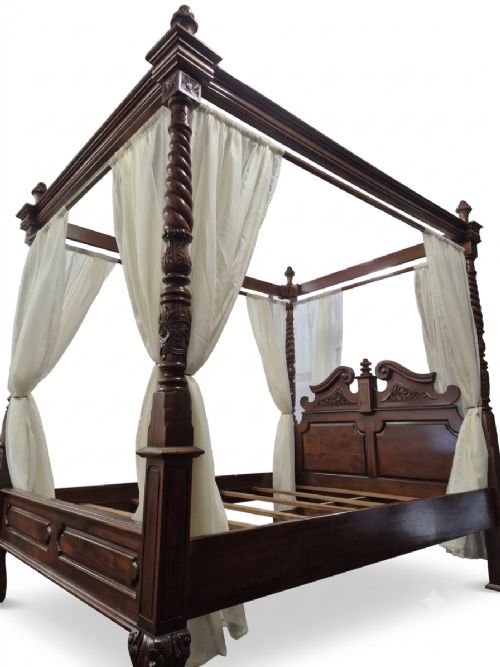
A dark wood bed frame encompasses substantial furniture designed for sleeping, constructed from dense timber species like mahogany, walnut, oak, and rosewood. These pieces emerge across the nineteenth and early twentieth centuries, spanning Victorian, Edwardian, and Regency eras alongside revival styles.
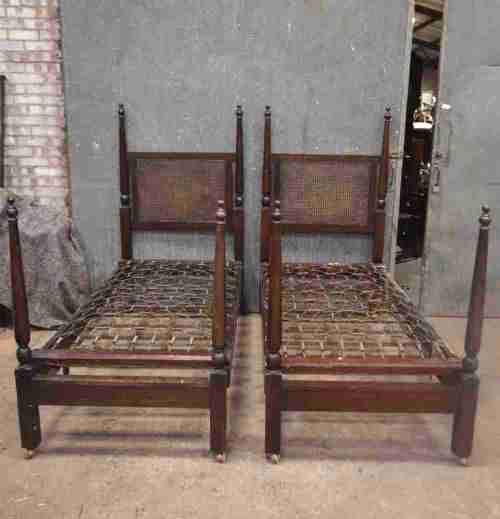
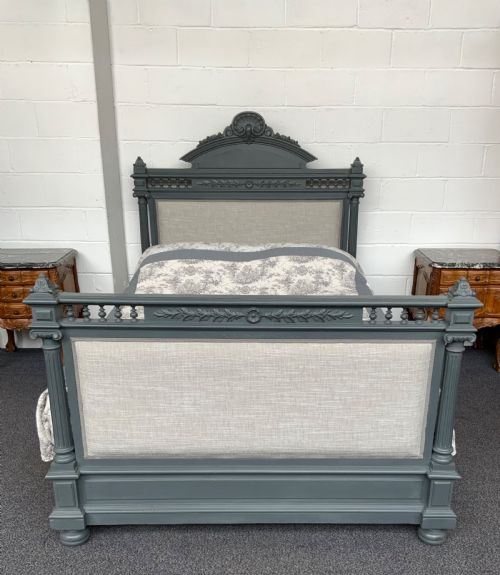
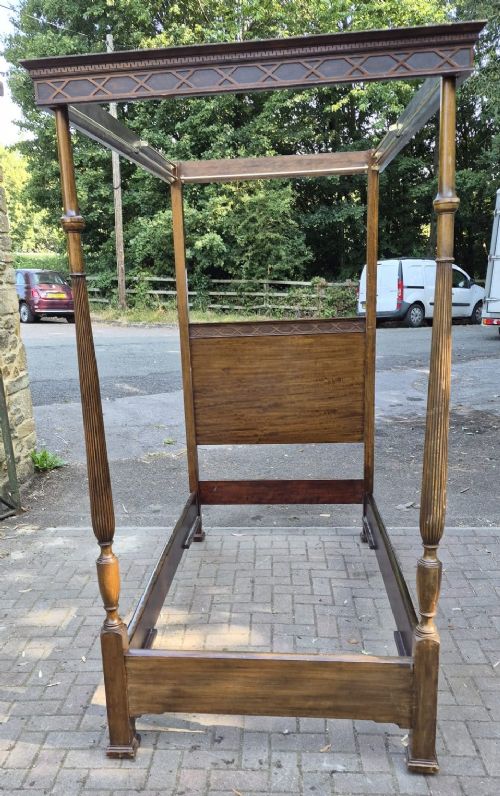
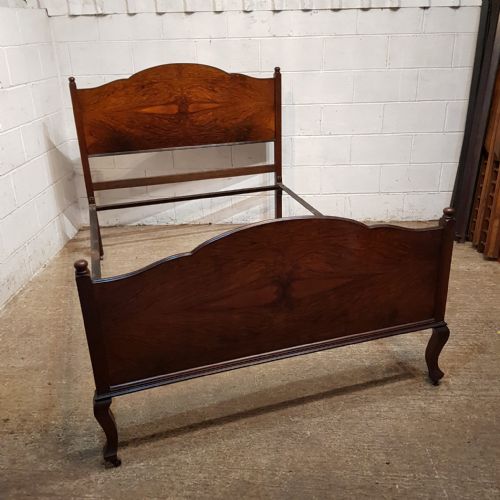
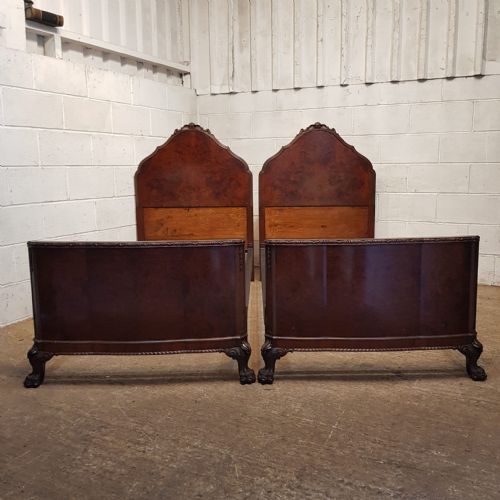
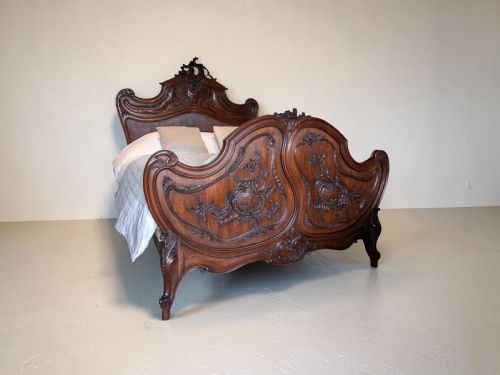
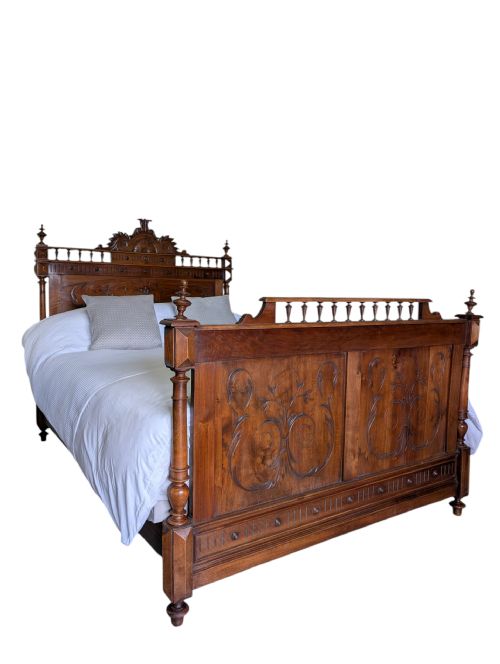
The selection ranges from grand four-poster beds and king sizes down to single bedsteads and pairs, often reflecting specific regional influences such as Anglo-Indian Colonial or French Chateau designs. Buyers encounter everything from hand-carved mahogany structures to inlaid Edwardian mahogany frames and burr walnut double bedsteads.
Grand four-poster constructions and carved walnut double beds dominate the offerings, providing traditional sleeping quarters with distinct historical character. Smaller single beds and paired sets also appear frequently, utilising oak and mahogany to suit varied room proportions.
How they were made
Cabinet-makers utilised dense hardwoods such as mahogany, walnut, oak, and rosewood, often selecting burr walnut veneers to create striking grain patterns on large surfaces. These timbers were joined using traditional carpentry methods to ensure the stability required for heavy bed frames.
Surface ornamentation involved hand carving, intricate inlay work, and applied brass details, seen particularly in Victorian and Edwardian examples. Painted finishes and elaborate sculptural elements also appear on select French and Continental forms within the evidence.
Form variations range from single beds and pairs to grand king-size four-poster beds in Victorian and Edwardian styles.
What varies in quality
The depth and execution of hand carving separate standard pieces from exceptional examples, with crisp, deeply undercut foliage and figures indicating superior craftsmanship. Material selection dictates value, where beautifully figured burr walnut or dense, old-growth mahogany elevate a bedstead.
Proportion and stylistic cohesion define the finest pieces, whether a bed follows strict Regency lines or an elaborate Anglo-Indian Colonial design. Integrated details such as matched pairs of single beds or original brass hardware reflect higher standards of original commission.
Howard And Sons·Heal And Son
The Dark Wood Bed Frame Glossary
- Four poster bed
- A bed with four vertical columns supporting an upper canopy or tester. These frames often feature hand-carved posts and dramatic proportions.
- Bedstead
- A framework of a bed consisting of posts, rails, and headboard without the mattress and bedding. This term frequently appears in historic cabinet-making records.
- Burr walnut
- A veneer taken from the burl growth of a walnut tree, producing swirling, highly decorative grain patterns. It was favoured for grand double bedsteads.
- Bergere
- A closed-upholstered armchair or headboard inset with canework panels. In bedroom furniture, this technique appears on oak single bed frames.
- Inlaid
- A decorative technique where contrasting materials are set into the surface of the wood. Edwardian mahogany frames often display this type of linear ornamentation.
Dark Wood Bed Frame: Frequently Asked Questions
How do I choose the right size?
Historic bed frames follow nineteenth and early twentieth-century sizing standards, which often differ slightly from modern mattress dimensions. Check the precise measurements given in each listing to ensure your existing base or mattress will fit comfortably within the antique wooden rails.
Consider the overall footprint of the frame, particularly with four-poster designs where the upper canopy and carved posts add significant height and width to the room.
Can I use a modern mattress?
Many antique bed frames accommodate modern mattresses, though some older single or double frames may require custom sizing or subtle internal adjustments. It is important to inspect how the side rails and slats are configured to support contemporary weight and depth.
Some listings explicitly note whether a bed base is included, which helps determine what additional internal support you might need to source for daily use.
How do I care for dark wood?
Preserve the finish of mahogany, walnut, and oak by keeping the bed frame away from direct heat sources and strong sunlight, which can dry out the timber and fade the polish. Dust regularly with a soft, dry cloth and apply a quality beeswax periodically to nourish the historic surface.
Avoid silicone-based sprays, as they build up over time and attract dust, dulling the natural lustre of the polished hardwood.
How do I identify the period?
Dating relies on a combination of timber choice, construction techniques, and stylistic markers such as Victorian carving, Edwardian inlay, or Regency proportions. Examining the joinery and the type of wood used helps place the piece within the nineteenth or early twentieth century.
Maker stamps or labels, when present, provide definitive proof of origin, while regional characteristics point toward specific British, French, or colonial workshops.