
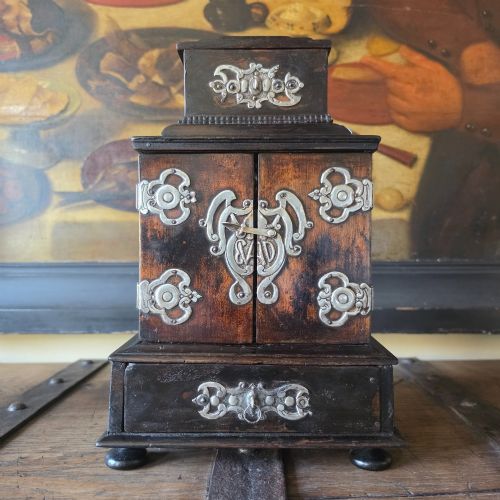
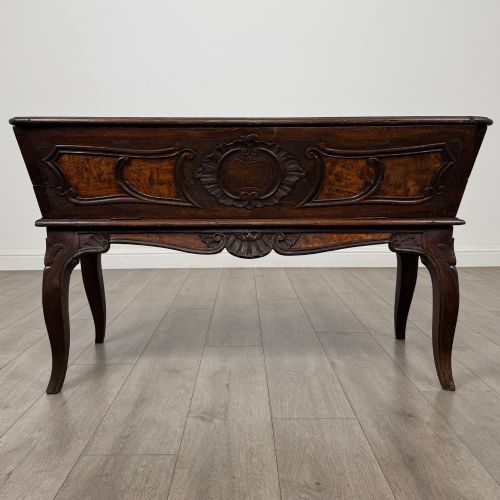

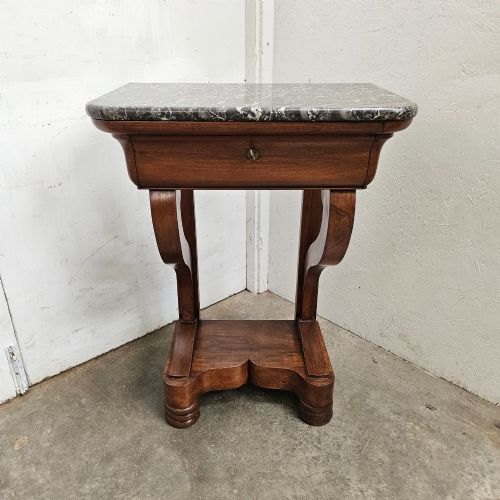


Dark Walnut Table Cabinet
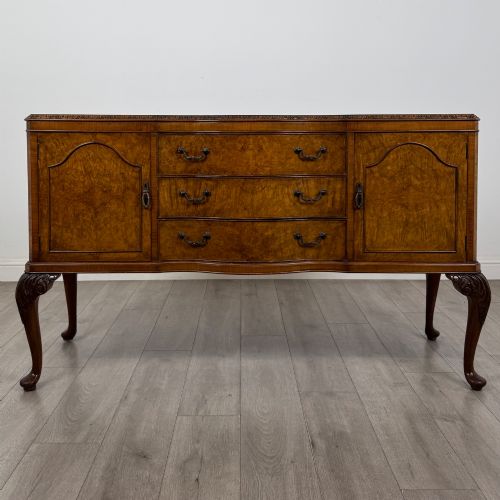
A dark walnut table cabinet is a compact timber piece designed to sit on a surface or floor, offering enclosed storage with rich, deep grain figures.
Dark Walnut Table Cabinet
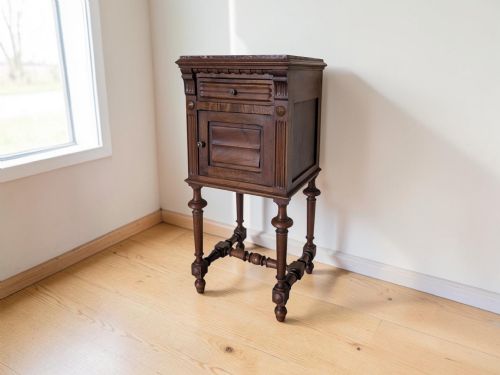
The versions most commonly met on this page span the 19th and early 20th centuries, including French walnut bedside chests, tambour nightstands, and parquetry veneer tables. They serve primarily as practical bedside stands or small storage units rather than large case furniture.
What varies in quality
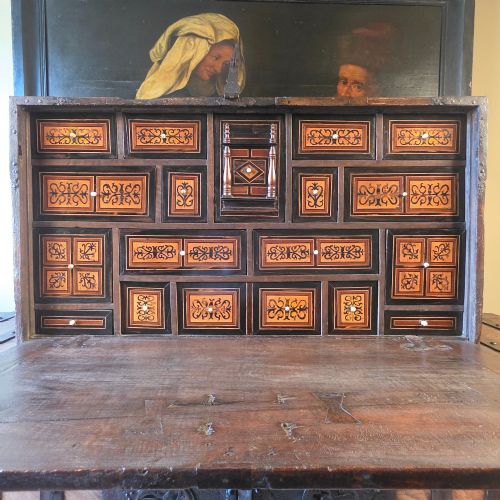
Quality in these pieces is dictated by the selection of the wood veneer, particularly the liveliness and symmetry of burr walnut figures across the surfaces. Finer examples display meticulous attention to parquetry patterns, crisply executed carvings, and the integration of secondary materials like white marble or cast brass.
Construction integrity also separates standard utility pieces from finer items, seen in the smooth operation of drawers, doors, and tambour mechanisms. The harmony of proportions and the preservation of the original finish determine the overall standing of an individual cabinet.
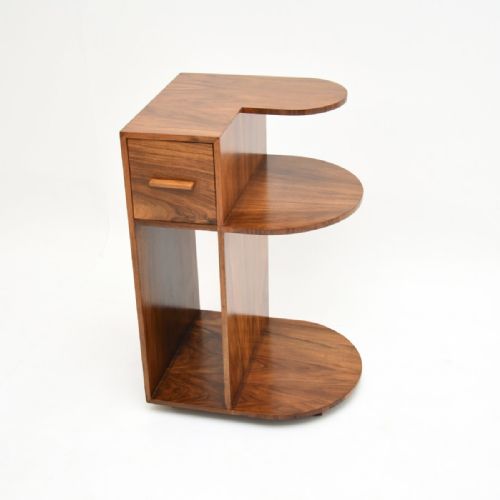
The listings show walnut combined with brass, marble, and glass across Victorian, Edwardian, and Art Deco periods.
The Dark Walnut Table Cabinet Glossary
- Burr walnut
- A veneer taken from the wart-like growths on a walnut tree, yielding a highly swirled and mottled grain pattern. It is prized for its decorative appearance on table cabinet surfaces.
- Parquetry
- A geometric mosaic of wood pieces used for decorative effect on furniture tops and doors. This technique appears on Edwardian and Victorian tables.
- Tambour
- A flexible shutter made of narrow vertical strips of wood glued to a canvas backing, allowing doors to slide around a curved corner. It is found on specific nightstands.
- Veneer
- A thin slice of superior wood applied over a base of cheaper timber to provide a decorative exterior. Walnut veneer is standard across many 19th-century pieces.
Dark Walnut Table Cabinet: Frequently Asked Questions
What is a dark walnut table cabinet used for?
These pieces function primarily as bedside storage, small lamp stands, or compact display units for jewellery and drinks.
Their enclosed compartments and drawers offer convenient space to keep personal items tidy within a bedroom or living area.
How do I date a walnut cabinet?
Dating relies on observing structural characteristics, hardware types, and the overall stylistic period of the piece, ranging from 18th-century Italian pedestals to 1930s Art Deco designs.
Secondary woods, dovetail construction joints, and veneer thicknesses also provide clear indicators of the era of manufacture.
Are marble tops original to these cabinets?
Marble tops frequently appear on French walnut bedside chests and console tables from the 19th century to provide a durable, decorative surface.
They were often selected for bedside use to resist moisture and wear from water jugs and wash basins.
How should I care for antique walnut?
Walnut furniture benefits from a stable indoor environment away from direct heat sources and strong sunlight that can fade the dark timber.
Occasional dusting with a soft, dry cloth maintains the polish without building up excess residue on the surface.