





Baroque Walnut Cabinet on Stand
A baroque walnut cabinet on stand is a commanding piece of historic furniture offering generous enclosed storage raised on an architectural base.
Baroque Walnut Cabinet on Stand
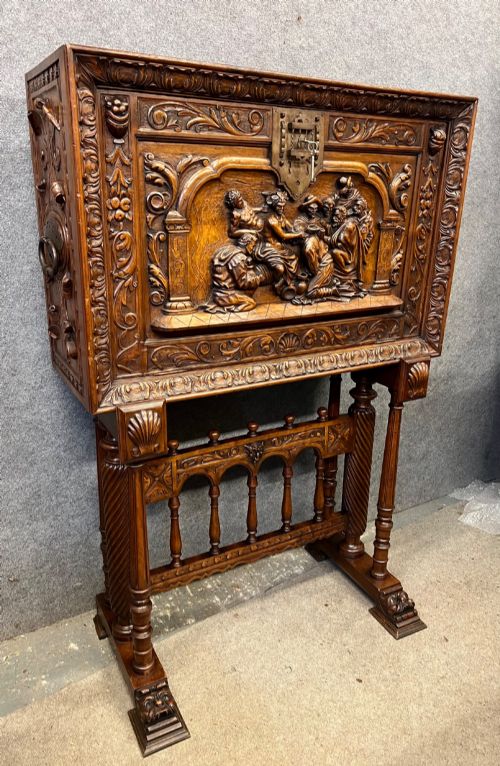
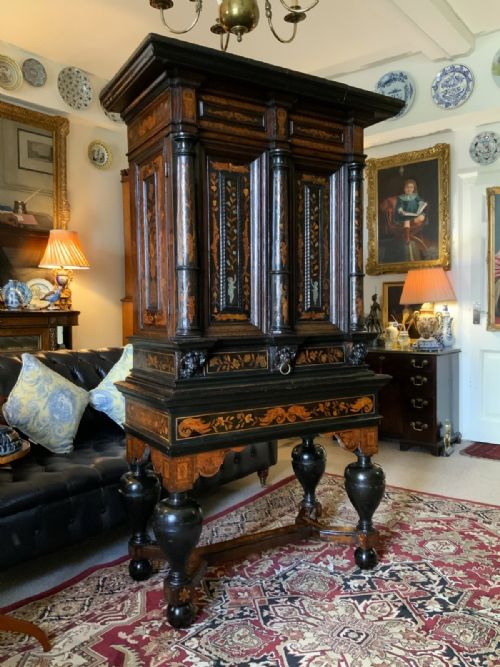
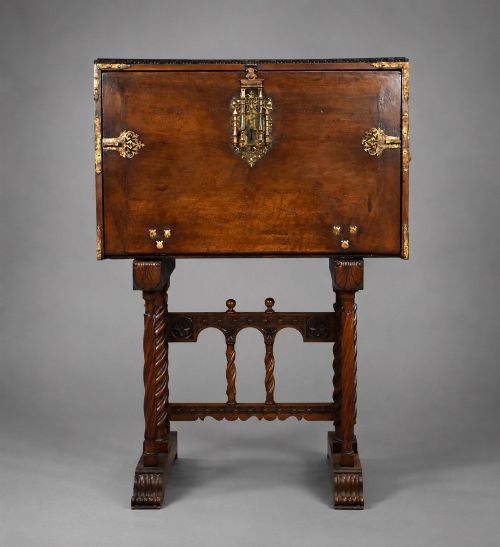
A baroque walnut cabinet on stand is a striking storage form combining a substantial upper cabinet with an elevated support base, originating across seventeenth and eighteenth century European workshops. You are most likely to encounter Dutch, Spanish, French, Flemish, and South German variations reflecting the distinct regional aesthetics of the period.
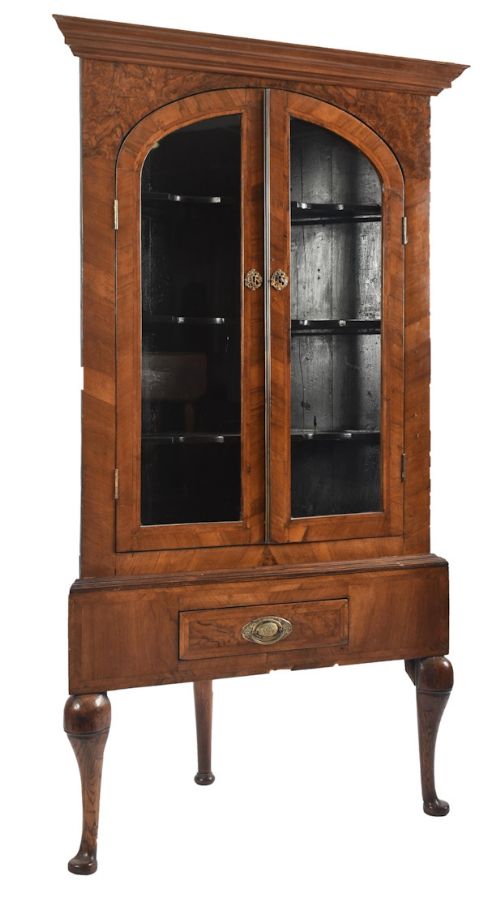
The selection ranges from traditional cabinets on stand and bureau-cabinets to specialised collectors cabinets and corner cupboards. These pieces primarily date from the seventeenth and eighteenth centuries, with occasional later nineteenth century interpretations adhering to historic styles.
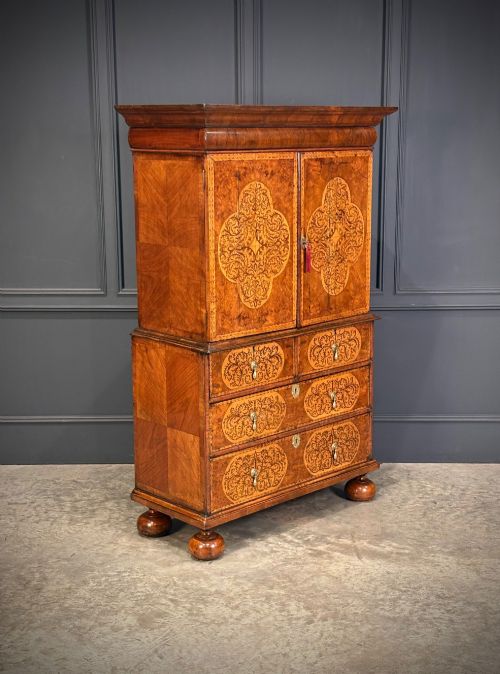
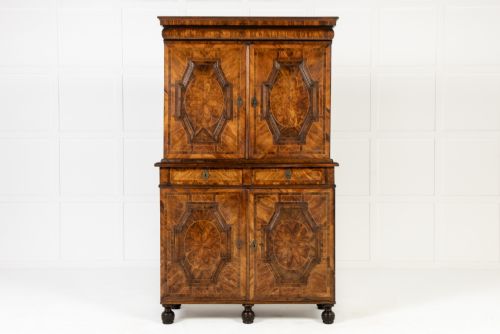
The core construction utilises rich walnut timbers, frequently enhanced by intricate marquetry, seaweed marquetry, oyster veneers, and contrasting inlay materials such as boxwood, bone, pewter, and fruitwood. Each regional school brings a distinct character to the form, whether through dramatic marquetry or austere architectural presence.
How they were made
Cabinetmakers constructed the foundational carcases using sturdy secondary timbers like oak before applying carefully selected walnut veneers and solid mouldings. Master craftsmen employed complex sawing techniques to produce oyster veneers and precise geometric or floral marquetry patterns across the exterior surfaces.
Decorative detailing relied on meticulous hand-cut inlays utilising boxwood, bone, pewter, and fruitwood to create striking contrast against the dark walnut ground. Brass and iron hardware, including hinges, escutcheons, and drop handles, were hand-forged and fitted to secure the doors and drawers.
Baroque Walnut Cabinet on Stand Retail Price Guide 2026
Typical asking prices for baroque walnut cabinet on stand among the pieces listed under this phrase on Sellingantiques today, from the lower quarter to the upper quarter. They describe what is for sale here now, not the wider market.
Secret drawers hidden behind false panels reward the curious owner with miniature compartments designed for truly private treasures.
What varies in quality
The distinction between standard examples and superior pieces rests on the ambition of the design and the precision of the marquetry or veneer work. Elaborate decorative schemes featuring dense seaweed marquetry or figural inlay require extraordinary technical skill that elevates the stature of the object.
Material selection and the integration of secondary woods dictate the structural integrity and visual depth of the cabinet. Finer specimens display harmonious grain matching, pristine inlay work, and robust stands that complement the proportions of the upper carcase.
The Baroque Walnut Cabinet on Stand Glossary
- Marquetry
- Decorative veneer work arranged in intricate patterns or pictures using various coloured woods and organic materials. This technique defines the visual richness of many baroque cabinets.
- Oyster veneer
- Cross-sections of small branches or roots laid down in circular or overlapping patterns resembling oyster shells. It creates a distinctive figure across seventeenth century drawer fronts and door panels.
- Bargueño
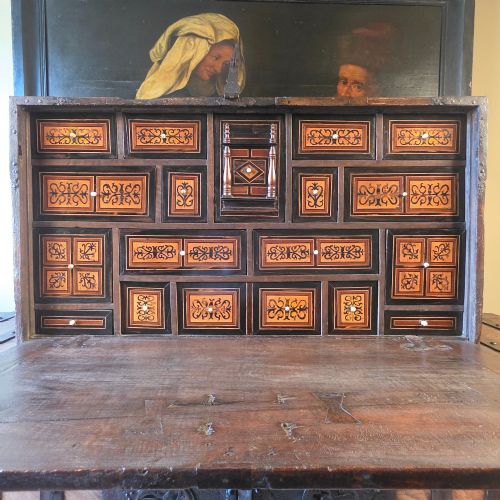
- A traditional Spanish chest-on-stand featuring a drop-front writing surface concealing numerous small drawers. These cabinets combine austere exterior walnut with highly ornate interior compartments.
- Seaweed marquetry
- A very fine, intricate two-part marquetry style resembling seaweed or arabesque tendrils popular in late seventeenth century English and Dutch furniture. It requires immense patience and skill to execute properly.
- Secondary wood
- The hidden structural timber used for drawer linings, carcase backs, and internal framing. Oak and fruitwood frequently serve this purpose in European baroque pieces.
Baroque Walnut Cabinet on Stand: Frequently Asked Questions
What is a baroque walnut cabinet on stand?
A baroque walnut cabinet on stand is a high-status storage furniture form featuring an enclosed upper cabinet mounted on an open or closed architectural base. These pieces were designed to display possessions and store valuables securely in affluent historic households.
They combine robust structural framing in walnut and oak with sophisticated decorative techniques such as marquetry, oyster veneering, and metal inlay. The combination of elevated display and enclosed storage makes them a striking focal point in traditional and contemporary interiors alike.
How were these cabinets used historically?
Historically, these cabinets served to store precious items, documents, collections of curiosities, or writing materials. The elevated stand kept the contents away from damp floors while projecting social status and refined taste.
Many examples feature specialised internal compartments, small drawers, or fold-down writing surfaces tailored for correspondence and administrative tasks. Their imposing presence suited formal reception rooms and private chambers of the European elite.
How do I care for a walnut cabinet?
Caring for a historic walnut cabinet involves maintaining stable environmental conditions away from direct sunlight, heating vents, and rapid humidity fluctuations. Excessive dryness can cause timber to split and veneers to lift from the carcase.
Dust the surfaces gently with a soft, dry cloth and avoid modern silicone-based polishes. Periodically feeding the wood with traditional wax preserves the natural lustre of the walnut and protects the historic finish.
How do I distinguish regional styles?
Distinguishing regional styles depends on observing the specific decorative motifs, hardware choices, and structural proportions employed by local workshops. Dutch and Flemish pieces frequently showcase vibrant floral marquetry or oyster veneers.
Spanish pieces, such as the bargueño, often favour architectural drop-front designs with bone or metal accents. South German examples tend toward sculptural ornamentation and complex bureau-cabinet forms with dramatic grain patterns.