


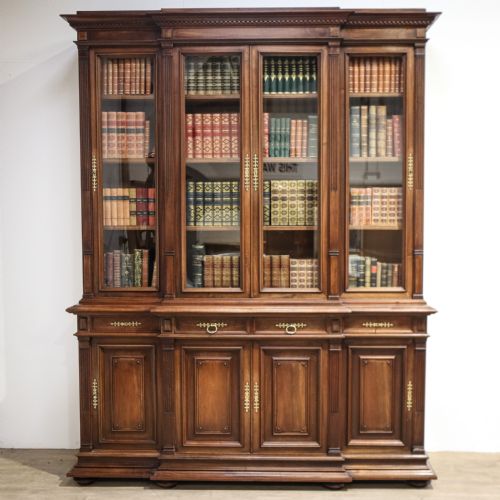


Dark Walnut Cupboard Doors
These dark walnut cupboard doors bring deep timber grain and enduring architectural presence to interiors.
Dark Walnut Cupboard Doors
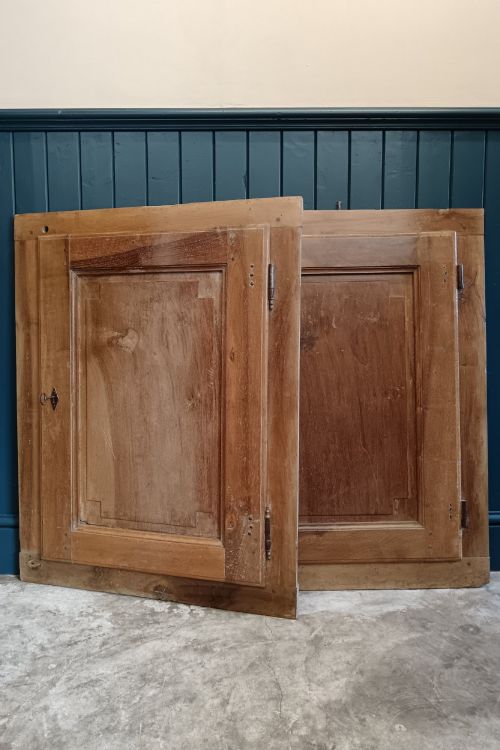
When you search for dark walnut cupboard doors, you encounter architectural salvage and fitted elements removed from larger furniture pieces. The selections here include items originating from centuries past, showcasing rich patinas developed over long periods.
The version most commonly met on this page involves panels sourced from larger French and Italian provincial storage pieces or standalone architectural elements. These components display the deep, chocolate tones characteristic of mature heartwood.
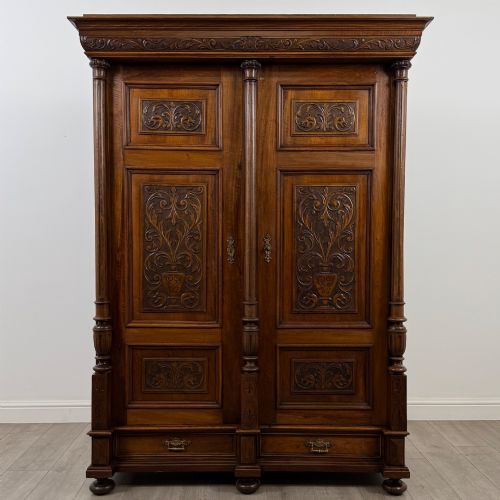
Makers utilised solid timber and figured veneers to construct these portals, which frequently formed the facades of armoires, buffets, and wall-mounted storage units. Their forms range from simple recessed panels to baroque moulded designs.
How they were made
Cabinet makers constructed these panels using seasoned timber planks joined with mortise and tenon frames to accommodate natural wood movement. Surfaces were planed, scraped, and finished with wax or oil to protect the grain while enhancing the dark lustre of the walnut.
Iron and brass hardware such as strap hinges, escutcheons, and latches were hand-forged or cast to secure the heavy panels within their frames. Decorative mouldings were often hand-carved directly into the solid wood boundaries of the doors.
Listings feature walnut, burr walnut, brass, and iron across items from the eighteenth, nineteenth, and twentieth centuries.
What varies in quality
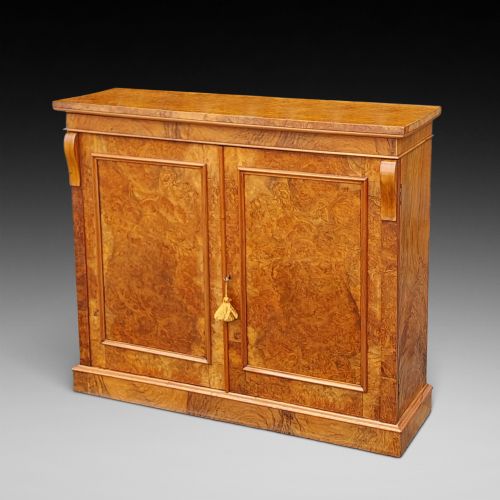
The grade of timber dictates the visual depth of the panel, with figured burr veneers and dense heartwood commanding attention for their complex grain patterns. Salvaged items show varying degrees of structural integrity depending on their exposure to past environments.
The precision of the joinery and the depth of the hand-carved mouldings separate standard utilitarian panels from finer examples produced in urban workshops. Original hardware preservation also contributes significantly to the overall integrity of the piece.
The Dark Walnut Cupboard Doors Glossary
- Burr walnut
- A figured wood grain obtained from the abnormal growth growths on walnut trees. It creates swirling, highly decorative patterns across cabinet surfaces.
- Mortise and tenon
- A traditional joint where a protruding peg fits securely into a corresponding cavity. This method provides robust structural stability for wooden frames.
- Architectural salvage
- Building elements rescued from older structures for reuse in new settings. These items preserve historical craftsmanship and materials.
- Escutcheon
- A protective plate surrounding a keyhole. It is typically forged from brass or iron to prevent wear on the surrounding timber.
- Panel
- A flat central section of wood fitted within a surrounding frame. This construction method accommodates the natural expansion and contraction of timber.
Dark Walnut Cupboard Doors: Frequently Asked Questions
How do I hang antique cupboard doors?
Hanging these panels requires matching historical pivot or butt hinges to the existing screw holes in the frame.
Careful alignment ensures the heavy timber swings true without binding against the surrounding woodwork.
Can I use these doors for modern cabinets?
These architectural elements adapt well to custom kitchen cabinetry or modern wall storage units.
Adjusting internal mounting points allows older panels to function within contemporary interior layouts.
How do I maintain dark walnut timber?
Regular applications of natural beeswax nourish the dry wood fibres and maintain a deep, protective lustre.
Avoid placing the timber in direct sunlight or near heat sources to prevent cracking.
How do I date walnut cupboard doors?
Examination of the saw marks, joint construction, and hand-forged hardware reveals the manufacturing era.
Tool marks left on the rear surfaces often indicate whether a panel dates to the eighteenth or nineteenth century.