
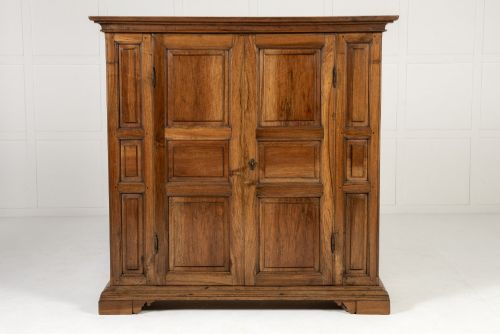
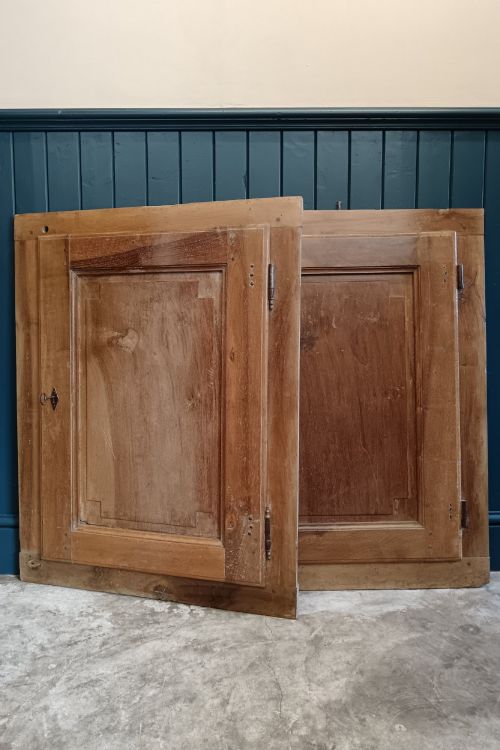


Antique Walnut Cabinet Panels
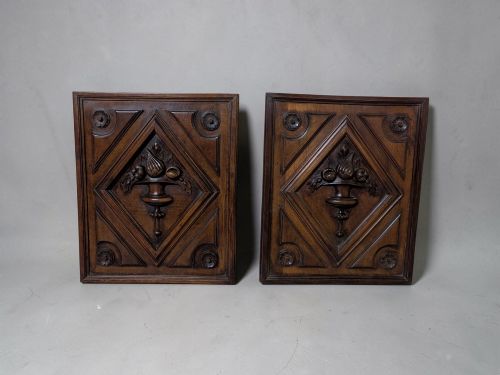
These antique walnut cabinet panels bring rich grain and architectural presence into a room, offering genuine historical timber for interior design projects.
Antique Walnut Cabinet Panels
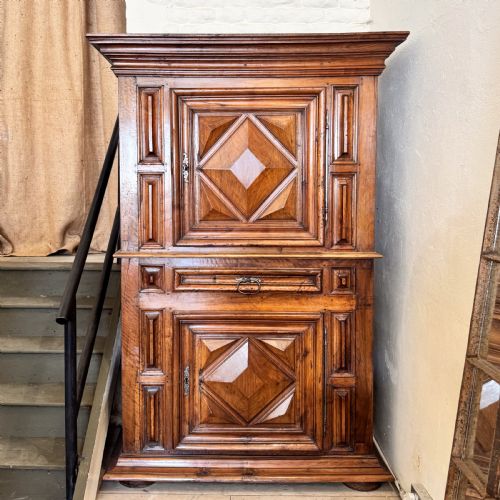
Makers and joiners of past centuries fashioned these panels to form the fronts of large cupboards, armoires, and architectural fitments. Today, buyers source these sections for interior renovation, decorative wall mounting, or custom cabinetry integration.
What varies in quality
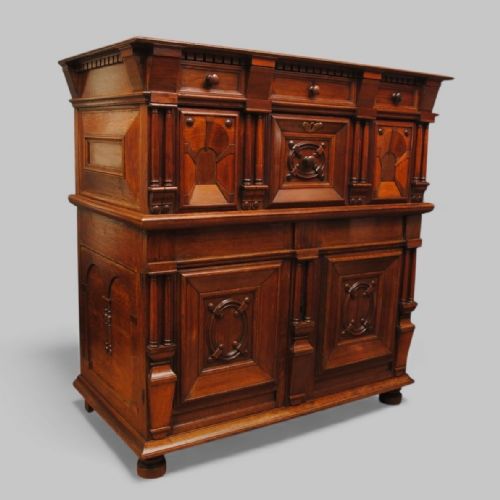
The standard of carving and the selection of timber figures govern the desirability of each piece. Finely figured burr walnut and deep, crisp hand-carved relief work distinguish superior examples from plain utility boards.
The integrity of the original construction and the survival of matching pairs or complete framing components determine how closely a panel reflects its period of origin.
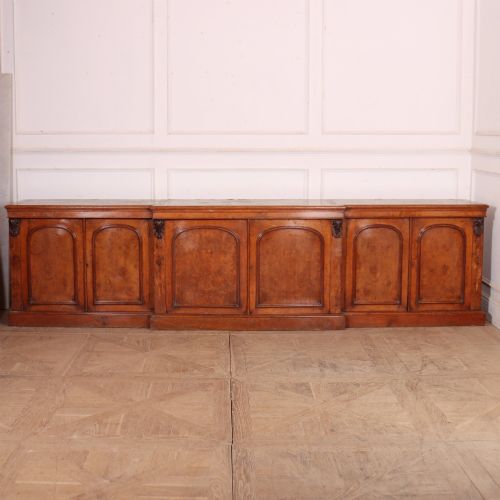
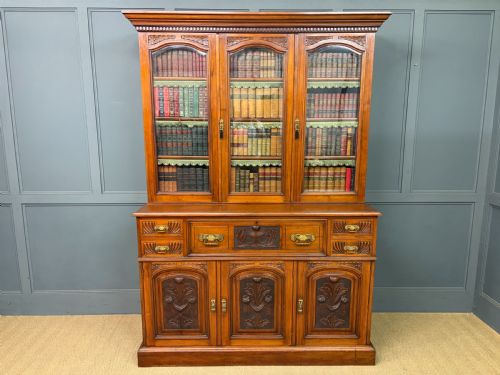
Listings feature walnut, burr walnut, oak, and mahogany panels originating from eighteenth-century Spain and Italy alongside nineteenth-century French and British workshops.
Gregory & Co. of London·Whytock & Reid of Edinburgh
The Antique Walnut Cabinet Panels Glossary
- Burr walnut
- A highly prized wood grain derived from the abnormal growth or burl of a walnut tree, creating intricate swirled patterns. It was frequently utilised for decorative veneer on high-status furniture.
- French polish
- A traditional wood finishing technique that applies numerous thin coats of shellac using a rubbing pad. This method produces a high-gloss surface with a deep amber chatoyancy.
- Mortise and tenon
- An ancient joinery method where a projecting peg fits tightly into a matching cavity. This joint provides robust structural stability for cabinet doors and frames without requiring metal fasteners.
- Architectural salvage
- Building elements and fittings rescued from older structures slated for alteration or demolition. These items are repurposed in modern interiors for their historical authenticity.
- Tambour front
- A flexible screen made of narrow wooden slats glued to a fabric backing, allowing a cabinet door to slide around a curved track. It demonstrates advanced precision joinery.
Antique Walnut Cabinet Panels: Frequently Asked Questions
How were cabinet panels used historically?
Cabinet panels formed the structural and decorative doors of large storage furniture such as armoires, buffets, and cupboards. They provided secure enclosures for household goods while displaying the wealth of the owner through carved ornamentation.
Craftsmen built these components to withstand daily handling, often matching the timber grain across paired doors to create a symmetrical facade on important case furniture.
How do I mount antique panels on a wall?
Mounting antique panels typically requires a custom wooden batten or French cleat system attached securely to the rear framework. This method distributes the weight evenly without driving fixings directly through the historic timber.
Consulting a professional restorer ensures that the hanging method respects the structural integrity of the wood and accommodates any seasonal movement in the board.
How can I tell eighteenth century panels from nineteenth century ones?
Eighteenth-century panels often display deeper hand-adzed tool marks on the reverse and simpler, heavier pegged mortise and tenon joinery. The carving styles reflect regional baroque or provincial motifs distinct from later revival periods.
Nineteenth-century examples frequently show more uniform mechanical sawing preparation and may incorporate revival styles such as Renaissance or Italian Baroque.
How do I care for walnut panels at home?
Maintain walnut panels by dusting with a dry, soft cloth and applying a microcrystalline wax sparingly to nourish the dry timber. Avoid placing the wood in direct sunlight or near heat sources to prevent splitting.
Stable room humidity levels prevent the historic timber from shrinking or warping, preserving both the polish and the integrity of the joinery.