
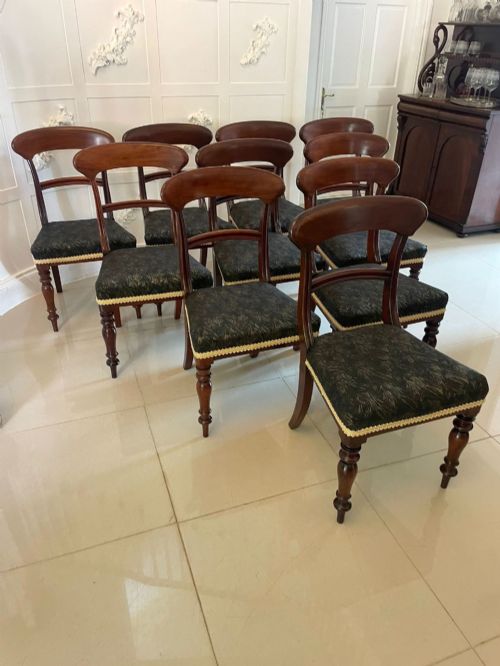
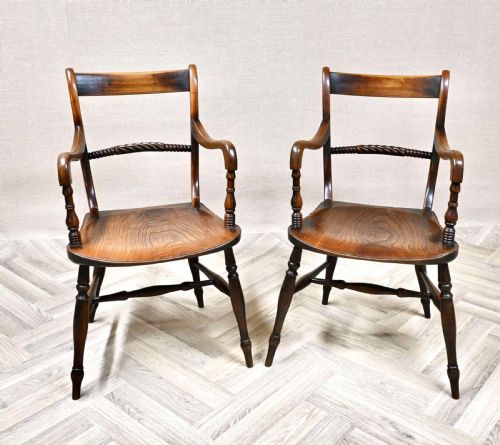
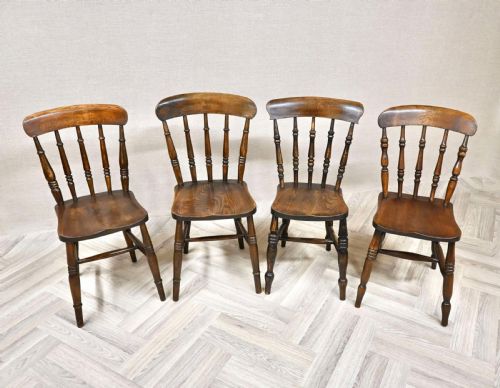

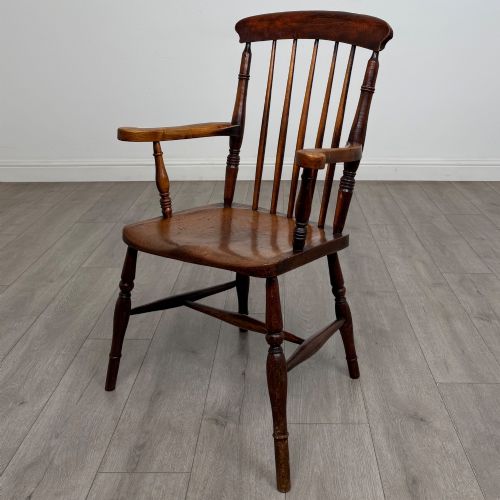

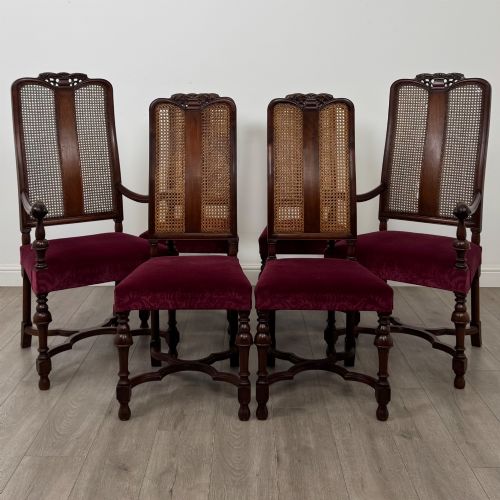
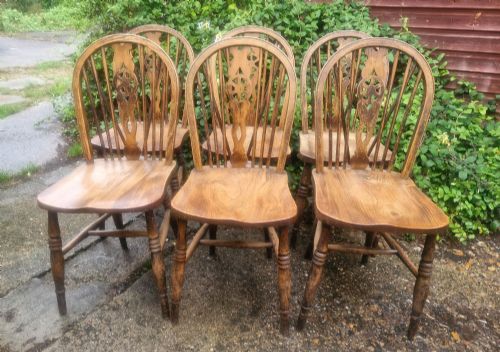
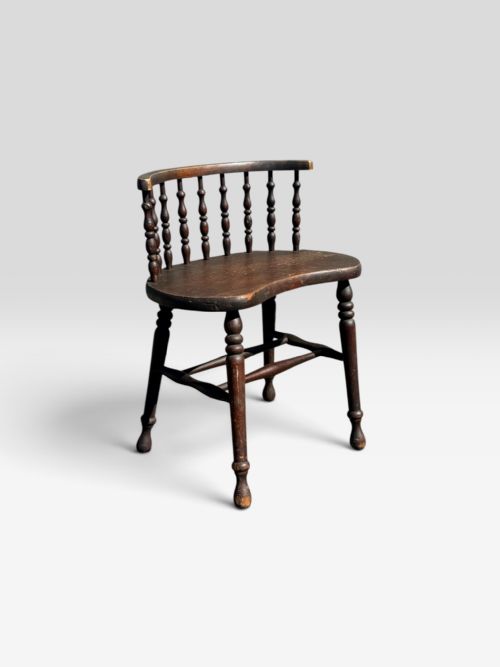
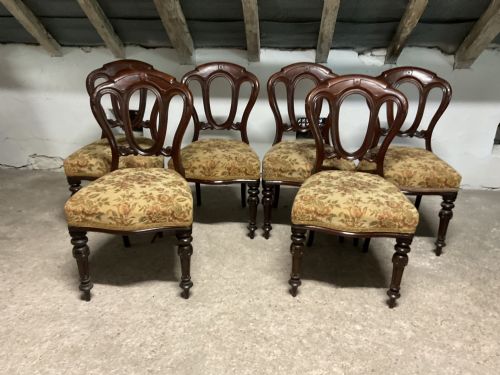
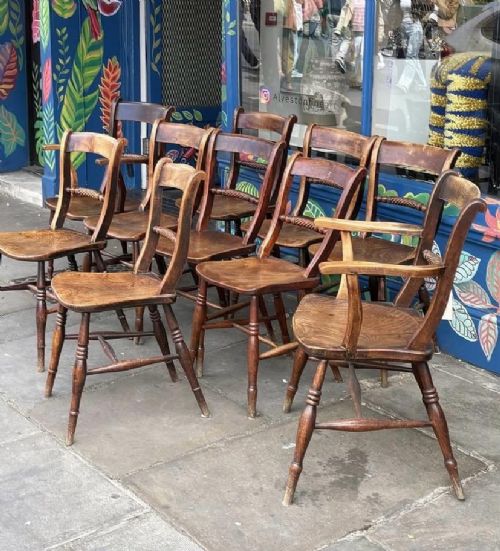
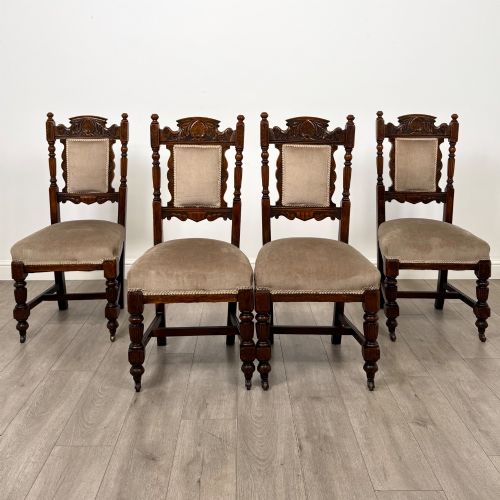
Dark Turned Leg Chair
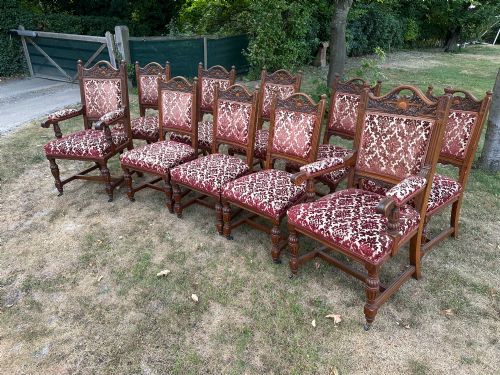
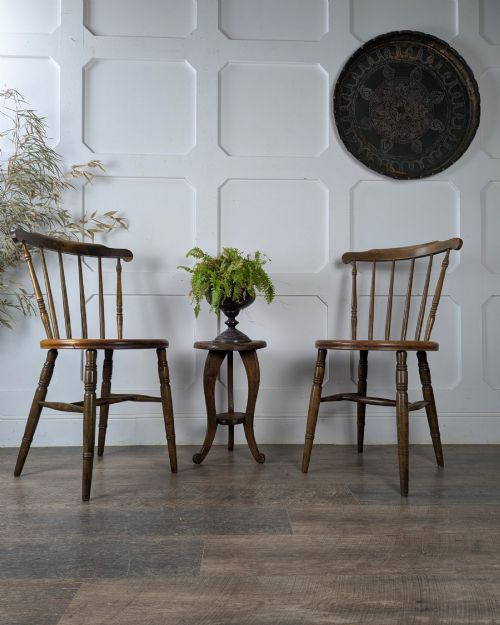
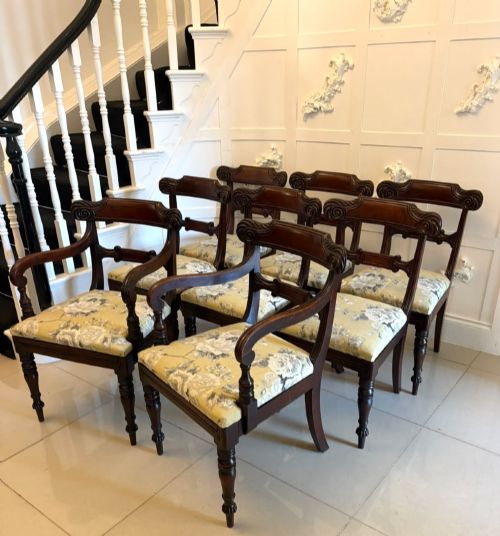
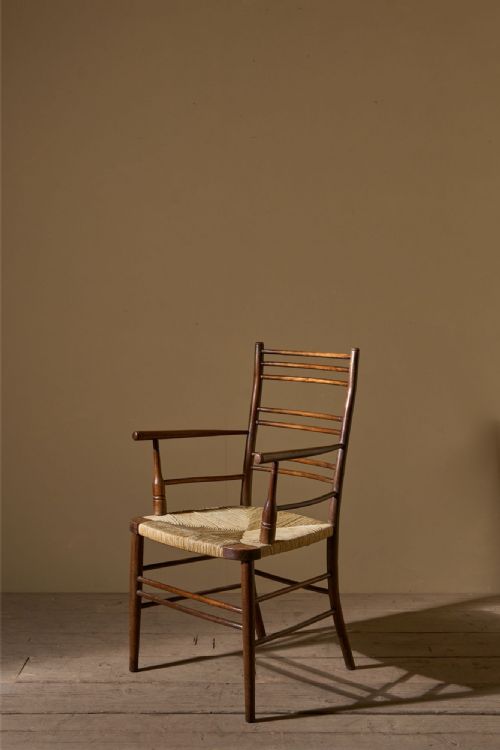
These dark turned leg chair examples offer solid vernacular timber construction, bringing traditional seating into modern rooms.
Dark Turned Leg Chair
When you search for a dark turned leg chair, you are looking at sturdy wooden seating rooted in vernacular traditions, typically featuring spindle or bobbin turnings produced on a lathe. The pieces available span several eras, appearing most frequently in nineteenth-century Victorian and Edwardian iterations alongside earlier eighteenth-century examples.
Forms range widely from kitchen dining chairs and Windsor armchairs to corner chairs and turners chairs, reflecting practical domestic and commercial use. Oak, elm, mahogany, and ash form the primary timber framework of these pieces.
Originating largely from British country workshops and regional makers, these items combine utilitarian function with distinct stylistic revivals such as Carolean and Jacobean details. Buyers encounter them as single side chairs, carvers, or matched sets intended for everyday seating.
How they were made
Craftsmen utilised solid hardwoods like oak, elm, ash, and beech for the structural frames, shaping vertical members and legs on a lathe to create distinctive turned profiles. Seat pads often combined carved solid timber with rush or cane inserts, secured using traditional joinery methods.
Secondary timbers and applied details, including brass hardware and leather upholstery, appeared on formal dining and parlour variations from the Victorian and Edwardian periods. Surface finishes relied on natural wax or oil applications to preserve the deep tones of the wood.
Listings feature timbers including oak, elm, mahogany, beech, ash, laburnum, and walnut paired with brass and cane.
What varies in quality
The degree of hand-turning precision on the legs and stretchers distinguishes simpler vernacular items from more formally ambitious pieces. Timber selection also dictates overall grade, with dense, highly figured oak or yew commanding greater attention than standard utilitarian beech or ash.
Originality of components, such as intact rush seats and matching turned stretchers across a set of dining chairs, preserves the integrity of the design. Subtle variations in lathe work indicate whether a chair emerged from a regional workshop or a larger commercial output.
Mellier and Co
The Dark Turned Leg Chair Glossary
- Turned leg
- A support column shaped on a lathe by rotating the timber against cutting tools. This technique produces decorative profiles ranging from simple bobbin shapes to complex vase and ring patterns.
- Windsor chair
- A wooden seating form featuring a solid sculpted wooden seat into which the legs and back spindles are wedged directly. These commonly include curved backrails and stick or wheel back designs.
- Corner chair
- A square-seated chair designed to fit diagonally into room corners, featuring a diagonal front leg and a continuous curved armrest supported by turned spindles.
- Rush seat
- A traditional woven bottom made from dried marsh grasses twisted into cords. This technique provides a flexible yet durable platform within a wooden frame.
- Carver
- An armchair designed to match a set of dining chairs, traditionally placed at the head of a table. These pieces feature integrated armrests matching the side chair turnings.
Dark Turned Leg Chair: Frequently Asked Questions
What is a turned leg chair?
A turned leg chair is a wooden seat featuring structural supports shaped on a lathe. These components display characteristic rounded rings, bobbins, or spindles.
They appear across various historical styles, serving as functional dining seats, armchairs, or decorative corner pieces.
How do I identify a Victorian chair?
Victorian chairs often feature denser hardwoods like mahogany and oak, accompanied by stylistic revivals such as Carolean or Jacobean turning details. Their construction reflects industrial and regional workshop output from the nineteenth century.
Examination of the timber grain and joining methods helps distinguish these pieces from later twentieth-century reproductions.
Where were these chairs used?
These chairs served multiple domestic environments, from farmhouse kitchens and country parlours to formal dining rooms. Windsor and stick-back variants suited heavy daily use, while mahogany and upholstered parlour models furnished reception spaces.
Their robust construction allowed them to transition easily between formal and utilitarian household roles.
How do I care for wooden chairs?
Preserving these wooden chairs involves maintaining stable indoor humidity levels to prevent timber splitting or shrinkage. Regular application of suitable beeswax feeds the dry grain without building up heavy residues.
Keeping them away from direct heat sources protects the original finish and structural joints.