


Dark Timber Hanging Mirror
A dark timber hanging mirror brings warmth and depth to a room, offering rich grain and practical reflection in one piece.
Dark Timber Hanging Mirror
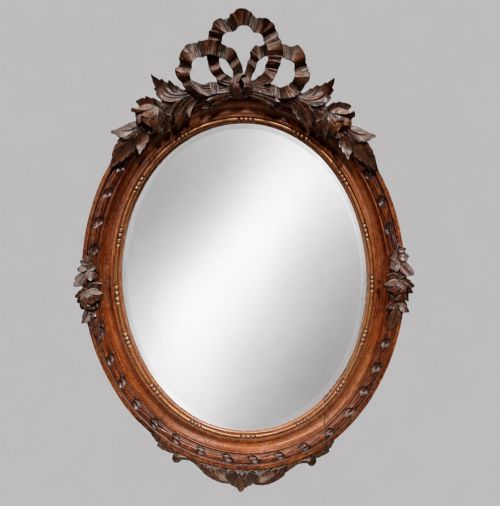
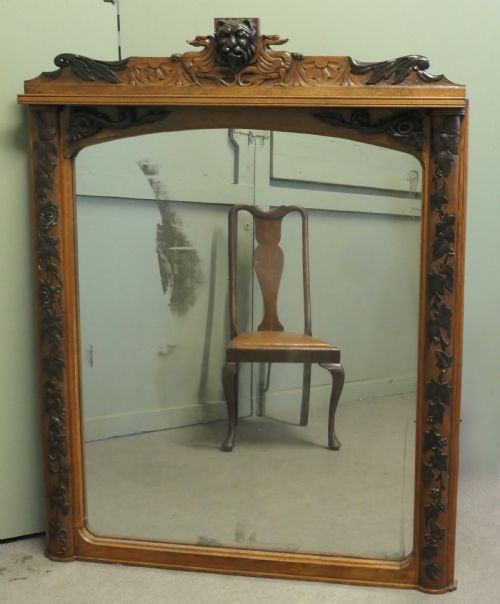
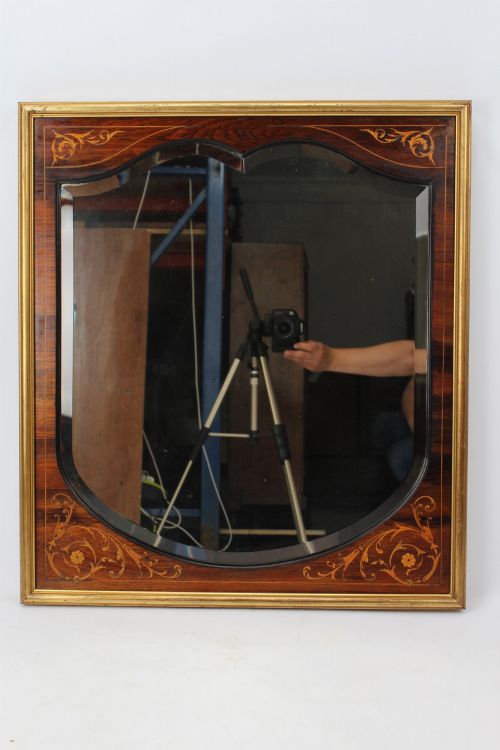
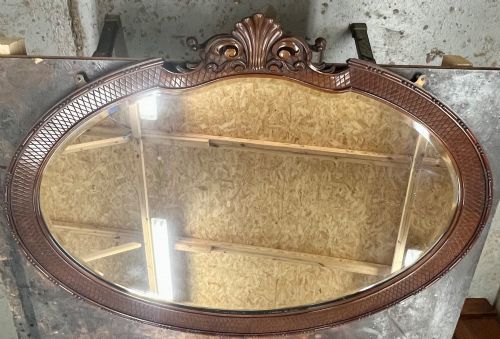
A dark timber hanging mirror is a wall-mounted glass panel framed in rich woods such as oak, mahogany, rosewood, and walnut. These pieces date across several centuries, with nineteenth-century examples and Victorian interpretations appearing frequently alongside earlier styles.
The forms range from simple rectangular and oval shapes to carved shields, architectural pier mirrors, and revival designs. Buyers encounter everything from understated Edwardian oak frames to ornate Victorian rosewood and gilt creations.
Materials and construction
Cabinetmakers utilised dense hardwoods like mahogany and oak, often shaping them through carving, turning, or applying decorative veneers such as oyster cuts. Timber frames were selected for their natural grain patterns and stability.
Glass plates were set securely into the wooden rabbets, sometimes featuring bevelled edges to catch the light. Joinery methods varied from straightforward mitred corners to complex mortise and tenon joints suited to heavier frames.
One unexpected piece takes the distinct form of a heraldic shield carved entirely from walnut.
Judging the quality
Quality rests in the depth of the timber selection and the crispness of any carved detail. Finer pieces display carefully matched grain, robust joinery, and well-preserved silvering on the glass.
Revival styles and plain frames are judged by the proportion of the moulding and the integrity of the wood. A well-constructed frame retains its structural rigidity over centuries of hanging.
The Dark Timber Hanging Mirror Glossary
- Oyster veneer
- Slices cut across small branches to create circular, concentric patterns in the wood. This technique appears on seventeenth-century pieces.
- Pier mirror
- A tall wall glass designed to hang between windows. These often match the proportions of surrounding architectural joinery.
- Bevel edge
- An angled perimeter ground into the glass plate. This finish adds a reflective border that catches natural light.
- Giltwood
- Timber coated in a thin layer of gold leaf. It frequently accents dark woods in nineteenth-century revival frames.
Dark Timber Hanging Mirror: Frequently Asked Questions
Are these mirrors suitable for bathrooms?
Dense hardwoods handle ambient moisture reasonably well, but steam and direct water contact can damage vintage wood finishes and silvered glass. Placing them in drier hallways or living rooms preserves the timber.
Ventilation is key if you choose to place a period frame in a humid environment.
How should I clean the wooden frame?
Dust the timber regularly with a soft, dry cloth to prevent grime accumulation. Avoid modern chemical polishes that can build up and soften historical wax finishes.
Applying a traditional beeswax occasionally helps nourish dry hardwoods and maintains their natural lustre.
How can I tell the age of the frame?
Dating relies on observing construction marks, wood species, and stylistic cues such as Victorian carving or Art Deco geometry. Tool marks on the reverse and the type of glass plate offer further clues to the period.
Comparing the joinery to known historical methods confirms the era of manufacture.