


Dark Teak Octagonal Table
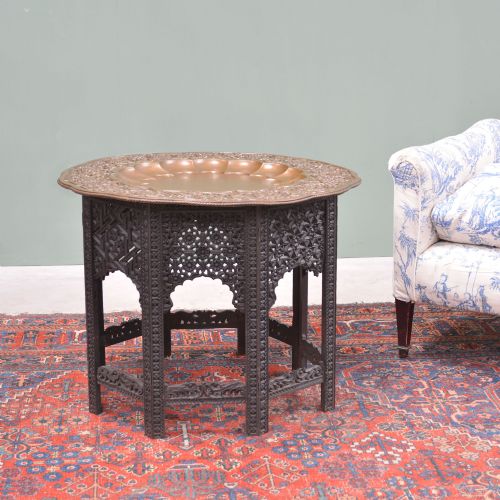
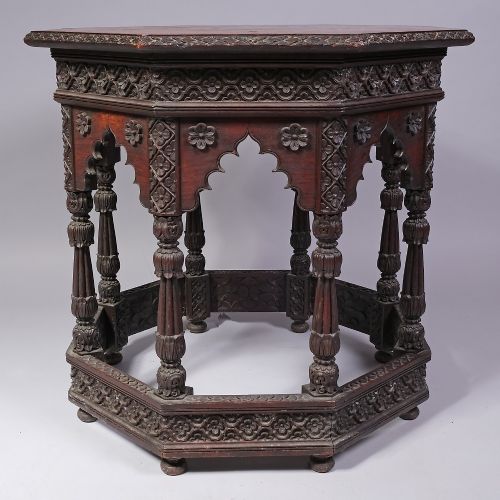
These dark teak octagonal table pieces are distinctive colonial forms prized for intricate carved woodwork and brass inlay.
Dark Teak Octagonal Table
A dark teak octagonal table is a distinctive form of colonial furniture, often associated with Anglo-Indian, Anglo-Burmese, and Bombay Presidency workshops. Buyers searching this phrase encounter side tables, occasional tables, centre tables, and folding camp furniture originating from the nineteenth century up to the nineteen-thirties.
The most common versions on this page are carved teak or hardwood examples featuring eight-sided tops, occasionally designed with folding bases or inlaid details. These pieces bridge the aesthetic of British colonial interiors and traditional local craftsmanship.
How they were made
Maker workshops utilised dense tropical timbers such as teak and hardwood, finished with traditional wax treatments to enrich the natural grain. Artisans employed deep relief carving techniques, often covering surfaces with floral, geometric, or figurative motifs.
Many examples incorporate contrasting materials inserted directly into the timber, including brass wire, sheet inlay, and bone or copper elements. Folding variants relied on clever hinged or interlocking wooden construction designed for portability.
Current listings span periods from the Victorian era through the nineteen-thirties, predominantly featuring teak, hardwood, brass, and wax finishes.
What varies in quality
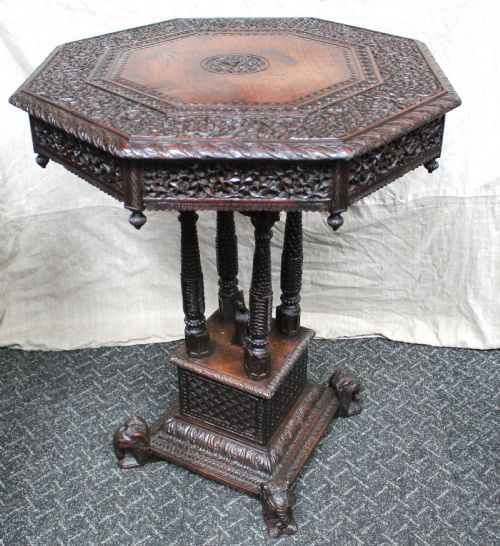
The distinction between standard examples and superior pieces rests entirely upon the depth and precision of the hand carving. Finer works display crisp undercutting and balanced symmetry across the entire octagonal surface without distortion.
Material selection and inlay complexity also drive the hierarchy, where meticulous brass work or intact bone sections elevate an ordinary occasional table into a notable specimen of colonial design.
The Dark Teak Octagonal Table Glossary
- Octagonal table
- A table featuring an eight-sided top supported by a central pillar or folding legs. This geometric format allows for intricate border carvings.
- Anglo-Indian
- Furniture made in India during the British colonial period, combining traditional local craftsmanship with British room forms. These items often showcase dense botanical carving.
- Hoshiarpur
- A region in Punjab famous for intricate woodwork involving delicate carvings and intricate inlay. Pieces from this tradition frequently utilise bone or brass alongside teak.
- Campaign table
- Portable furniture designed to fold or dismantle for easy transport by military officers or travellers. They retain robust hinges and practical folding mechanisms.
Dark Teak Octagonal Table: Frequently Asked Questions
How do I date a dark teak octagonal table?
Dating relies on examining the timber density, construction methods, and stylistic cues found within the carving. Nineteenth-century examples often exhibit hand-cut joints and denser teak.
Later pieces from the twentieth century may show slightly more standardised turning or machine assistance in auxiliary framing parts.
Were these tables made for export?
Yes, many of these pieces were produced in the nineteenth and early twentieth centuries specifically for British officers, administrators, and the European export market. They combined familiar British furniture shapes with traditional eastern decorative arts.
This fusion created portable and decorative items suited for colonial drawing rooms and parlours back home.
How should I care for the wax finish?
Maintenance involves applying a natural beeswax periodically to nourish the dry tropical hardwood and maintain the soft sheen. Avoid placing the furniture near direct heat sources or strong sunlight to prevent timber shrinkage.
Gentle dusting with a dry cloth keeps the deep recesses of the hand carvings clear without harming the patina.
What is an elephant table?
An elephant table is a figural occasional table where the base or support structure incorporates carved elephant motifs. These distinctive forms are characteristic of nineteenth and early twentieth-century Indian workshops.
They pair the standard octagonal top format with sculptural wooden supports representing the animal.